
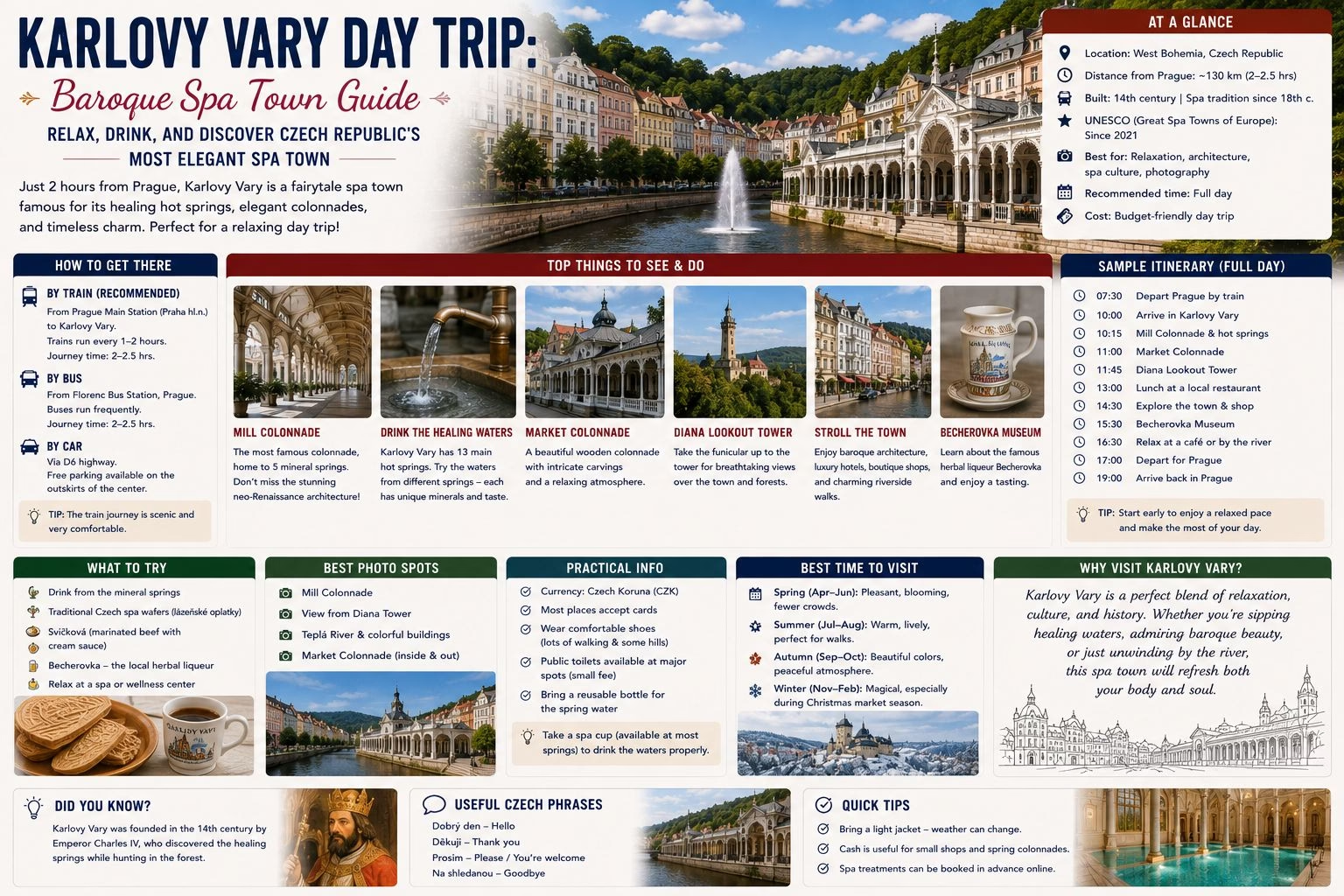
Karlovy Vary (German: Carlsbad) is the most architecturally complete Baroque and Belle Époque spa town in Central Europe: a narrow river valley lined with colonnades, grand hotel facades, spring water fountains, and the specific atmosphere of a 19th-century European resort that has retained its character into the 21st century. Founded according to tradition when Emperor Charles IV’s hunting dog fell into a hot spring in 1358, the town grew to become the most fashionable European spa destination of the 18th and 19th centuries, with Beethoven, Goethe, Karl Marx, and Peter the Great among its historical visitors.
Getting There from Prague
By bus (recommended): Direct services from Prague Florenc bus station to Karlovy Vary, main bus station. The most comfortable is the Student Agency/RegioJet bus (yellow buses); journey time approximately 2 hours 15 minutes to 2 hours 30 minutes. FlixBus also serves the route. Multiple departures daily from approximately 6am. Cost: CZK 160 to 230 single. Return buses throughout the day; last bus approximately 6 to 8pm depending on service.
By car: 130 kilometres northwest of Prague via D6 or D7 motorway; journey approximately 1 hour 45 minutes. Traffic in and around Karlovy Vary requires care; the spa promenade zone is pedestrianised.
The Spa Colonnades and Spring Water Circuit
The defining experience of Karlovy Vary is the circuit of the thermal spring water fountains, where visitors collect and drink the hot mineralised water from the town’s 12 thermal springs. The water temperature ranges from approximately 30°C to 72°C; the mineral content varies between sources. The springs are accessed through drinking cups (a specific elongated spout-cup design, available for purchase at all souvenir shops throughout the town, in every pattern and design imaginable) and dispensed from dedicated pavilions along the spa promenade.
The colonnades: the Grand Colonnade (Hlavní kolonáda), the Market Colonnade (Tržní kolonáda), the Mill Colonnade (Mlýnská kolonáda, the longest; with five springs), and the Castle Colonnade (Zámecká kolonáda) form the main circuit. Walking the full colonnade circuit with time at each fountain takes approximately 2 to 3 hours. The thermal waters are free to drink from the public fountains; some springs are in paid buildings.
The specific taste of Karlovy Vary spa water: heavily mineralised, slightly sulphurous, warm. An acquired taste that most visitors try once and some find surprisingly appealing.
The Spas and Thermal Pools
Karlovy Vary’s spa culture extends beyond the promenade walking to the hotel thermal baths, which are primarily available to hotel guests, and to the public thermal pool at the Alžbětiny Lázně (Elizabeth’s Bath). The public facilities allow non-guests to access the thermal pools for a fee (approximately CZK 200 to 400 for a bathing session). The hotel spas (Grandhotel Pupp, Imperial, Richmond) offer day spa packages but at significant cost.
For a day visitor, the promenade and the free spa water drinking circuit is the primary experience; the thermal pools are best for overnight visitors who can book day packages in advance.
The Architecture and Town Atmosphere
Karlovy Vary’s architectural character is defined by the specific overdress of 19th-century resort architecture: every façade is ornamented, curved, and exuberant in a way that reflects the prosperity and ambition of the resort’s peak period. The Grandhotel Pupp, built in 1701 and expanded in the 19th century, is the most famous building; the Imperial Hotel on the hill above the river is the most spectacular example of the resort’s elevated aesthetic.
The Becherovka Distillery Museum is a specific Karlovy Vary experience: Becherovka, the Czech herbal bitters produced in Karlovy Vary since 1807, is one of the most famous Czech exports after beer. The museum and tour covers the herbal recipe (partially secret) and the production process; entry approximately CZK 200.
Extending to Loket Castle
Visitors with a car or willing to take a short local bus often extend a Karlovy Vary day with a stop at Loket, a fairy-tale medieval castle set on a rocky bend of the Ohře river approximately 12 kilometres away. The gothic castle and the small walled town beneath it are considerably quieter than Karlovy Vary itself and make a genuinely rewarding hour or two if time allows. Regular local buses connect the two towns in about 30 minutes; a taxi is faster but unnecessary given the short distance.
Related: Day Trips Hub | Karlovy Vary Attraction Guide | Plzeň | Plan Your Trip | Beer and Food