
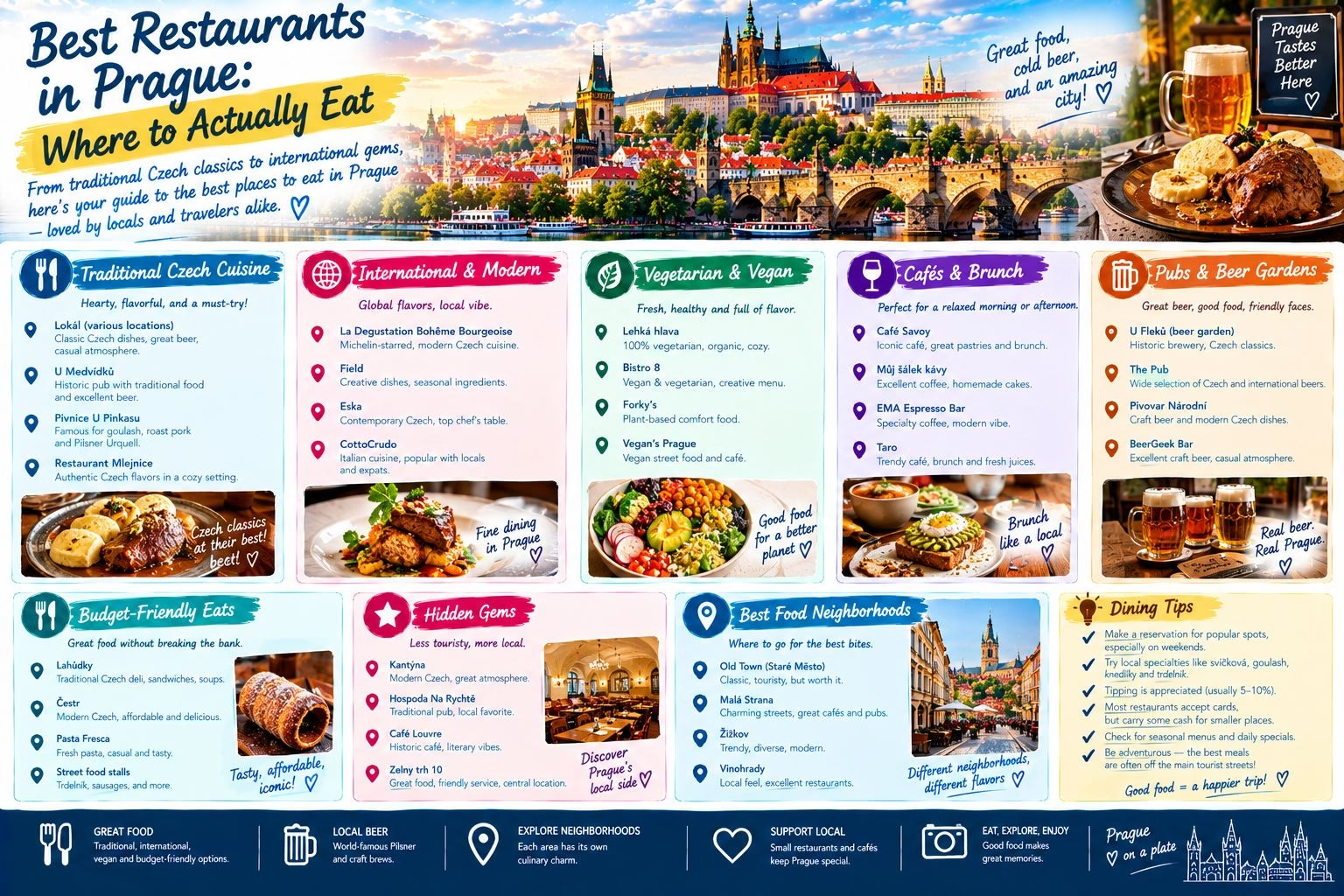
Prague’s restaurant scene has changed dramatically since 2010. The city now has genuinely excellent dining across multiple categories: traditional Czech cooking done with care and good ingredients, contemporary European cooking, excellent Asian options (particularly Vietnamese, which has a 50-year history in Czechoslovakia through the guest worker programmes of the communist era), and a farm-to-table movement that has produced some of the most interesting Czech food available.
This guide focuses on the practical navigation: how to find good food, what to eat where, and the price and quality differentiation between the tourist circuit and the neighbourhood restaurants where Prague residents actually eat.
The Tourist-Area Restaurant Problem
The restaurants within 200 metres of the Old Town Square and the Charles Bridge approach serve a mix of Czech food and international dishes at prices 2 to 3 times the non-tourist equivalent quality. This does not mean all of these restaurants are bad; it means the price-to-quality ratio is consistently worse than neighbourhood equivalents, and that some are specifically poor value.
Identifying a tourist-trap restaurant: laminated menus with photographs and multiple languages; prix fixe tourist menus; staff who approach passers-by to offer entry; prices for a main course above CZK 400 without a corresponding quality explanation. Avoiding these is not difficult with a five-minute walk in any direction from the tourist axis.
Traditional Czech Cooking: Where to Find the Best
Lokál (multiple Prague locations): The Lokál group specifically replicates traditional Czech pub food and beer experience at consistent quality. The formula: Pilsner Urquell poured properly, svíčková and goulash made from scratch, simple but accurate Czech cooking at non-tourist prices. The Dlouhá location (Old Town adjacent) and the Vinohradský Lokál (Vinohrady) are both excellent.
Krčma (Holečkova, Smíchov): A genuinely traditional Czech restaurant in a neighbourhood setting; the goulash and svíčková are consistently among the best in Prague. Reservations recommended for evenings.
U Pinkasů (Jungmannovo náměstí, New Town): One of the oldest Czech beer halls in Prague (operating since 1843), serving Pilsner Urquell and traditional Czech food in a large vaulted interior. Busy but reliable.
Vietnamese Food: A Specifically Czech Phenomenon
The Czech Republic has one of the largest Vietnamese communities in Europe, a product of the state-organised guest worker programmes of the communist period (1960s to 1980s). Vietnamese families who settled in Czechoslovakia, then Czech Republic, have run restaurants and market stalls for 50 years; the Vietnamese food in Prague is genuinely good and produced by families with deep roots in the city.
Pho Vietnam Tuan & Lan (Holešovice): The most widely recommended Prague Vietnamese restaurant; the pho is outstanding, the prices are very Czech, and the restaurant is perpetually full at lunch. A specific recommendation.
Bun Bo Nam Bo (near Holešovice): A second excellent Vietnamese option in the Holešovice cluster.
The Holešovice and Žižkov areas have the highest concentration of genuinely good Vietnamese restaurants; the Old Town area has almost none.
Contemporary Czech and Farm-to-Table
Field (Old Town): One of Prague’s better contemporary restaurants, using Czech and Bohemian ingredients in contemporary European cooking. The tasting menu format is the best expression; prices at the high end of the Prague range.
Eska (Holešovice, Manifesto area): Bakery and restaurant in a converted factory space; outstanding bread and pastry; the lunch menu offers good value for the quality level.
The Neighbourhood Restaurants of Vinohrady and Žižkov
The best value-to-quality ratio in Prague is consistently found in the neighbourhood restaurants of Vinohrady and Žižkov that serve the Czech professional class. These restaurants have no tourist trade, which means the quality depends entirely on keeping Czech regulars satisfied. The menus are shorter, the ingredients better, and the prices one-third to half of tourist-area equivalents.
The practical method: walk any street in Vinohrady between Náměstí Míru and the Riegrovy sady park. Every third or fourth door is a restaurant. Look for Czech menus, Czech patrons, and a daily menu board. These restaurants do not require advance booking except on Friday and Saturday evenings.
Booking a Table in Prague
Most of the neighbourhood restaurants recommended above do not need advance booking outside Friday and Saturday evenings; walking in and waiting a few minutes for a table is normal Prague practice. The exceptions are the higher-end contemporary restaurants (Field, Eska) and the well-known traditional spots (Krčma, U Pinkasů) on weekend evenings, which are worth booking two to three days ahead in summer. Most Prague restaurants now take bookings through their own website or by phone rather than a single unified platform; calling or messaging the restaurant directly is more reliable than assuming a listing site has live availability.
Related: Beer and Food Hub | Czech Beer Guide | Pub Culture | Solo Travel in Prague