
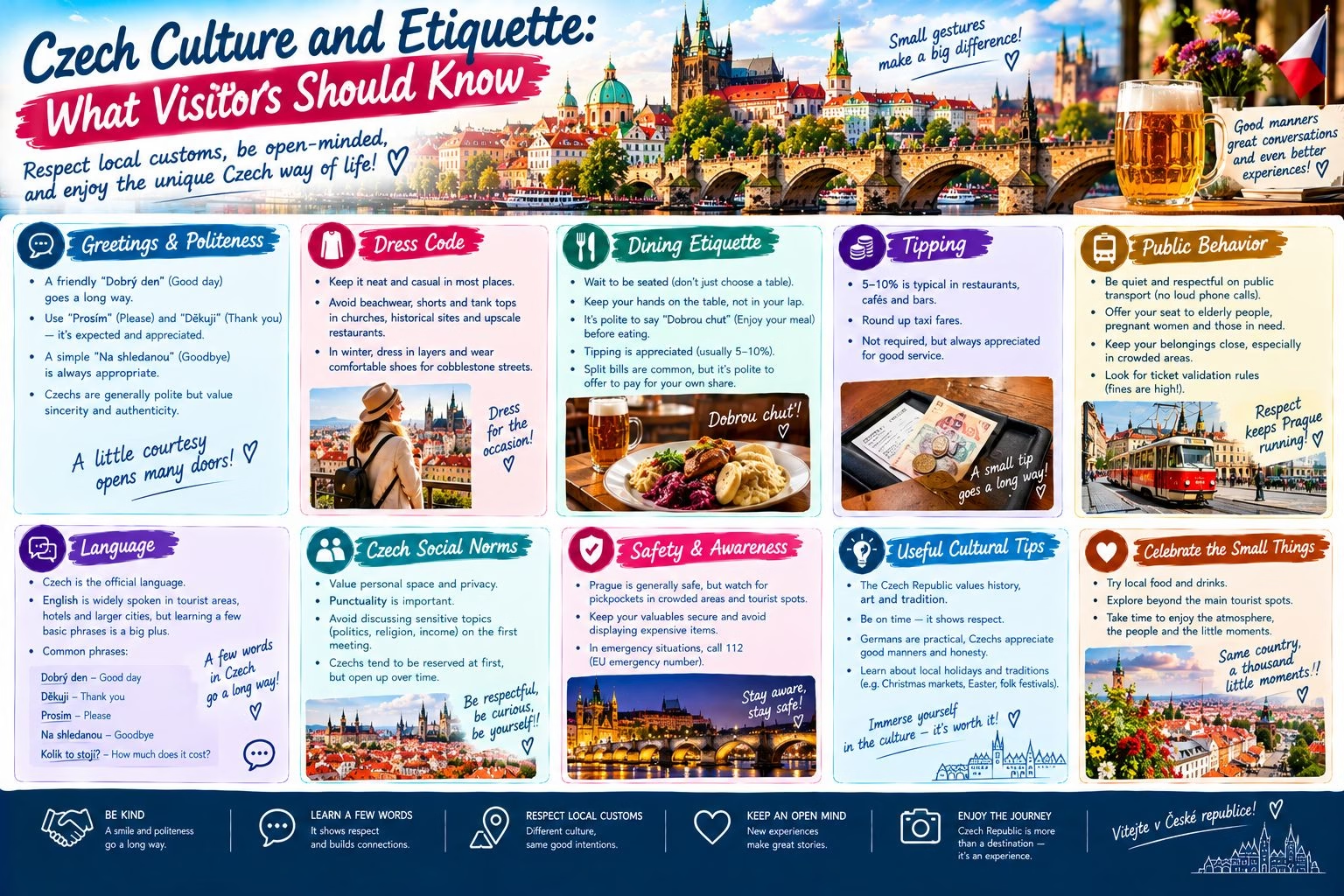
Czech culture has specific characteristics that visitors who understand them in advance navigate more smoothly and enjoy more than those who encounter them cold. The core cultural note: Czechs tend toward directness, understatement, and a certain restraint in public expression that can read as unfriendliness to visitors from more overtly warm cultures. It is not unfriendliness; it is a different register.
The Czech Social Register
Czech public social interaction is formal and relatively reserved with strangers. The difference between what a Czech person may be like in a private context (warm, funny, engaged) and in a public or initial encounter (direct, brief, limited small talk) is larger than in many Western European cultures. This gap is sometimes called “Czech distance” by expats; it is not a personal rejection but a cultural default.
Implications for visitors:
Service interactions: Czech shop assistants, train staff, and public service workers interact in a direct and functional manner. Small talk is not expected or offered in the same way as in American or Irish service culture. A Czech shop assistant who says “Dobrý den, prosím?” and completes the transaction without further conversation is not being rude; they are being Czech.
Getting friendlier: Czech people generally warm significantly in personal contexts and after repeated contact. The Czech capacity for friendship and hospitality is genuine and deep; it activates through time and repeated interaction rather than immediate warmth.
Greetings and Forms of Address
The formal/informal address distinction (vy versus ty) is important. Use vy (formal you, equivalent to German Sie or French vous) with strangers, service staff, older people, and professional contacts. Use ty (informal you) only when invited to do so or with clear peer-level contemporaries who have established an informal register.
Standard greetings:
- “Dobrý den” (good day): the universal daytime greeting for strangers and formal contexts.
- “Ahoj” (hi/bye): informal, for known people and peers.
- Addressing people by title plus surname (pan Novák, paní Nováková) is normal in professional and formal contexts.
Czech Beer Culture Etiquette
Czech pub culture has specific norms covered in detail in the pub culture guide. The key etiquette point for visitors: the Czech pub is a social space where the pace is slower, the conversation more central, and the hospitality more specific than in a tourist bar. Respecting the pace (not rushing the service, not waving for attention), the table-sharing norm, and the ordering system produces a significantly better experience.
Czech National Sensitivities
German versus Czech history: The Czech Republic’s relationship with Germany and Austria is complex; the Habsburg period (1526 to 1918) and the Nazi occupation (1939 to 1945) are not ancient history for Czech national consciousness. Prague’s Jewish Quarter stands as testimony to what the occupation meant for the Czech Jewish community; Terezín is an hour from Prague. Acknowledging this history where relevant is appropriate.
Communist period: The Czech experience of the communist period (1948 to 1989) includes both forced conformity and genuine suffering, particularly after 1968 when the Prague Spring was suppressed by Soviet tanks. The Velvet Revolution of 1989 is a central event in Czech national memory. Engaging with this history thoughtfully is received positively.
Czech national identity: Czechs are not Germans, Austrians, or generically “Eastern European.” The Czech Republic is Central European in geography and self-understanding; the conflation with generic Eastern Europe is mildly annoying to Czech people in the way that any generalisation about national identity is.
Public Behaviour
Noise on public transport: Czech tram, metro, and bus culture expects quiet in public transport. Loud phone conversations, group loudness, and music without headphones are noticeable and unwelcome.
Smoking: Czech Republic still has a more permissive smoking culture than Western Europe, although indoor smoking bans in restaurants and bars have been in effect since 2017. Outdoor café terraces may have smoking tables.
Visiting a Czech Home
Being invited into a Czech home is a genuine marker of trust, not a casual courtesy, and it comes with two customs worth knowing in advance. Shoes come off at the door without needing to be asked; most Czech households keep a set of guest slippers by the entrance for exactly this reason. Bringing something small (flowers, a bottle of wine, or something for any children in the house) is expected rather than optional, and flowers, if given, are traditionally presented in an odd number and unwrapped. Arriving on time or a few minutes early is the norm; unlike in some cultures, a relaxed attitude to timing is not assumed for a home visit.
Related: Practical Info Hub | Language Basics | Beer and Food: Pub Culture | Safety and Scams