
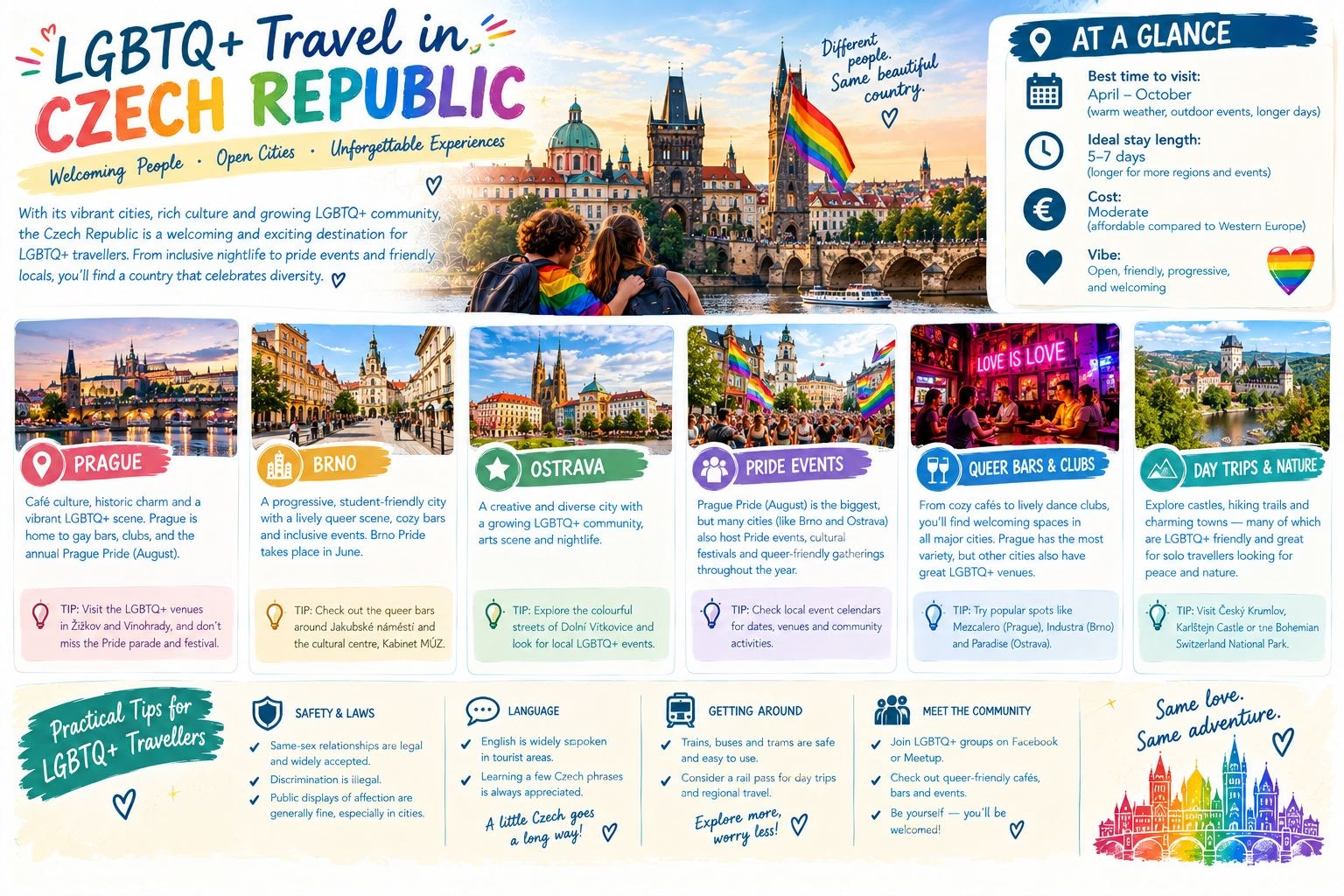
Prague and the Czech Republic are comfortable, welcoming destinations for LGBTQ+ travellers, with a legal and social environment that’s considerably more progressive than the country’s international reputation might suggest, and one of Central Europe’s more established gay scenes concentrated in Prague specifically.
The Legal Picture
Same-sex civil partnerships have been legal in the Czech Republic since 2006, and the country has consistently ranked among the more LGBTQ+-accepting nations in Central and Eastern Europe by survey data. Public attitudes, particularly in Prague and among younger Czechs, are broadly tolerant, closer to Western European norms than to the more conservative positions found in neighbouring Poland or in parts of Central Europe further east.
Prague’s Scene
Prague has an established gay scene concentrated in the Vinohrady neighbourhood, sometimes informally called Prague’s gay village, with bars, clubs, and cafés with a visible LGBTQ+ clientele and, notably, the same neighbourhood this site recommends generally for its café culture and liveability. Prague Pride, held in August, is one of the larger Pride events in Central Europe and draws visitors from across the region.
Specific Venues and the Scene’s Character
The Vinohrady scene runs from relaxed neighbourhood bars with a mixed, welcoming crowd through to dedicated clubs with a livelier nightlife atmosphere, giving visitors a genuine range rather than a single type of venue. Compared with Berlin or Amsterdam, Prague’s scene is smaller and less globally famous, but it’s well-established, safe, and increasingly confident, having grown considerably since the early 2000s. Prague Pride week includes a parade through the city centre, cultural events, and film screenings alongside the nightlife, and has become a genuine city-wide event rather than a niche gathering.
Where to Be More Cautious
Public attitudes are more conservative outside Prague and the other major cities, and in smaller towns and rural areas discretion is the more comfortable default, less because of any specific hostility risk and more because visible LGBTQ+ life is simply less present as a social reference point. This is a difference in visibility and social norm rather than legal risk or a meaningful safety concern.
The Regional Comparison
Within Central Europe, the Czech Republic sits toward the more progressive end alongside Slovenia, ahead of Poland and Hungary, both of which have seen more overtly hostile political rhetoric toward LGBTQ+ rights in recent years. This regional context is worth knowing if your itinerary extends beyond the Czech Republic into neighbouring countries, since the comfort level and legal protections can shift noticeably once you cross those borders.
Practical Travel Notes
Holding hands or ordinary public affection in Prague draws no particular attention in most neighbourhoods, particularly Vinohrady, the Old Town, and Malá Strana. Hotels and accommodation platforms don’t discriminate, and there’s no legal barrier to booking a room as a couple regardless of gender. Standard urban safety precautions, the same ones covered in the general safety guide, apply equally.
Meeting People and Community
Vinohrady’s bar and café scene is the natural starting point, and Prague Pride in August is a good opportunity to connect with both the local community and other LGBTQ+ travellers if your visit aligns with it. The broader Vinohrady neighbourhood culture, covered in the Vinohrady and Žižkov guide, overlaps significantly with the city’s queer social scene.
Practical Takeaway
The Czech Republic, and Prague specifically, is one of the more comfortable Central European destinations for LGBTQ+ travellers, with an established scene, legal protections, and broadly accepting social attitudes in the cities. Exercise the ordinary discretion that makes sense in smaller towns, and Prague itself presents very few practical concerns.
Related: Vinohrady and Žižkov | Solo Travel Hub | Practical Info: Safety