
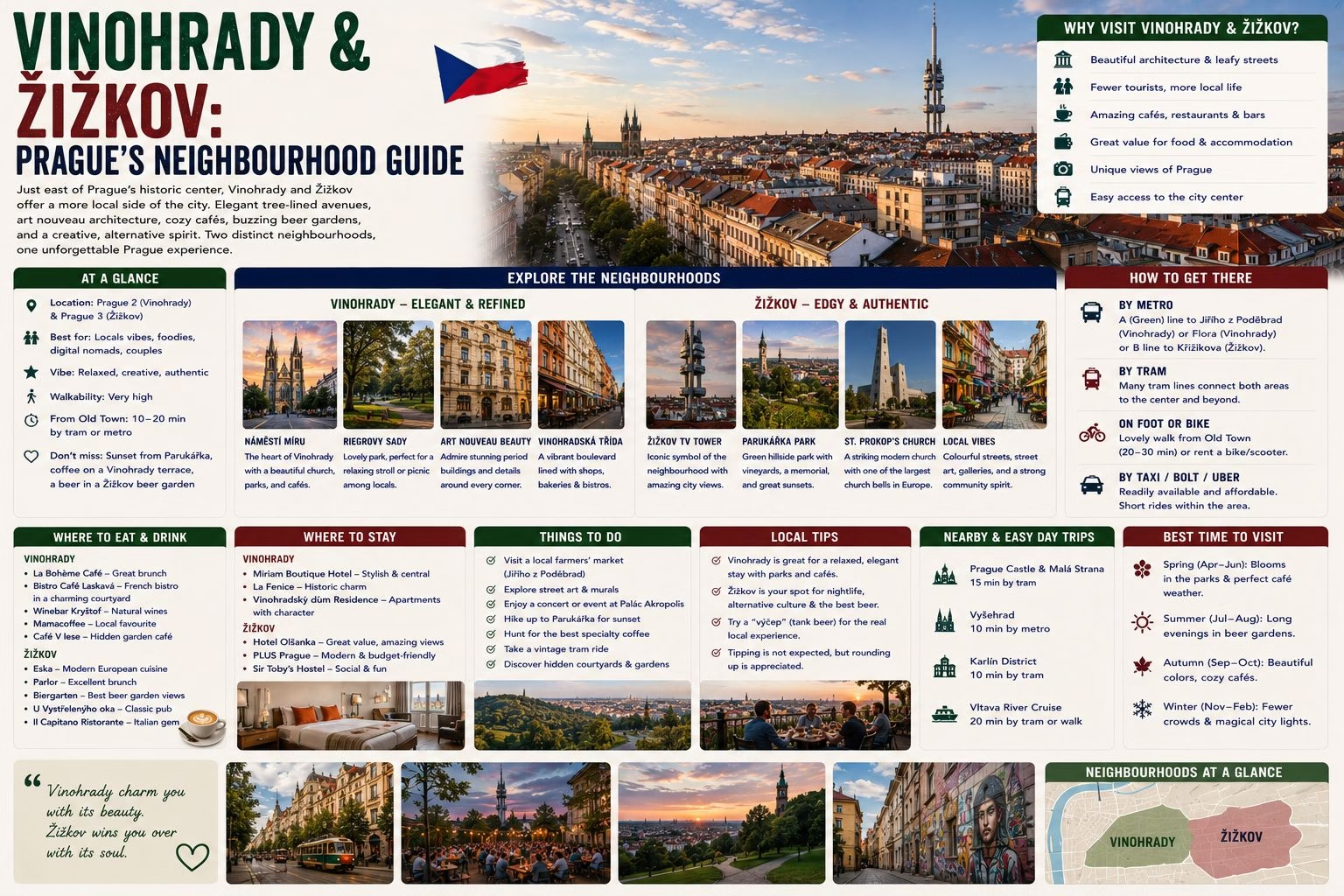
Vinohrady and its eastward neighbour Žižkov are where Prague lives when it is not performing for tourists. These two adjacent neighbourhoods, 15 to 20 minutes by tram from the Old Town Square, represent the Prague that visitors encounter on their second or third trip when they have stopped racing from monument to monument and started noticing the city that surrounds the monuments.
Vinohrady: Prague’s Most Liveable Neighbourhood
Vinohrady (the name means “vineyards” in Czech; the area was wine-growing land before 19th-century urbanisation) was developed in the 1880s to 1930s as a prosperous residential neighbourhood for the Czech middle class. The street grid is regular and wide; the apartment buildings are overwhelmingly Art Nouveau, Secession, and Functionalist; the pavements have the specific combination of mature lime trees and ornate lamp posts that marks this as one of the best-designed 19th-century urban extensions in Central Europe.
The neighbourhood feels different from the Old Town in every respect: quieter, less crowded, primarily residential rather than touristic, with the rhythms of a neighbourhood that functions for people who live there. The cafés fill up on weekend mornings with parents, couples, and people reading. The wine bars in the evening are primarily for residents. The restaurants serve the daily menu at lunch and regional Czech and Central European food in the evening.
What to Do in Vinohrady
Náměstí Míru (Peace Square): The central square of Vinohrady, dominated by the Neo-Gothic Basilica of St Ludmila (1890s; the best example of Neo-Gothic ecclesiastical architecture in Prague, rivalling some of the authentic Gothic buildings in the Old Town for visual impact). The square is the social hub of the neighbourhood: the farmer’s market on Saturdays, the Christmas market in December, the outdoor café terraces in summer.
Riegrovy sady park: The large park on the border between Vinohrady and Žižkov, with a beer garden that has the most famous panoramic view in Prague outside the castle: looking west over the rooftops toward the Old Town and the spires of the Týn Church and St Vitus. Particularly good at sunset; bring a beer from the garden (Gambrinus or Braník, the beers that are actually on tap at Riegrovy sady) and watch the city turn gold. Free.
The Vinohrady café scene: The neighbourhood concentration of independent cafés, particularly in the streets around Mánesova and Blanická, is the best in Prague. Kavárna Místo, Café Pavlač, EMA Espresso Bar, and the wine bars along Slavíkova are specific recommendations that Jan Marek covers in more detail in the coffee and café guide.
Žižkov: The Traditional Prague Working-Class Neighbourhood
Žižkov, east of Vinohrady, has a different character: historically working-class, traditionally the highest pub-per-capita density of any Prague district, and home to two of the city’s most distinctive structures.
The Žižkov TV Tower: Completed in 1992, the 216-metre tower is the tallest structure in the Czech Republic and the most controversial piece of architecture in Prague. The contemporary artist David Černý’s addition of 10 giant crawling babies (sculptures of babies with QR codes for faces) climbing the tower make it even more unusual. The viewing platform at 93 metres is open to visitors; the lift costs approximately CZK 300. The tower is most interesting as a city panorama and as a conversation piece; it divides opinion as strongly as any piece of recent Czech public art.
Žižkov pubs: Žižkov’s traditional hospoda culture is the closest thing to old Prague pub life available in the inner city. The pubs in the neighbourhood around Seifertova and Bořivojova are frequented primarily by Czech residents, serve Gambrinus or Kozel at CZK 40 to 55 per half-litre, and have the specific atmosphere of a working-class Czech pub that has not been renovated for tourist comfort.
The Žižkov Hussite military architecture: Žižkov was founded as a fortified position by the Hussite armies in 1420; the National Memorial on Vítkov hill commemorates the Hussite victory over the Crusaders at the Battle of Vítkov in 1420. The equestrian statue of Jan Žižka on the hill is one of the largest equestrian statues in the world; the view from the memorial over the city is excellent and entirely tourist-free.
Getting to Vinohrady and Žižkov
Tram 11 (from Lazarská in Nové Město) and trams 22 and 23 (from Náměstí Míru) serve the main parts of Vinohrady. Metro line A (green line) has stations at Náměstí Míru and Jiřího z Poděbrad, both in the heart of Vinohrady. Žižkov is most easily reached by tram from the Old Town (trams 5, 26) or by walking from Vinohrady.
Vinohrady for Longer Stays and Families
Vinohrady’s residential character, described above, is also why it is Prague’s default neighbourhood for expats, digital nomads, and families staying beyond a short city break. The playgrounds in Riegrovy sady and the smaller neighbourhood parks see a genuine mix of local and international families, the medical clinics around the neighbourhood serve the expat community directly, and the supermarket and pharmacy density is higher than in the Old Town or Malá Strana, which matters more than proximity to monuments once a stay passes a week. Visitors planning a longer stay in Prague, whether for remote work or an extended visit, will find the practicalities of daily life covered in the Prague cost of living guide and the living in Prague guide.
Related: Solo Travel in Prague | Expat and Nomad Hub | Where to Stay in Prague | Prague Nightlife