

If you’re planning your first trip to the Czech Republic, this is the fastest way to get oriented: the essentials that shape every other decision, currency, safety, transport, and timing, in one place.
The Currency Isn’t the Euro
The Czech Republic uses the Czech koruna (CZK), not the euro, despite EU membership. Use a bank ATM for cash, never a tourist-street currency exchange booth, and decline any offer to be charged in your home currency at a card terminal or ATM. The money and currency guide covers this in full.
It’s Safe, With Financial Rather Than Physical Risks
Violent crime against visitors is uncommon. The real risks are financial: taxi overcharging, currency exchange scams, and inflated tourist-area restaurant bills. Use Bolt or Uber instead of street taxis, and eat where the menu is primarily in Czech. The scams guide covers the specific patterns.
Public Transport Is Excellent and Cheap
Prague’s tram, metro, and bus network runs on a single integrated ticket, CZK 40 for 90 minutes, CZK 120 for 24 hours, and you don’t need a car for a Prague-based trip. Validate your ticket after buying it; an unvalidated ticket is treated as no ticket by inspectors.
Do You Need a Visa?
Most Western nationalities, EU, UK, US, Canadian, Australian, and others, can enter visa-free for up to 90 days within any 180-day period, since the Czech Republic is a full Schengen Area member. Check the visa and entry requirements guide if you’re unsure whether your nationality needs to apply in advance.
Prague Is Most of the Country’s Search Demand for a Reason
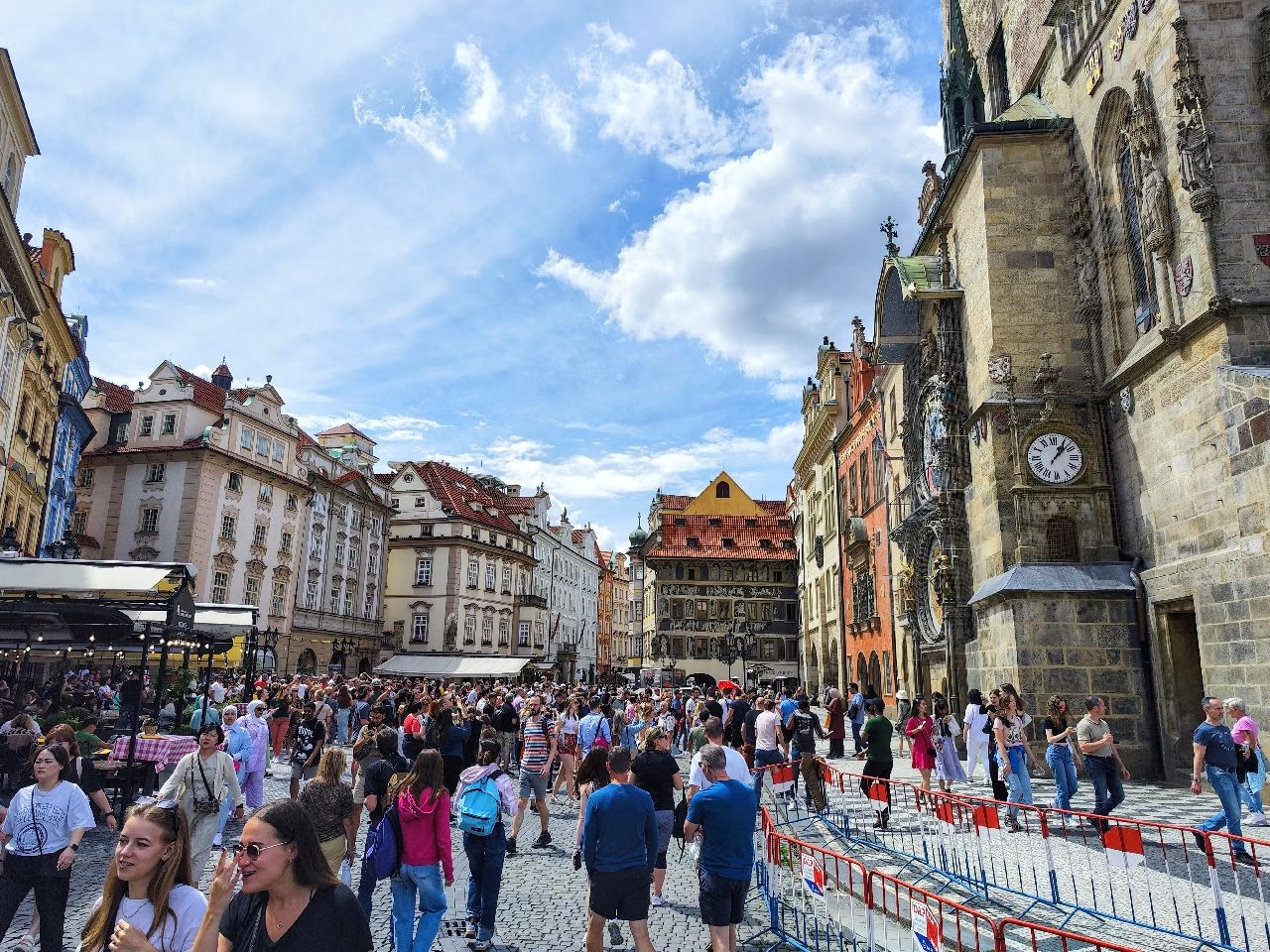
Prague accounts for the overwhelming majority of what draws visitors to the Czech Republic, and it earns that attention: a historic centre that survived the 20th century intact, the largest ancient castle complex in the world, and neighbourhoods, Vinohrady, Žižkov, Holešovice, that reward exploration beyond the Old Town Square. Start with the Prague hub.
Give It More Than a Weekend if You Can
Three days covers Prague’s essentials. A week lets you add Český Krumlov and Kutná Hora, the two strongest day trips. The how many days guide breaks this down by trip length.
Go Beyond the Old Town Square for Food and Drink
Restaurants directly on the Old Town Square charge two to three times what an identical meal costs one or two streets away, and Czech beer culture, genuinely one of the world’s best, is best experienced at a neighbourhood hospoda rather than a tourist bar. The beer and food hub covers where to actually eat and drink.
English Works in Prague, Less So Beyond It
Prague and the tourist infrastructure are comfortably English-friendly. Smaller towns and the older generation are more variable; a handful of Czech phrases go a long way, covered in the language basics guide.
Shoulder Season Is the Sweet Spot
Late April to May and September offer the best balance of good weather, thinner crowds, and reasonable prices. July and August are beautiful but genuinely crowded; the best time to visit guide covers every month.
What to Pack
Comfortable, flat walking shoes are the single most important item; Prague’s cobblestones are hard on anything else. Beyond that, pack in layers for spring and autumn, and check the season-specific detail in the packing guide before you go.
If You’re Travelling Alone
The Czech Republic is genuinely one of the more comfortable solo travel destinations in Europe, helped considerably by the pub culture’s habit of sharing tables with strangers. The solo travel hub covers safety, meeting people, and budget specifics for anyone travelling on their own.
If You’re Considering a Longer Stay
Many visits to Prague turn into longer stays, and the expat and nomad hub picks up exactly where a short trip leaves off: visas, healthcare, banking, and the practicalities of actually living here rather than just visiting.
Where to Go From Here
The Plan Your Trip hub covers booking logistics, budget, and visa requirements in full. Once you’re oriented, the Prague hub and day trips hub are where the real planning starts.
Related: Plan Your Trip | Prague Hub | Practical Info Hub