
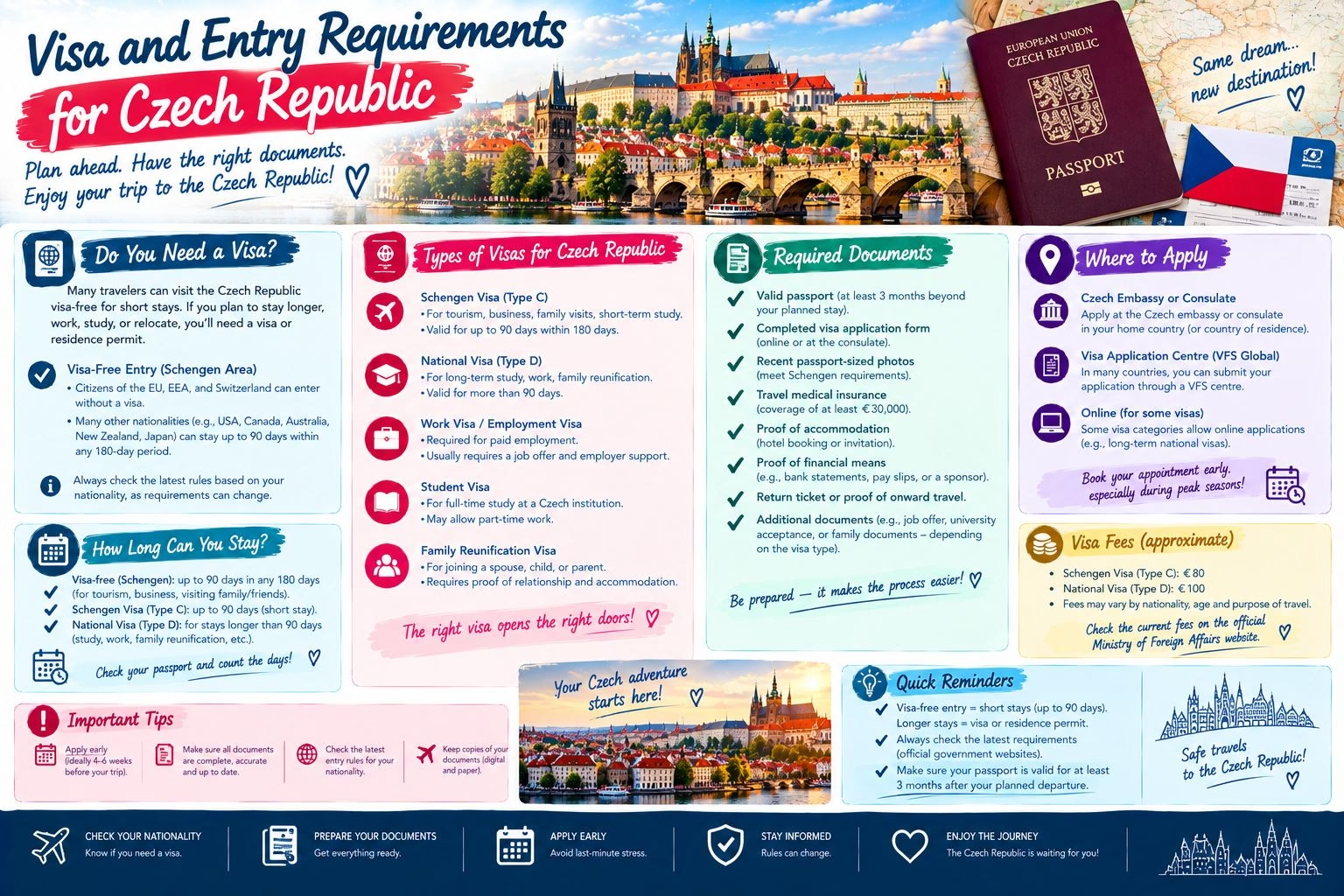
The Czech Republic is both a member of the European Union and a member of the Schengen Area, and the entry requirements follow from both memberships. The Schengen Area determines the practical visa requirements for most international visitors; EU membership determines the rights of EU citizens visiting or residing in the country.
The Schengen Area and Czech Republic Entry
The Czech Republic joined the Schengen Area in 2007. This means that entry into the Czech Republic from another Schengen country is an internal border crossing with no systematic passport controls. Entry from outside the Schengen Area uses the Schengen external border rules.
Who Does Not Need a Visa
The following nationalities can enter the Czech Republic, and the entire Schengen Area, without a visa for tourist and short-stay visits of up to 90 days within any 180-day period:
All EU and EEA citizens (free movement rights, not merely visa-free tourism).
UK citizens: despite Brexit, UK passport holders retain visa-free access to the Schengen Area for up to 90 days in any 180-day period for tourism. This is a current and ongoing arrangement; verify the current status before travel as UK-EU relations evolve.
US, Canadian, Australian, New Zealand, Japanese, South Korean, Israeli, and most other Western passport holders have visa-free Schengen access.
The Czech Ministry of Foreign Affairs (mzv.gov.cz) maintains the authoritative and current list. Check before travel, as visa agreements change.
The 90-Day Schengen Calculation
The 90-day limit applies to the entire Schengen Area, not to the Czech Republic specifically. Days spent in Germany, Austria, France, Poland, Slovakia, or any other Schengen member state all count toward the same 90-day allowance. The calculation is rolling: 90 days within any 180-day period, not 90 days per calendar year.
For visitors combining Czech Republic with neighbouring Schengen countries (which is common: Prague, Vienna, Budapest is a popular Central Europe circuit), track the Schengen days accurately. The entry stamp shows the entry date; the exit stamp shows the departure; the total accumulated days must not exceed 90.
EU and EEA Citizens
EU and EEA citizens have the right to live, work, and remain in the Czech Republic under EU free movement law. Entry with a national identity card (without a passport, in most cases) is permitted. Registration with the Czech Foreign Police (cizinecká policie) is required after 30 days of residence; tourist visitors below this threshold have no specific registration requirement.
ETIAS: European Travel Information and Authorisation System
The EU is implementing ETIAS, an electronic pre-travel authorisation system for visa-exempt non-EU visitors, modelled on the US ESTA. As of August 2026, ETIAS is still not operational: the EU had targeted the last quarter of 2026, but removed that date from its official pages in July 2026 after concluding the timeline was no longer feasible, and a 2027 launch is now considered the more realistic outcome.
No applications are being accepted anywhere; treat any site offering to process an ETIAS application now as a scam. Visitors from the UK, USA, Canada, Australia and other visa-exempt countries can currently enter with just a passport, exactly as before. Once a firm date is set, the EU has committed to announcing it several months in advance; check travel-europe.europa.eu/etias for the current status closer to your travel date.
Entry from Austria, Germany, Slovakia, and Poland
The Czech Republic shares land borders with Germany to the west, Austria to the south, Slovakia to the east, and Poland to the north. All four are Schengen members. Border crossings with these countries have no systematic passport or customs controls; you drive or take a train across without stopping. Border police may conduct random spot checks but routine crossing is seamless.
Longer Stays: Residence Permits
For stays longer than 90 days, the Czech Republic requires a residence permit or long-stay visa. The options relevant to most visitors considering extended stays:
Long-stay visa (Category D): for stays of 90 days to 1 year; applied for at the Czech embassy in your home country. Categories include tourism/private purposes, business, study, and employment.
Temporary residence permit: for stays beyond 1 year; applied for within the Czech Republic with various category options.
The Czech digital nomad visa (Long-Stay Visa for Freelancers and Self-Employed) is covered in detail in the expat and nomad visa guide. The full expat residency process is also covered there; the visa section here focuses on standard tourist entry requirements only.
What Changes When ETIAS Launches
When ETIAS does go live, entering the Czech Republic and the rest of the Schengen Area on a passport from a visa-exempt country will still not require a visa; ETIAS is a lightweight pre-travel screening, not a visa, and the EU has built in a transitional period of at least six months during which travellers without an authorisation can generally still enter if they meet the other entry conditions. The practical change for most visitors will be a ten-minute online form and a small fee completed before departure, roughly comparable to the US ESTA or the UK’s own ETA. Nothing needs to be done now; there is no application to submit until the system is officially live.
Related: Plan Your Trip | Budget Guide | Expat and Nomad: Visa and Permits