
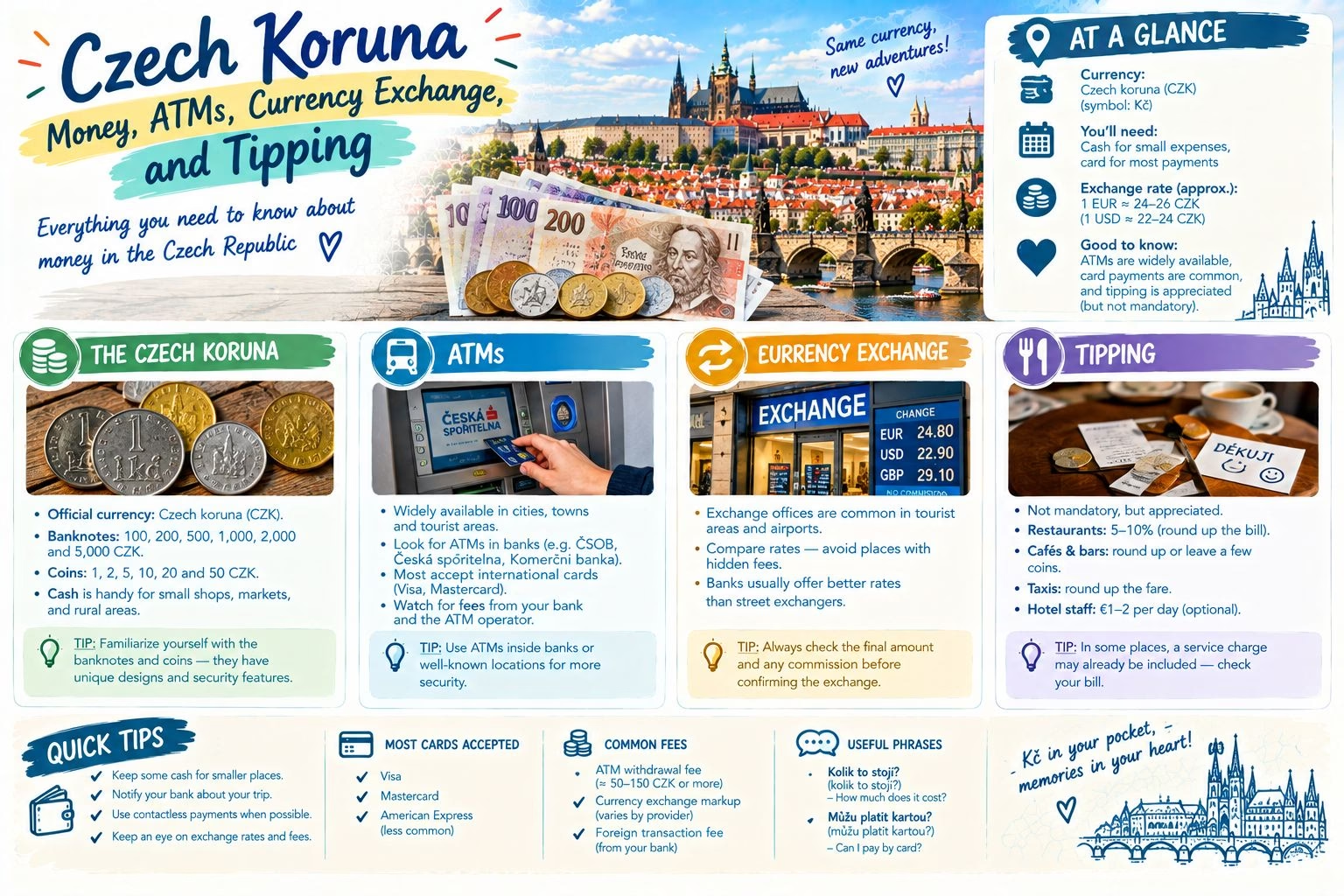
The Czech Republic uses the Czech koruna (CZK, abbreviated Kč in local use). Understanding the currency and the specific traps in the Czech tourist-area financial infrastructure is the most practically valuable preparation for a Czech visit.
Exchange Rate and Mental Arithmetic
CZK 25 to 27 per euro (approximate; verify at xe.com for the current rate). CZK 22 to 24 per US dollar. CZK 30 to 33 per UK pound.
Useful mental arithmetic: divide the CZK price by 25 to get the approximate euro equivalent. A beer at CZK 65 is approximately EUR 2.60; a restaurant meal at CZK 350 is approximately EUR 14.
Czech prices look larger than they are in Western currencies because the koruna denomination is larger. CZK 1,000 is approximately EUR 40, not EUR 1,000.
How to Get Czech Koruna
Bank ATM (Bankomat in Czech): The correct method for all visitors. The major Czech banks (Česká spořitelna, Komerční banka, ČSOB, Raiffeisenbank) all have ATMs throughout Prague and other Czech cities. Using a bank ATM with an international debit or credit card provides the bank interbank exchange rate, which is the best available.
Specific ATM tips: avoid the freestanding “Euronet” ATMs found in tourist areas, which charge significant additional fees and offer worse rates. Use the ATMs attached to bank branches (inside the branch or in the external wall of the building). If offered “dynamic currency conversion” (converting the withdrawal to your home currency instead of CZK), decline; this always uses a less favourable rate.
Currency exchange offices (směnárny): Widespread in tourist areas and almost uniformly offering poor rates. The “0% commission” signs are not dishonest (there is sometimes literally no commission), but the exchange rate itself is set several percent below the bank rate in lieu of commission. The “0% commission” sign specifically directs attention away from the rate, which is where the profit is.
Card Payments
Czech Republic is reasonably card-accepting by Central European standards. Restaurants and hotels generally accept Visa and Mastercard. However:
Traditional Czech hospody (pubs): frequently cash only.
Market stalls: cash only.
Smaller shops and service businesses: variable; have cash available.
Prague public transport ticket machines: accept cards and cash.
Carry CZK 500 to 1,000 in cash at all times as a buffer for the cash-only situations.
Tipping
Czech tipping practice: round up to the nearest round number for small purchases (taxi, coffee); add 10 percent for restaurant meals with service. The method: when told the total, state the amount you wish to pay. If the bill is CZK 285, say “Tři sta” (three hundred) and the server will return the change; if you do not want change, say “Nechte to” (keep it).
Leaving tip money on the table after paying by card is fine; telling the server “leave the change” when paying by card is the simplest method.
Euro in the Czech Republic
Some Prague hotels and tourist-area establishments accept euro. The exchange rate applied is always less favourable than using Czech koruna. Pay in koruna wherever possible.
Contactless and Mobile Payments
Contactless card payments are the default in Prague and most Czech cities, and Apple Pay and Google Pay work at the vast majority of card terminals, including public transport ticket machines and most shops and restaurants. The gap is the same one noted above: traditional pubs, market stalls, and smaller village businesses often only take cash, so the CZK 500 to 1,000 buffer is worth carrying even for visitors who plan to pay by phone everywhere else.
Related: Practical Info Hub | Safety and Scams | Plan: Budget | Prague Transport