
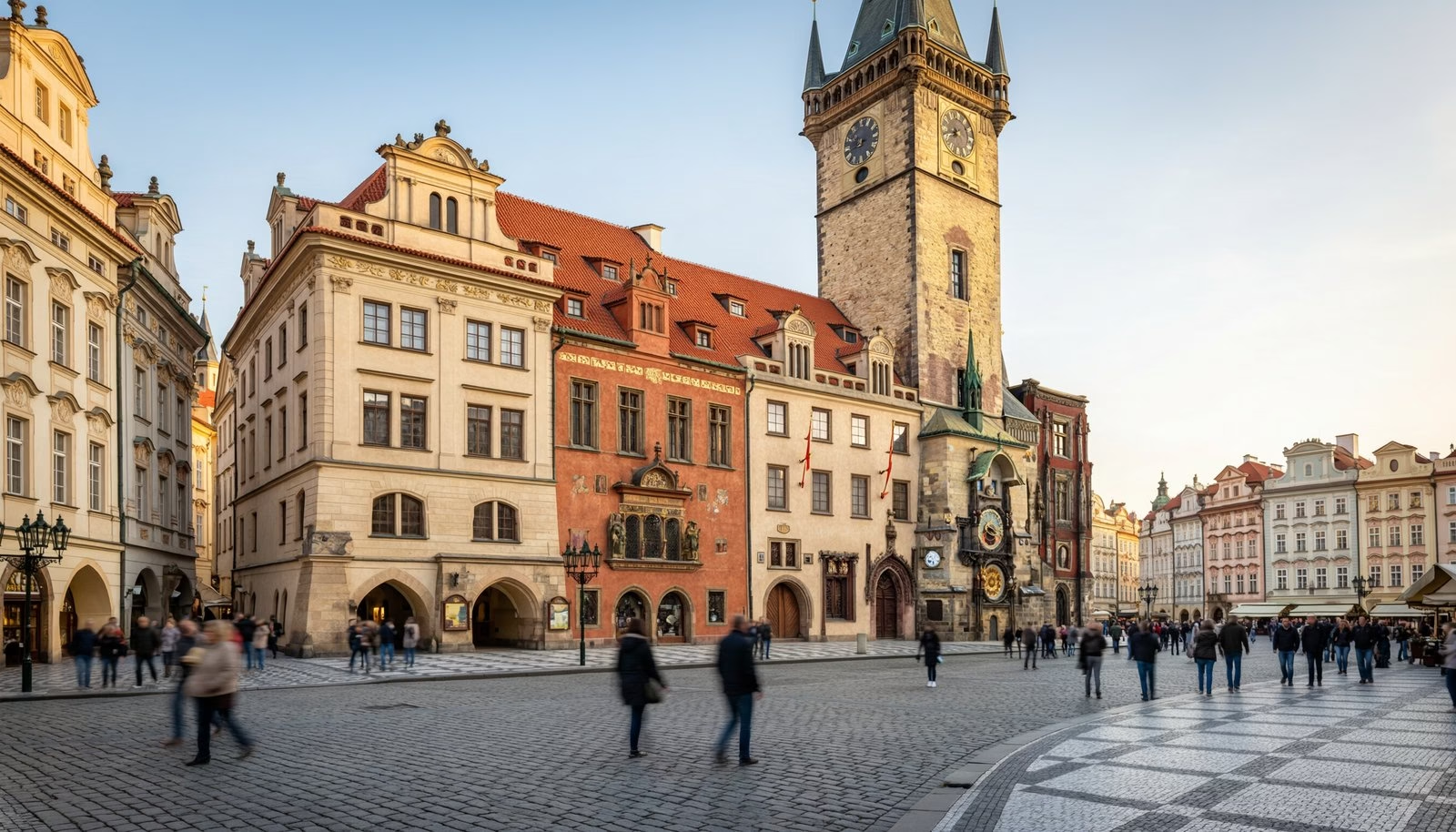
Prague has a well-developed tourist scam landscape that has been refined over 30 years of high-volume international tourism. The scams are not violent or physically threatening; they are financial, and they specifically target visitors who do not know the correct prices. Understanding them before arrival is the most effective protection.
The Taxi Scam: The Most Expensive Single Encounter
Unofficial taxis approached by drivers on tourist streets in Prague can charge 5 to 15 times the correct fare. The mechanism: the meter is either rigged to run fast, or the driver uses a different rate setting than the regulated Prague tariff. The meter looks like it is working; the price it produces at the end is not correct.
The most common approach: a driver standing outside the taxi (not sitting inside) who offers to take you somewhere at a “good price.” The “good price” agreement is verbal; the meter overrides it.
How to avoid: Use Bolt or Uber exclusively for all Prague taxis. Both apps show the price before you book; the driver is identified and tracked; the payment is through the app so there is no cash dispute. The price is consistently 3 to 5 times cheaper than the unofficial taxis and comparable to the regulated taxi companies for short journeys.
If you cannot use a ride app: legitimate Prague taxi companies include AAA Radiotaxi (phone +420 14014) and Tick Tack (+420 14222). Only take taxis from these companies or from the official airport taxi ranks.
The Currency Exchange Scam: The Most Systematic
Tourist-area money changers in Prague operate a sophisticated multi-version scam:
Version 1: Advertised rate not applied: The rate on the board (often genuinely good, to attract attention) changes at the point of transaction. “That rate is only for transactions over €500.”
Version 2: 0% commission on a bad rate: The rate is set several percent worse than the bank rate, but the “0% commission” sign distracts from this. Technically not fraudulent; effectively a premium of 10 to 20 percent.
Version 3: Small denomination bills: Change given in 100 CZK notes instead of 1000 CZK notes; the visitor counts fewer notes than they expect and may not check carefully.
How to avoid: Use a bank ATM only. Česká spořitelna, Komerční banka, and ČSOB all have ATMs in the city centre offering the bank interbank rate. Decline “dynamic currency conversion” offers (paying in your home currency rather than CZK always uses a bad rate). The airport has bank ATMs after passport control; use these on arrival rather than the exchange offices in the arrivals hall.
The Restaurant Bill Scam
Several tourist-area restaurants in Prague use specific tactics to inflate bills:
Bread and condiments: Bread brought to the table without being ordered or described as free, then charged CZK 40 to 80 per person. Usually listed somewhere in small print; sometimes not.
Tap water charge: Water brought to the table without being specified as tap water, then charged as bottled water.
Service charge: An undisclosed service charge added as a line item without prior mention. In Czech Republic, unlike some other countries, a service charge is not standard or legally required; if it appears without prior menu disclosure, you can query it.
How to avoid: Look at the menu for a “service charge” line before ordering. Ask about bread and condiments before accepting them. If a bill is significantly higher than expected, ask for itemisation and challenge any items you did not order or agree to.
The Astronomical Clock Crowd
The clock performance on the hour draws a large crowd to the Old Town Square, which is specifically used by pickpockets: the concentrated, upward-looking crowd is ideal for unnoticed pocket access. Keep your bag in front of you and your phone in an inner pocket while watching the clock.
If You Have Already Been Scammed
If a taxi or currency exchange has already overcharged you, the fastest recourse for a card payment is disputing the charge with your bank once you are home; keep any receipt, however dubious it looks, since it is still evidence of the transaction. For anything more serious, or if you want it on record locally, the nearest police station can take a report; officers in central Prague tourist districts generally speak enough English to handle a straightforward complaint, and the report itself is often what a travel insurance claim requires.
For a same-day dispute over a restaurant bill, asking the restaurant for an itemised receipt and querying specific lines before paying is more effective than raising it after you have already settled the bill.
Related: Practical Info Hub | Safety Guide | Prague Transport | Money and Currency