
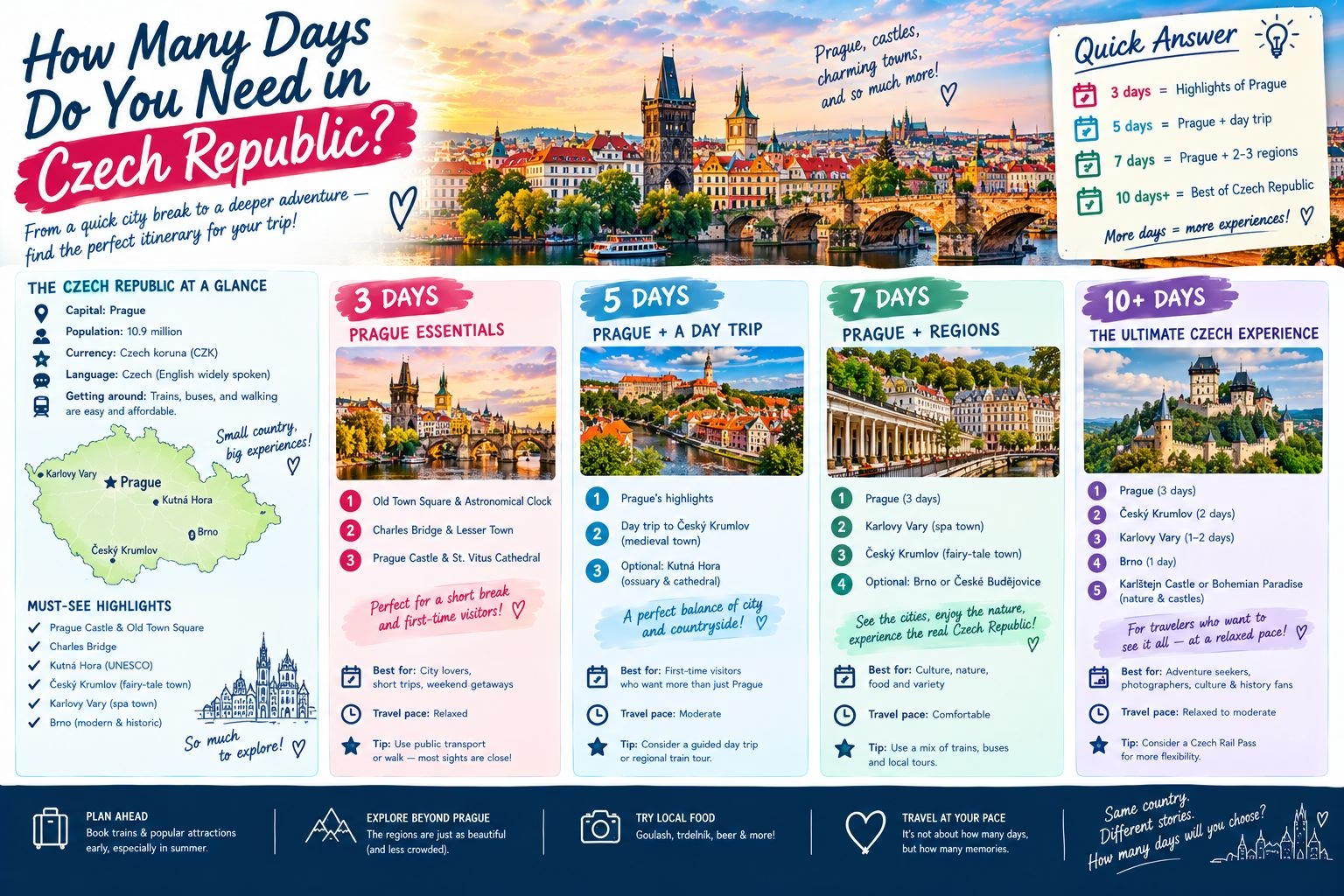
The Czech Republic is a small country with a very specific visitor-demand distribution: the capital Prague accounts for the overwhelming majority of international tourism, and Prague is a city dense enough to justify 3 to 5 days on its own before the day trip circuit is even considered. Understanding this demand distribution is the key to planning the right length of trip.
The Framework by Trip Length
3 to 4 days: Prague focus
Three days is the minimum for a meaningful Prague experience. The standard first-visit circuit covers the Old Town, the Jewish Quarter (Josefov), Malá Strana, and Prague Castle in two days; the third day should go somewhere off the tourist axis: Vinohrady for the afternoon café and neighbourhood character, or the Vyšehrad fortress (free, excellent views, almost no tourists compared to the castle), or the Holešovice district for the contemporary side of the city.
Four days adds a half-day trip to Karlštejn (40 minutes by train, easy to combine with an afternoon back in Prague) or a full morning at the Stromovka park and Výstaviště, Prague’s undervisited exhibition grounds and park in Holešovice.
5 to 7 days: Prague plus one or two day trips
The natural first-time visit length. Five days allows Prague properly explored plus one full-day trip (Český Krumlov, bus 3 hours each way) or two half-day trips (Kutná Hora by train, 1 hour, plus Karlštejn by train, 40 minutes).
Seven days adds a second full-day trip, or an overnight stay in Brno (the Czech Republic’s second city, 2.5 hours by fast train, genuinely worth one night for those with the time).
8 to 14 days: Beginning to understand the country
Eight days or more allows for a circuit that goes beyond Prague: perhaps Prague for 4 days, then overnight in Český Krumlov (arriving the afternoon before, spending the evening in the town without the day visitors, leaving after a morning walk), then a day in Plzeň for the Pilsner Urquell brewery on the way back to Prague.
For 10 to 14 days, adding Moravia opens a different Czech experience: the wine regions of Znojmo and Mikulov, the city of Olomouc (one of the most underrated Czech cities, well-preserved Baroque centre, essentially no international tourism), and the UNESCO-listed city of Telč.
The Day Trip Question in Detail
The most important practical consideration: Czech day trips require more travel time than visitors usually expect, and significantly less time in the destination is actually needed. This asymmetry matters:
Český Krumlov: 3 hours each way by bus. The town itself needs 4 to 6 hours to see properly (castle, old town, river walk). Total day: 10 to 12 hours including travel. This is a full day; do not attempt it as part of a day that also includes significant Prague sightseeing.
Kutná Hora: 1 hour each way by train. The Bone Church (Kostnice) in Sedlec, the Cathedral of Saint Barbara, and the old town centre together need 3 to 5 hours. Total half-day: 5 to 7 hours including travel. Works well as a morning departure from Prague.
Karlštejn: 40 minutes each way by train. The castle exterior and interior tours (tickets required in advance for interior) need 2 to 3 hours. Total: 4 to 5 hours. Works as an afternoon trip or morning trip.
Karlovy Vary: 2.5 hours each way by bus (direct FlixBus). The spa town needs 4 to 5 hours to walk the colonnades, try the spa waters from the spring fountains, and eat lunch. Total: 9 to 10 hours. Full day required.
Plzeň: 1.5 hours by fast train. The brewery tour (including the underground cellars, the most interesting part) needs 2.5 to 3 hours; the old town centre another hour. Total: 6 to 7 hours. Full day or half-day depending on which activities you prioritise.
Building the Itinerary Around Crowd Management
The most effective day trip strategy for summer visits is to go on weekdays rather than weekends. Český Krumlov on a Saturday in July is extremely crowded; Český Krumlov on a Tuesday in September is an entirely different experience. If weekend day trips are the only option, the early bus (departing Prague by 7 to 8am) reaches most destinations before the main tourist wave arrives.
For Prague itself, the Old Town area is best experienced in the early morning (before 9am) or the evening (after 7pm) during summer. The rest of the day, the tourist circuit is at maximum capacity. Planning the morning for the Old Town and the afternoon for outer neighbourhoods or the day trip is the most efficient structure for peak season visits.
If You Can Only Choose One Length
For a first visit with no strong preference either way, seven days is the length most likely to feel right in hindsight: enough for Prague to stop feeling rushed and for two genuinely different day trips, short enough that nothing gets skipped for lack of time. Five days is the safer choice for a first trip to Europe generally, or for visitors combining the Czech Republic with another country. Anything under four days should stay Prague-only rather than squeezing in a day trip that ends up rushed on both ends.
Related: Plan Your Trip | Best Time to Visit | Itineraries | Day Trips Hub