
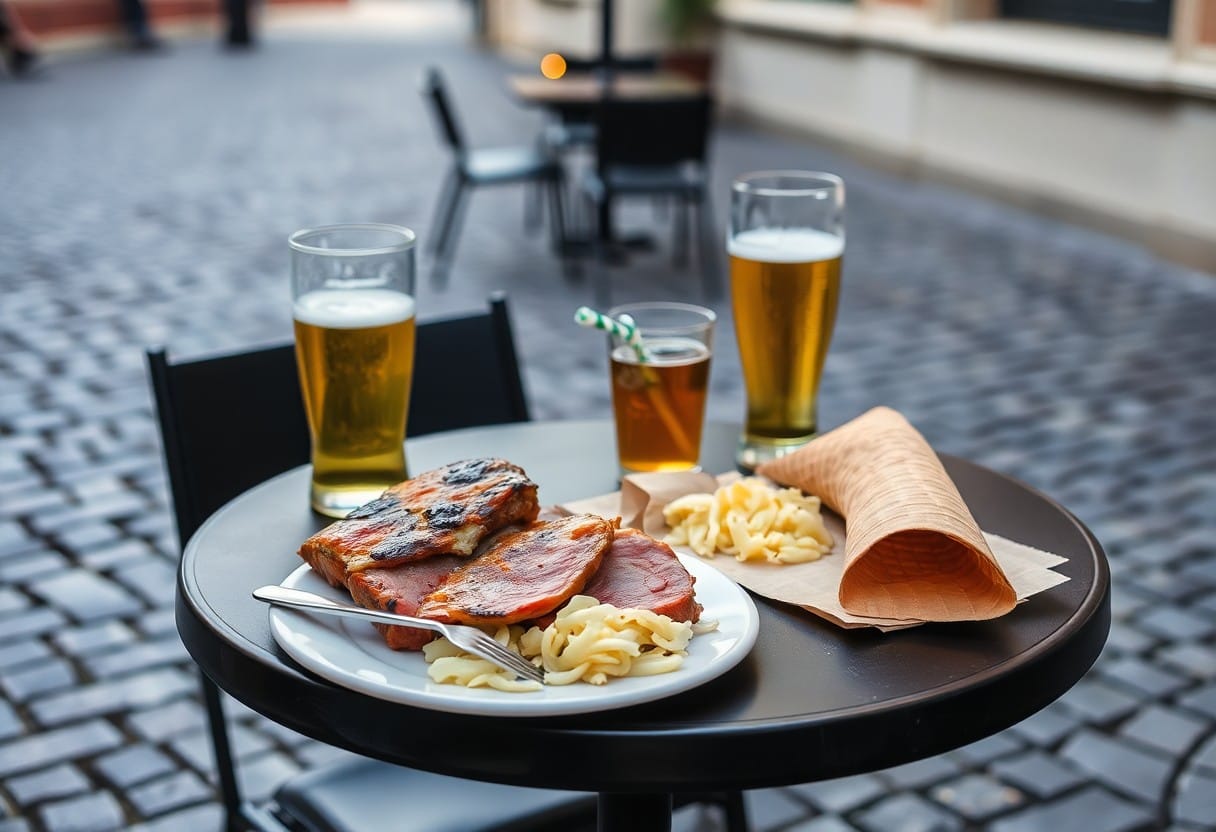
Czechia offers hearty flavors that welcome solo travelers; you should prioritize tasting svíčková, knedlíky and goulash for authentic comfort food, sample street favorites like trdelník and smažený sýr, and pair meals with Pilsner beer for a classic experience. Be wary of heavy portions and high alcohol content that can leave you tired or off-balance while exploring. Trust local pubs and markets to guide your palate and keep your solo culinary adventure safe and memorable.
Types of Traditional Czech Foods
You’ll find Czech cuisine organized around hearty mains, dumplings and pastries: think svíčková (marinated beef with cream sauce), guláš (beef stew), and a range of knedlíky (bread or potato dumplings) that accompany most plates. Portion sizes are generous – a typical restaurant serving runs 350-500 g – and many dishes rely heavily on gluten and dairy, so you should plan accordingly if you have dietary restrictions.
- svíčková – beef in a creamy vegetable sauce, often served with cranberries and whipped cream
- vepřo knedlo zelo – roast pork with dumplings and sauerkraut, a national staple
- guláš – thick, paprika-forward stew served with bread or dumplings
- řízek – breaded and fried cutlet (similar to schnitzel)
- trdelník – sweet, rolled pastry popular at markets and tourist areas
| svíčková | Marinated beef with a root-vegetable cream sauce; commonly topped with cranberries and whipped cream – expect 180-250 CZK in casual restaurants and high calorie content. |
| guláš | Hearty paprika stew, usually beef; restaurants serve 300-400 g portions and prices from 120-190 CZK. Gluten may appear in dumplings or thickening agents. |
| vepřo knedlo zelo | Roast pork with bread dumplings and sauerkraut; a filling plate often shared between two. Typical local price 140-230 CZK and commonly available across pubs. |
| řízek | Thin, breaded fried cutlet (veal, pork or chicken); served with potato salad or fries. Watch for hot oil and cross-contact with other fried foods. |
| trdelník | Sweet spit-roasted pastry rolled in sugar or nuts; street-food price 40-120 CZK. Widely sold at markets but often adapted for tourists with extra fillings. |
Regional Specialties
In Moravia you should seek out Olomoucké tvarůžky (small, pungent ripened cheese) and hearty pork sausages from family-run smokehouses; Olomouc and Uherské Hradiště markets often sell them fresh and affordable. South Bohemia emphasizes freshwater fish – trout and carp are staples, especially around Český Krumlov, where traditional recipes date back centuries and market stalls price fish dishes between 100-250 CZK.
Traveling to Silesia or northern Bohemia brings different notes: smoked meats, game stews and rye breads; Prague, by contrast, balances classic tavern fare with modern kitchens that reinterpret knedlíky and goulash for contemporary palates. If you want the most authentic experience, visit municipal markets at lunchtime when small producers bring single-batch items and you can sample before you buy.
Seasonal Dishes
Winter centers on Christmas carp and vánočka (braided holiday bread); carp is traditionally eaten on December 24th and live fish markets sell 1.5-2.5 kg specimens for home preparation, so you should be cautious about bones when eating in a busy tavern. Street markets from November to January feature svařené víno (mulled wine) for about 40-80 CZK a cup, which is a warm, sugary option but can mask strong alcohol content.
Spring and summer highlight lighter options: fruit-filled ovocné knedlíky (plum or strawberry dumplings) appear from May through August, often 6-10 pieces per order and paired with buttered breadcrumbs or curd. Festivals in Moravia showcase fresh cherries and strawberries used in jams, cakes and cold desserts, and you can find seasonal prices typically lower at farm markets than at tourist stalls.
For practical tips, check weekly market schedules – many local markets update stalls by season and you can often buy small portions for 50-150 CZK to taste before committing to a full meal. Perceiving seasonal patterns will help you time your trip for specific dishes and avoid tourist-priced versions.
Tips for Enjoying Czech Cuisine
Order the midday denní menu (usually 11:00-14:00) when you want the best value – most places charge around 120-200 CZK for a soup, main and drink. Share heavy plates like vepřo knedlo zelo or a giant plate of knedlíky with a friend or splitables to avoid wasting food; portions in traditional pubs often exceed 500-700 g. If you prefer lighter options, pick seasonal salads or market stalls where a typical farmers’ market sandwich runs 80-150 CZK.
- Seek out a local hospoda (pub) for authentic atmosphere and house-brewed beer.
- Ask about Allergens: pork, dairy, gluten before ordering – many classics contain at least one.
- Use cash in smaller pubs; carry ~200-500 CZK for quick meals and markets.
- Try iconic spots like U Fleků (Prague, brewery since 1499) but expect tourist prices and crowds.
When to Go
Visit in late spring to early autumn for open-air beer gardens and market stalls; May-September sees festivals and lower weekday crowds in smaller towns. Winter, especially December, is best for seasonal specialties at Christmas markets – expect roast ham, mulled wine and trdelník with queues but memorable local flavors. Weekdays between 11:00 and 14:00 are prime for cheap denní menu deals; evenings and weekend nights fill quickly, so book ahead if you target well-known restaurants.
Where to Eat
Head to a neighborhood hospoda for a no-frills, authentic meal and a pint – typical pub mains cost 140-300 CZK and often pair with beer half-liter pours for 40-70 CZK. For elevated tasting menus try Michelin-listed spots such as La Degustation Bohême Bourgeoise or Field, where multi-course experiences range from 1,500-3,500 CZK per person. Markets like Naplavka (Prague) and farmers’ markets in Brno provide fresh, local bites and are great for meeting producers directly.
Look for places with locals at the bar, check opening hours (many restaurants close between lunch and dinner), and expect to tip around 5-10% for table service. Any time you ask staff for a recommendation they’ll often point you to the day’s best plate or the nearest unpretentious hospoda.
Step-by-Step Guide to Dining Solo
Plan your meals around local rhythms: many kitchens serve warm food from roughly 11:00-14:00 for lunch and again from 17:00-20:00 for dinner, while cafés and bakeries stay open longer. Pack a small phrase list, have 200-500 CZK in cash for markets or tiny pubs, and use the table below as a quick checklist when you head out.
Step-by-Step Checklist
| Step | Action & examples |
| Plan timing | Aim for lunch specials (“menu dne“) 11:30-13:30; many places fill up-arrive early for cheaper set meals (120-220 CZK). |
| Language tools | Install offline Czech on Google Translate; keep key phrases like “Účet, prosím” (bill) and “Co doporučujete?” (recommendation). |
| Reservations | Book for popular restaurants or weekends; call or use online systems-state party size as “1 osoba” (1 person). |
| Allergies & diet | Say “Jsem alergický/á na …” and carry ingredient cards for gluten, dairy, pork; many traditional dishes contain pork. |
| Portions & drinks | Expect mains ~250-350 g; beer served in 0.3 L or 0.5 L glasses-local lagers commonly 4.5-5% ABV. |
| Payment & tipping | Cards accepted widely but small venues prefer cash; tip ~5-10% or round up to the nearest 20-50 CZK. |
| Safety | Tap water is safe; be cautious with raw items like tatarský biftek (steak tartare) if you avoid raw meat/egg. |
Preparing for Your Culinary Journey
You should scout menus online before leaving your accommodation: many Prague and Brno restaurants post full menus and prices, so you can estimate meal cost (120-350 CZK for mains) and spot dishes that suit your diet. Load a phrasebook and an offline translator; key phrases that help include “Mohu vidět jídelní lístek?” (May I see the menu?) and “Jsem alergický/á na…” for allergy declarations.
Pack a small wallet with 100-300 CZK for markets and pubs that prefer cash, and note mealtimes-cafés often close between lunch and early dinner. If you want a local bargain, try the menu dne (daily menu): it usually costs 120-220 CZK and includes soup plus a main, a fast way to taste authentic home-style cooking without ordering unfamiliar large plates.
Navigating Menus and Ordering
You’ll encounter menu headings like Polévky (soups), Předkrmy (starters), Hlavní jídla (mains) and Dezerty (desserts); learn a few dish names-svíčková (marinated beef with cream sauce), knedlíky (dumplings), guláš (goulash), and smažený sýr (fried cheese). Pointing to menu items or saying “Prosím, dám si…” plus the dish name is an efficient ordering tactic when language is limited. If you need clarification, ask “Co obsahuje?” (What does it contain?) to verify ingredients and spot hidden pork, dairy, or nuts.
When servers ask if you’d like something to drink, common beer portions are shown as 0.3 L or 0.5 L; if you want a smaller pour, request “malé pivo” (small beer). Service time varies-expect 10-20 minutes for mains in casual spots and 20-40 minutes in busy restaurants; plan accordingly if you have a train or event to catch.
Use the daily menu as a safety net: menu dne often features tested, fresh ingredients and is priced transparently, making it a reliable choice when you want speed, value, and an authentic home-cooked option.
Factors Influencing Food Choices
Practical constraints often steer what you order: availability of ingredients, opening hours, and price brackets matter more than menu descriptions when you’re traveling alone. In Czechia, look for the midday “polední menu” which typically costs between 120-180 CZK in many bistros and gives you a cheap, filling option; conversely, tourist-heavy districts push prices up by 20-40% for similar dishes. Seasonality also affects choices-wild game appears more often in autumn menus, while fresh river fish and lighter salads become common in summer, so you can time meals to match local produce cycles.
- Seasonality
- Price
- Availability
- Dietary restrictions
- Authenticity vs. tourist options
- Language barriers
Many traditional plates rely heavily on pork, dairy, lard and gluten-think svíčková, roast pork with dumplings, and hearty goulash-so those factors will narrow choices if you avoid those ingredients. Urban centers like Prague and Brno offer dozens of plant-based and international alternatives, but in villages you may find only one pub menu; weigh the trade-off between authenticity and dietary fit when you pick a place.
Dietary Restrictions
You can manage allergies and restrictions with a few practical steps: carry a short Czech translation card that lists common allergens (mléko = milk, vejce = egg, lepek = gluten, ořechy = nuts) and ask servers directly using simple phrases like “Obsahuje to mléko?” for milk. Many cafés and newer restaurants clearly label bezlepkové (gluten-free) or veganské options, particularly in larger cities; however, cross-contamination remains a real risk in small kitchens that use shared frying fat or utensils, so treat that as potentially dangerous if you have severe allergies.
When you need reliable options, prioritize certified spots: look for bakeries and restaurants advertising bezlepkové or dairy-free menu sections and check reviews from local allergy communities online. Bringing your own snacks for transit days is a smart fallback-supermarkets sell clear-label alternatives, and you can usually find shelf-stable items that reduce the chance of exposure.
Cultural Considerations
Eating patterns and etiquette influence what you pick: dinner services often start after 17:00 and many kitchens close between lunch and early evening, so timing affects availability. Tipping 5-10% is common practice in Czech restaurants; pubs (hospody) favor quick, hearty plates and communal tables where solo diners can blend in easily. In small towns, family-run eateries may serve a single daily menu or a fixed roast, so expect less flexibility but often tastier, regional recipes made from local ingredients.
Solo dining is widely accepted; sitting at the bar or ordering the midday polední menu will save money and let you try traditional meals without commitment. For cultural goodwill, if you’re invited into a Czech home to eat, bring a small gift such as pastries or flowers-hosts often reciprocate with generous portions and homemade specialties that aren’t on restaurant menus.
Thou should carry a short Czech allergy card (for example: “bez laktózy”, “bez lepku”, “neobsahuje ořechy”) and show it when ordering to reduce the risk of cross-contamination.
Pros and Cons of Solo Dining
Pros and Cons of Solo Dining
| Pros | Cons |
|---|---|
| You set the pace: order when you want and move on – ideal if you have a tight itinerary. | Social gap: some meals feel quieter, especially in traditional family-style restaurants where groups dominate. |
| You can sample more: try multiple street foods or small plates without catering to others’ tastes. | Portion sizes: many Czech mains are hearty – you may end up bringing half home or paying for more than you eat. |
| Bar seating and counter service often put you next to locals – a good way to strike up conversation. | Language hurdles: outside Prague and tourist spots, English can be limited; ordering might require gestures or a phrasebook. |
| Time flexibility: many pubs (hospodas) are open late – you can eat past 22:00 in numerous spots in Prague. | Table expectations: some restaurants expect groups for sharing starters or tasting menus, limiting options for solo portions. |
| Budget control: you can choose budget-friendly local lunches (often around 150-300 CZK) rather than tourist menus. | Service patterns: servers may prioritize larger tables during peak hours, leading to longer waits for solo diners. |
| Personal focus: you can savor traditional dishes like svíčková or goulash at your own pace and take notes for later. | Photo/phone use: taking photos of your meal can draw attention in small, quiet eateries and feel awkward. |
| Try new spots quickly: you can pop into a market stall for trdelník or a sausage without coordinating anyone else. | Safety at night: late-night solo dining in some districts can be less comfortable – stay aware of surroundings. |
| Easy to customize: you can ask for modifications or smaller portions without group compromise. | Limited dessert sharing: ordering a whole cake or dessert feels wasteful if you can’t split it. |
Advantages of Eating Alone
You can move fast between culinary stops: sample a mid-afternoon frgál in a Moravian bakery, then hop to a local pub for a 180-250 CZK goulash without waiting for companions. This freedom means you can build a tasting route – try three different dumpling styles in one day or pair a beer flight with three small plates across neighborhoods.
One-on-one interaction improves authenticity: sitting at the bar often leads to short conversations with bartenders or regulars, and you can learn local ordering tips (for example the Czech word for menu is “jídelní lístek”). Eating solo also makes it easier to ask for portions to be adjusted, pay attention to food provenance-like farm cheeses from Moravia-and sample off-menu specials that might not suit a group’s tastes.
Challenges to Consider
Being the only diner can feel isolating in traditional, family-run restaurants where large tables and shared platters dominate; you may encounter menus designed for groups or set lunches that assume multiple people. In smaller towns, menu variety can be limited and servers may assume you want a quick plate rather than a multi-course meal, so planning where to go for a fuller experience helps.
Language and portion issues also matter: outside major tourist centers, English is less common, so ordering complex dishes like roasted pork knee (vepřové koleno) might require pointing or using a translation app. Portions are often generous – main courses can be enough for two – so expect leftovers or consider ordering a starter and a soup rather than a full main.
For extra caution, pick well-lit eateries and prefer bar seating or tables with easy exit routes when dining late; this reduces discomfort and makes paying or leaving quicker. If you want company, choose communal-feel spots like wine bars or brewery taprooms where striking up conversation is more natural and you’re likely to meet fellow travelers or locals.
Food Markets and Festivals
You’ll find that markets and festivals are where dishes like svíčková, klobása, and svařák feel most alive – vendors, chefs and locals all clustered around stalls. The riverside Náplavka market on Saturdays is a perennial favorite for street food and artisanal cheese, while Old Town and Wenceslas Square markets light up during Advent with roasted ham and mulled wine; a first‑hand solo account you might compare notes with is Eight Days in Prague in October: a Solo Traveller’s Trip Report. Be aware that markets get very busy on weekend afternoons, and you should keep your valuables secure when crowds swell.
Popular Markets to Visit
Náplavka Farmers’ Market (smíchov riverbank) runs most Saturdays from spring through autumn and often hosts 50-80 local stalls offering sausages, fresh cheeses, smoked fish and seasonal produce; it’s where you can pair a klobása with craft beer while you sit by the Vltava. Havelské tržiště in Old Town operates daily and is useful for quick bites and souvenir bites – trdelník appears here everywhere, but it’s more of a tourist treat than a historic Czech specialty.
You’ll also want to check Jiřák (Jiřího z Poděbrad) farmers’ market for high‑quality pastries and regional preserves, and the small but vibrant Holešovice markets for innovative street chefs. Prices for a hearty market lunch typically fall between 60-200 CZK; many stalls take cards, but carrying some cash speeds up small purchases, and you should always watch for pickpockets in dense crowds.
Annual Food Events
The Prague Food Festival (usually in May) brings together dozens of top restaurants offering tasting menus and live cooking in a central park setting, making it easy to sample modern takes on traditional fare in one afternoon. The Czech Beer Festival (late May-June) is one of Europe’s larger beer gatherings with well over a hundred brews from micro and classic breweries – you can pair regional lagers with open‑fire roasted specialties and meet local brewers in person.
Plan ahead by buying tickets for the big festivals and arriving early to avoid the busiest hours; many events offer tasting portions so you can try multiple dishes without overspending. Expect English signage at major festivals, bring layers for unpredictable weather, and know that vegetarian options can be limited at traditional beer events, so scout menus in advance if that matters to you.
Summing up
Ultimately you should treat Czech cuisine as a central part of your solo itinerary: sample svíčková with dumplings, hearty guláš, smažený sýr from a street stall, roast pork with sauerkraut and knedlíky, sweet koláče or trdelník, and local beers to round out the experience. Prioritize small hospody, bakery counters and farmers’ markets where you can taste authentic preparations and compare regional variations; your palate will quickly tell you which dishes deserve repeat visits.
When you travel alone, use that freedom to sit at the bar, ask servers for the house specialty, and order smaller portions or shareable plates if you want variety without waste. Keep cash handy, learn a couple of basic Czech phrases to smooth transactions, and balance rich meals with lighter snacks so you can try more over several days-this approach lets you confidently explore traditional flavors and build a personal shortlist of favorites to return to on future trips.
FAQ
Q: What traditional Czech dishes should I try while traveling solo?
A: Try vepřo-knedlo-zelo (roast pork with bread dumplings and sauerkraut) for a hearty national classic; svíčková na smetaně (marinated beef sirloin in creamy vegetable sauce with dumplings) for a richer, festive plate; and guláš s knedlíky (Czech-style goulash with dumplings) for a comforting stew. For cheaper or quicker options, order smažený sýr (fried cheese) or chlebíčky (open-faced sandwiches). For dessert or street treats, sample trdelník (sweet rolled pastry) and koláče (small filled pastries). Most pubs (hospoda) and tourist restaurants list these dishes with prices; portions are generous, so consider sharing or asking for a smaller serving.
Q: How can I order and eat these dishes comfortably on my own?
A: Sit at the bar if you prefer solo dining in a bustling place – it’s common and social. Use simple Czech phrases: “Jednu porci svíčkové, prosím” (One portion of svíčková, please) or “Na přímo/na místě, prosím” for eating in; ask for takeaway with “s sebou” (seh SEH-boh). If portions are large, request “malá porce” (small portion). Pay attention to menu abbreviations (S = smažené, P = pečené). Tipping of around 5-10% or rounding up the bill is typical; hand the tip directly to the server and state the total if you want them to keep the change.
Q: Which street foods and snacks are best for quick bites while exploring cities like Prague?
A: For on-the-go eats try trdelník from street vendors, grilled klobása (sausage) with mustard and bread, chlebíčky from cafés for a portable light meal, and smažený sýr in a bun for a filling vegetarian option. Markets and outdoor stalls also sell utopenec (pickled sausage) and seasonal specialties at Christmas markets. Prices vary by location-expect street pastries €2-5 and sausages €3-6-so carry small change and check for common allergens like cheese or pork if you have dietary restrictions.

I’m Jan, a Czech writer, hiker and travel guide born in Bohemia and based in Prague. I’ve been writing about my home country for 9 years, and I know it the way you only do when you’ve grown up here: the trail signs that locals actually follow, the pubs that aren’t in any guidebook, the castles that get overlooked because they’re not on a tour bus route.
Over 9 years I’ve covered every corner of the Czech Republic, from the Krkonoše ridges and Šumava forests to the wine cellars of South Moravia and the spa towns of West Bohemia. I’ve taken 40+ solo trips across Czechia, Slovakia, Poland, Hungary and Austria and I write in Czech and English, which means I can read the local hiking forums, regional news and municipal information that never gets translated.
My writing covers three areas: practical solo travel in Czechia (getting around by train and bus, hiking safely, visiting castles and landmarks without the crowds), expat and long-term living (the cultural surprises, the bureaucracy, what it actually costs, how the healthcare and transport systems work), and off-the-radar Czech Republic, the places most visitors never reach because they spend all their time in Prague.
Prague is extraordinary, but it’s maybe 10% of what this country has to offer. The rest is what I’m here to write about.