
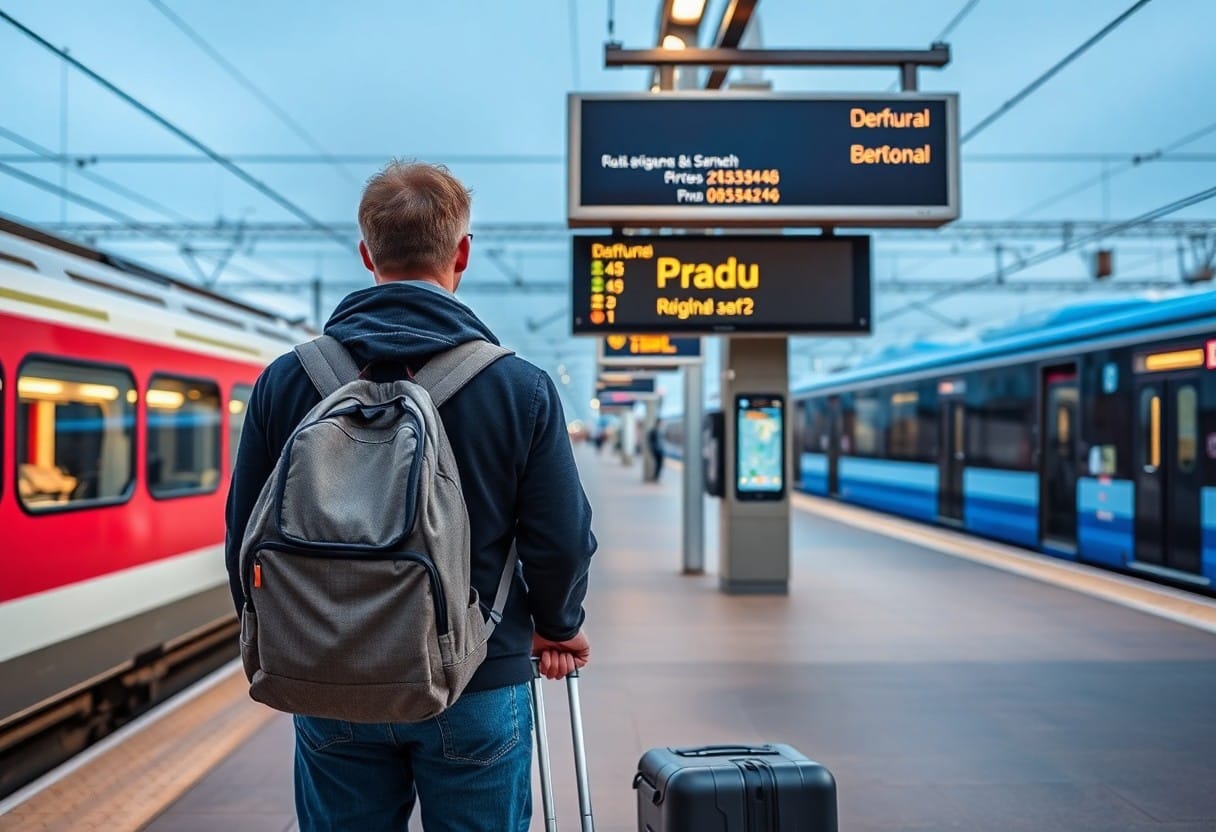
Most of your journeys will be efficient, but plan ahead: validate your ticket before boarding, keep valuables secure against pickpocketing, and use well-lit stops at night; use apps for schedules so you catch the reliable, on-time trains and scenic regional routes, learn basic Czech phrases, and keep a photo of your passport and emergency contacts on your phone.
Types of Transportation
You’ll find three main options for getting around: intercity trains, regional trains, and a dense network of buses (plus local trams and metro in cities). Intercity services from ČD (Czech Railways), RegioJet and Leo Express connect major hubs; they typically run at 120-160 km/h on long routes and take about 2.5-3 hours for Prague-Brno. Buses often win on price and direct routing to smaller towns, with fares sometimes starting under 100 Kč if you book early.
- Intercity trains – faster, more comfortable, seat reservations optional but helpful.
- Regional trains – frequent, cheap, useful for short hops and rural connections.
- Buses – wider route coverage, cheaper off-peak fares, good for towns without rail links.
- Local trams/metro – best for intra-city travel; integrate with regional tickets in many places.
| Feature | What to expect |
|---|---|
| Operators | ČD, RegioJet, Leo Express, FlixBus |
| Typical price range | Regional: ~50-150 Kč; Intercity: ~200-700 Kč; Buses: from ~99 Kč |
| Booking | Online apps, station kiosks, on-board (rare); seat reservations available on private carriers |
| Luggage | Trains: generous (keep valuables with you); Buses: 1-2 large bags + carry-on, check policies |
Overview of Trains
You’ll use trains for the fastest intercity connections and the most comfortable longer trips; for example, Prague-Ostrava takes about 3.5 hours by fast train while Prague-České Budějovice is roughly 2.25 hours. Many intercity trains have onboard Wi‑Fi, power sockets and a buffet car; private operators like RegioJet often include free coffee and reserved seating on long runs. Expect ticket inspections: keep a validated ticket or an e‑ticket accessible to avoid fines of several hundred korun.
When you travel, reserve a seat on peak routes (holiday weekends, summer weekends) – reservations can cost 50-200 Kč but save you from standing. Pay attention to platform changes: main stations like Prague hlavní nádraží use digital boards and announcements in English on major routes. Watch for pickpockets in crowded carriages and at busy stations; secure your bag and use inner compartments for passports and cards.
Overview of Buses
Buses cover more direct routes to small towns and often beat trains on price and door‑to‑door time; Prague-Brno by bus can be as quick as 2.5 hours on express services. Companies such as FlixBus and RegioJet run frequent services with onboard toilets, Wi‑Fi and recliner seats – book early to snag fares from under 100 Kč. You should check where the coach stops in each city (central station vs. highway stop) to avoid long transfers.
For solo female travelers, community threads can give up‑to‑date safety tips and route notes – see user experiences at Solo female traveler in Prague – any tips/advice?. Buses generally have luggage compartments and monitored boarding; keep valuables in the cabin and note that late‑night services are less frequent. Be aware that some remote stops are poorly lit and may have limited shelter.
Assume that schedules and prices change seasonally and you check timetables 24-48 hours before departure.
Tips for Solo Travelers
When you travel alone in Czechia, plan for flexibility: book long legs on a reliable train operator and use buses for last-mile connections. Pack a small lock for luggage, keep a copy of your passport and tickets offline, and favor daytime departures on the busiest corridors (Prague-Brno, Prague-Ostrava) where services run every 30-60 minutes and offer greater safety and staffing. Use official apps from ČD, RegioJet, Leo Express, and FlixBus to pull up e-tickets quickly and select seats when available for added comfort and security.
Quick practical checks that pay off: confirm platform info on departure boards, note the carriage number on your booking, and keep small change (20-200 CZK) for station toilets and snack machines. The following tools and operators will save you time and money:
- ČD (Czech Railways) app – national schedules and IC/EC trains
- RegioJet and Leo Express – private operators with seat selection and onboard services
- FlixBus – cheap intercity buses often from 99 CZK
Knowing that staffed stations and scheduled checks reduce incidents will help you choose safer options.
Booking Tickets
Buy tickets in advance for popular routes-Prague to Brno or Prague to Vienna sell out and prices rise; expect standard intercity train fares between about 150-400 CZK and faster private services sometimes slightly higher but with free Wi‑Fi and refreshments. Use the operator apps to lock in early-bird fares: RegioJet and Leo Express let you reserve a specific seat for a small extra fee, which is useful when you want guaranteed space during peak travel times or when carrying luggage.
If you purchase a paper ticket at a machine or booking office, keep it accessible-inspectors check tickets on board and fines for travel without a valid ticket can exceed the original fare. For buses, e-tickets on your phone are widely accepted; still, screenshot or download the PDF in case you lose reception. Tickets with cancellation or exchange options are slightly more expensive but worth it if your plans might change.
Choosing Routes
Prefer daytime train services on busy corridors since they’re frequent, staffed, and often faster than buses; for example, high-frequency ČD and private operators run Prague-Brno in roughly 2.5-3 hours with multiple departures each hour during peak times. When the fastest option is a private operator, weigh the small extra cost against onboard amenities-RegioJet commonly offers free coffee and power outlets on many services, which can make solo travel more pleasant.
For rural or mountainous areas, combine a regional train segment with a short local bus-regional fares often fall in the 40-120 CZK range and local buses fill gaps in the rail network, but check schedules carefully because some connections run only a few times per day. Keep an eye on arrival and departure times at smaller stations (e.g., Český Krumlov or Špindlerův Mlýn bus links) so you avoid long waits after sundown, and consider reserving a seat when offered on longer hops to ensure you are seated near the exit for quick transfers.
Knowing how operators schedule services and where staff are present lets you pick routes that balance speed, comfort, and safety.
Step-by-Step Travel Guide
Quick Step Overview
| Step | Practical tip / example |
|---|---|
| Plan & book | Compare ČD, RegioJet and FlixBus; book major routes 1-3 weeks in advance for best fares and seat options. |
| At the station | Arrive 20-30 minutes before intercity departures (10-15 minutes for buses); check digital boards for platform changes. |
| Onboard | Keep tickets and ID handy; intercity trains (EC/IC) run up to 160 km/h on main lines and offer Wi‑Fi on private carriers. |
| Safety & luggage | Use luggage straps or locks, keep valuables in a money belt, and stay aware in crowded areas where pickpockets operate. |
Planning Your Journey
You should check both national and private operators: ČD (Czech Railways) covers regional and long-distance timetables, while RegioJet and FlixBus often undercut prices and include onboard amenities like Wi‑Fi and refreshments. For busy corridors such as Prague-Brno or Prague-Český Krumlov, booking 1-3 weeks ahead usually secures the best fares and a guaranteed seat on RegioJet or Leo Express services.
If you’re collecting local tips from other solo travelers, consult community threads such as Traveling Solo in Prague – Rick Steves Travel Forum for up‑to‑date safety notes and station hacks; use official apps to buy e‑tickets, and always carry a physical ID because Czechia is in Schengen and you may be asked for it onboard or at borders.
Navigating Stations
At larger hubs like Praha hlavní nádraží, platforms may be split across levels and digital boards use “Odjezdy” for departures and “Příjezdy” for arrivals – check them frequently because platforms can change within minutes. You should locate station maps on arrival, note the nearest exit and taxi stands, and have a clear plan for luggage storage if you need to explore between connections.
When you see platform assignments, move promptly; intercity trains can announce last‑minute changes and staff conduct platform checks shortly before departure. Keep a copy of your reservation or QR ticket on your phone and have a printed backup for longer international legs, and always keep passports/ID in a secure, quick‑access pocket.
For added safety, use station lockers or staffed left‑luggage at major stations, avoid sleeping in low‑traffic areas, and watch for individuals working in teams around crowds – pickpocketing is the main threat in busy stations, so keep bags zipped and close to your body.
Factors to Consider
When deciding between train and bus for solo travel in Czechia, weigh fare structure, timetable density, and last-mile connections: main corridors like Prague-Brno see frequent hourly or better departures, while regional routes may run only a few times a day. Trains often shave off travel time on the D1/E50 corridor and give more space for luggage and working on the go; buses can undercut prices on the same routes and sometimes stop closer to smaller towns without rail service.
- Cost: advance fares, promos, operator apps
- Speed: express trains vs. highway-dependent buses
- Frequency: hourly services on mainlines, sparse regional timetables
- Connectivity: stations with metro links vs. remote bus stops
- Safety: crowded hubs where pickpockets are more active
Check operator differences – ČD (Czech Railways) and carriers like RegioJet or FlixBus run very different sales strategies, seating options, and onboard amenities; you can often save by booking early through the provider’s app and by avoiding Friday afternoon departures when roads clog. Thou plan departures and transfers with an IDOS search and compare travel time against total door-to-door duration.
Cost Efficiency
You can expect typical Prague-Brno train fares around 200-400 CZK if bought close to departure, while bus fares on the same corridor often range 120-300 CZK and occasionally drop to promotional fares from about 59 CZK when booked early. Use operator apps (RegioJet, FlixBus, and ČD) to catch flash sales; buying at station kiosks or last-minute generally raises the price by 20-50%.
If your itinerary includes multiple hops in a day, check regional day tickets and city integrated passes that bundle short-distance rides; for multi-day stretches, a mix of advance-train tickets and selected cheap bus legs usually yields the best value. Highlighted savings come from off-peak travel, nonrefundable advance fares, and student or youth discounts offered by many carriers.
Travel Time
High-frequency express train services on major routes cut travel time – Prague to Brno commonly takes about 2h 20-2h 45 by fast train, while buses often take 2h 30-3h depending on traffic; Prague-Ostrava by rail runs around 3h, buses can be similar but are more affected by motorway jams. Trains are generally more reliable on clocked schedules because they avoid highway congestion, whereas buses can suffer delays of 30-90 minutes during holiday weekends or peak commuter hours.
When transfers are involved, count connection margin: trains tend to use central stations with metro/tram links (Prague Hlavní nádraží, Brno hlavní nádraží), reducing transfer time, whereas some bus terminals (Florenc in Prague is central, but others can be peripheral) add waiting and last-mile transit. For rural destinations you’ll find that buses provide direct stops while trains require a taxi or local bus connection, increasing total door-to-door time.
Use the IDOS planner to compare scheduled durations and frequency, factor in average delays (expect more on highways in summer), and pick departure times with buffer for tight connections; choosing an early morning train reduces the chance of traffic-related delays and often gives the best on-time performance. Thou favor direct, frequent departures when you need predictable timing.
Pros and Cons
Pros vs Cons of Train and Bus Travel
| Pros | Cons |
|---|---|
| Faster between major cities (e.g., Prague-Brno in ~2-2.5 hours) | Buses can be slower and hit traffic on highways into cities |
| More legroom, luggage space and onboard facilities on many trains | Some regional trains are crowded at peak times |
| Frequent services on main rail corridors (often hourly or better) | Less frequent connections to smaller towns by rail |
| Private bus operators (RegioJet, FlixBus) often undercut rail prices | Bus stops sometimes outside city centres, requiring transfers |
| Buses serve routes and villages without rail access | On‑board checks and fines apply if you board without a valid ticket |
| Easy promotional fares on buses (occasional €1-€5 deals if booked early) | Seat comfort varies widely between bus fleets |
| Trains are generally more stable timewise and less affected by road incidents | Nightly or regional services may be limited, forcing inconvenient changes |
| Both modes offer Wi‑Fi and power on many services (check operator) | Wi‑Fi quality and power availability are inconsistent |
Advantages of Train Travel
You get predictable journey times on main lines: trains between Prague and Brno run roughly every 30-60 minutes and take about 2-2.5 hours, so you can plan same‑day return trips or day excursions with confidence. Services run by České dráhy and private operators like RegioJet/Leo Express offer larger seats, dedicated luggage racks, and toilets – practical when you travel with backpacks or suitcases.
On longer routes you benefit from more space to work or sleep, and many long‑distance trains provide power outlets and better Wi‑Fi than regional buses. If you value mobility during the trip, choose InterCity or Railjet/IC services on key corridors; they tend to be faster and have fewer unscheduled stops than regional services.
Advantages of Bus Travel
You can often save a significant amount: on the busiest routes buses run by FlixBus or RegioJet are typically 20-50% cheaper than standard rail fares when booked in advance, and flash sales sometimes drop fares to a few euros. Buses also reach towns and industrial zones that lack direct rail links, so you avoid extra transfers or taxi fares at the end of a trip.
Operator amenities are competitive – many coaches include reserved seating, reliable Wi‑Fi, onboard toilets and 230V outlets, making them comfortable for several‑hour journeys. Night services let you travel overnight and save on a night in a hostel while covering long distances.
For practical tips, check pick‑up/drop‑off locations carefully (some stops are at motorway junctions or peripheral terminals) and keep your passport and valuables with you rather than in the luggage hold; luggage allowances are generous but oversized items can incur extra fees.
Safety Recommendations
General Safety Tips
In busy hubs like Prague’s Old Town, Wenceslas Square and major stations (Praha hl.n., Brno hl.n.) you should assume a higher risk of pickpocketing, especially on crowded trams and platforms during the 07:00-09:00 and 16:00-19:00 rush windows. Keep your passport and extra cards locked in your accommodation safe, carry only a daily amount of 500-1,000 CZK (~€20-40), and use an inside-front pocket or money belt for vitals. Buy tickets before boarding and validate where required – inspectors perform frequent checks on intercity and urban lines, so having a validated ticket prevents fines and delays.
- Pickpocketing: secure valuables in front pockets or a concealed pouch; avoid showing maps or large phones on crowded platforms.
- Tickets: purchase via official apps, station machines or kiosks and always validate if a validator is present.
- Documents: keep one paper copy of your ID separate from originals and store encrypted scans in the cloud.
- Cash: split small bills across bags; use ATMs inside stations or banks and shield the PIN entry.
- Night travel: choose well-lit platforms, wait near staffed areas, and prefer official taxi apps (Bolt, Uber) in larger cities.
Knowing simple routines-keeping valuables close, validating your ticket, and storing a digital ID copy-prevents most common travel headaches.
Emergency Procedures
If you experience a medical issue, incident, or see suspicious behavior, call 112 (EU-wide) immediately; for direct lines use 155 for ambulance, 158 for police and 150 for fire. When you call, give the exact station name or GPS location, the train number and carriage/seat if applicable, and a brief description of injuries or danger so responders can be prioritized. Notify on-board staff or station personnel at once – conductors and station staff can secure the scene, coordinate with emergency services and note train details you’ll need for reports.
For theft, lost documents or property, report the incident to the conductor and file a police report at the station police desk or at the nearest police station; obtain a written or electronic copy for insurance claims and to block cards. Contact your embassy or consulate for emergency travel documents (many can issue temporary documents within 24-48 hours), call your insurer’s 24/7 assistance line, and have bank numbers ready to freeze cards – keeping these contacts accessible offline speeds recovery after an incident.
Summing up
Ultimately you can travel Czechia’s trains and buses confidently by planning routes and buying or validating tickets in advance, using official apps and timetables, and keeping small change or contactless payment handy. Keep your luggage secure, have copies of reservations and identification, and use major stations and staffed stops when arriving late or in unfamiliar towns so you can ask staff for assistance when needed.
You should blend practicality with local awareness: learn basic Czech phrases, check platform changes, be mindful of pickpockets in crowded vehicles, and use seat reservations for longer journeys. With these habits you will move efficiently between cities and enjoy the flexibility of solo travel across Czechia while staying safe and in control.
FAQ
Q: How do I buy and validate train and bus tickets in Czechia?
A: Buy tickets via operator apps (České dráhy, RegioJet, Leo Express), the national timetable site/app IDOS, station ticket machines, or directly from drivers on many regional buses. Long‑distance trains and private coaches often accept e-tickets with QR codes; keep the confirmation accessible. On some regional buses you must buy from the driver and show the ticket when asked; exact change can be required. For trains you usually don’t need to validate a printed ticket yourself-conductors check tickets onboard-but check the ticket terms when purchasing (some cheap fares are non-refundable or tied to a specific train). Book popular routes in advance to secure a seat; for short regional trips buy on the day.
Q: What safety and luggage practices should a solo traveler follow?
A: Keep valuables (passport, cards, phone) on your person in a secure inside pocket or money belt. Use luggage locks and place bags in sight or in luggage racks above/behind seats; keep a smaller bag under your seat with importants. On overnight or sparsely populated services, sit in carriages with other passengers or near the conductor/driver. Be vigilant at busy stations-pickpocketing occurs around platforms and tourist hubs. Use station left-luggage facilities if you need to store big bags during the day. Note emergency numbers: 112 for EU emergency services and local police 158.
Q: How should I plan routes and transfers between cities and smaller towns?
A: Use IDOS.cz or the operator apps to check combined train and bus connections and real-time platform info. Allow extra transfer time because platform assignments can change shortly before departure. Rural services may run only a few times daily, especially on weekends or holidays, so check return options before leaving a town. When possible, base yourself in a regional hub (Prague, Brno, České Budějovice) and use timed day trips. For last‑mile trips, note that some village services require prior booking or have seasonal schedules; carry a printed screenshot of your timetable in case of poor signal. If connections are tight, consider an earlier departure or an alternate route via a larger station.

Hello, I am Jan, a travel writer based in the Czech Republic. I specialize in discovering and writing about my homeland—medieval towns, mountain hikes, the local pub scene, and off-the-tourist-radar destinations.
I also write about life as an expat in Czechia—just what it is like to live here, and not just visit. That means the little victories, the cultural surprises, and the daily realities of establishing life in this side of the world. If you’re considering visiting or making the move, I hope to give you an authentic, realistic sense of what life in Czechia is all about.