
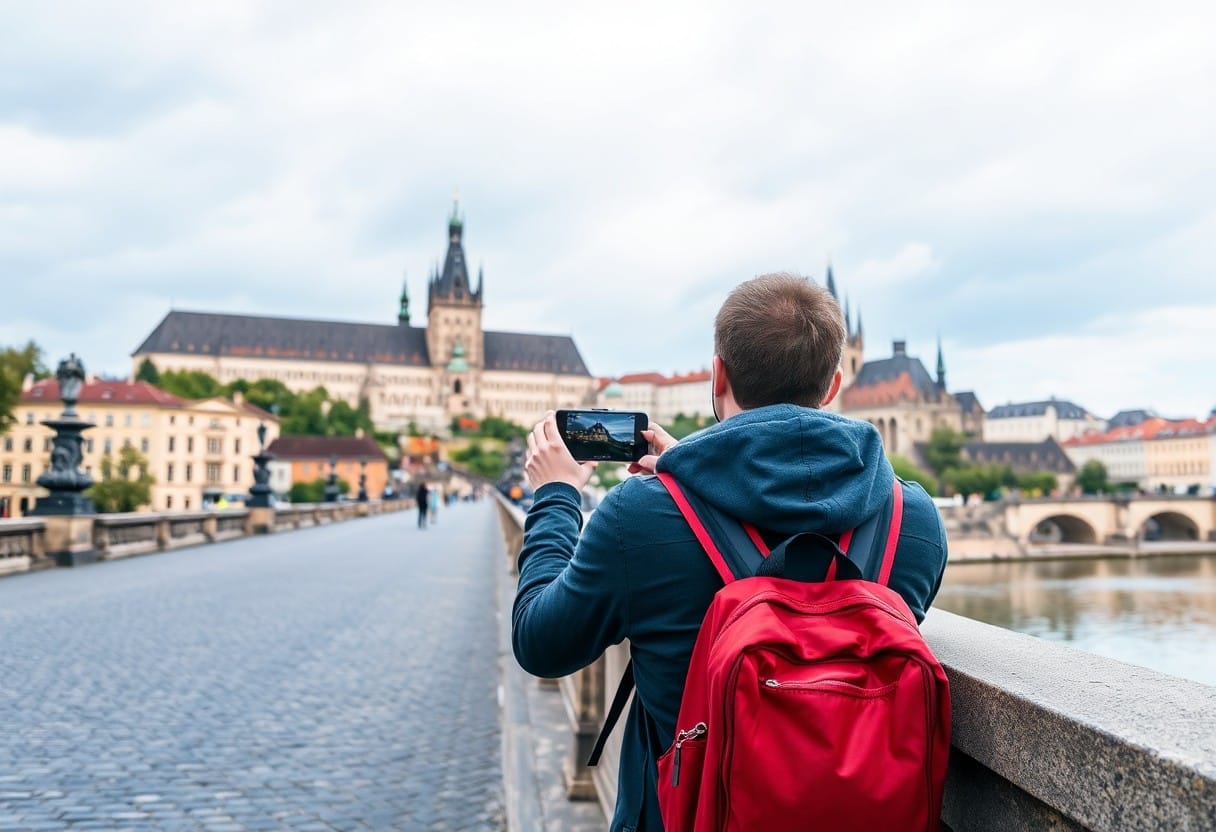
Just approach solo castle and landmark visits with practical planning: research opening times and transport, carry ID and a charged phone, and learn a few Czech phrases so you can navigate and ask for help; be vigilant of narrow passages, uneven stone steps and steep drops, and occasional pickpockets in crowded sites; expect breathtaking Gothic and Baroque architecture, rewarding solitude at off-peak hours, and rich local history to guide your route confidently.
Types of Castles and Landmarks
| Type | What to expect |
| Royal / State Castles | Large complexes with state rooms, chapels and museums (Prague Castle: largest ancient castle complex; interiors often on paid circuits). |
| Fortified / Hilltop Castles | Medieval defensive layouts, towers and ramparts (Karlštejn, founded 1348; steep approaches and narrow staircases). |
| Châteaux & Manor Houses | Baroque or neo-Gothic reconstructions with landscaped parks (Hluboká: 19th‑century Windsor-style rebuilds). |
| Modern Landmarks | Contemporary architecture and towers with observation decks and galleries (Dancing House, Žižkov TV Tower, DOX). |
- Castles with guided circuits (A/B/C) – interiors often timed and limited.
- Ruins on hills where approach trails are steep and uneven.
- Chateaux offering parkland, concerts and seasonal festivals.
- Modern landmarks with elevators and observation decks, some with limited wheelchair access.
- Solo travel considerations: crowd timing, transport links and safe parking.
Historical Castles
You’ll find several layers of history stacked into one site: Prague Castle blends Romanesque foundations and Gothic halls with Baroque facades, while Karlštejn (founded by Charles IV in 1348) preserves medieval reliquaries and original defensive features. Expect guided tours to last from 30 to 90 minutes, with ticket prices commonly in the range of about 150-400 CZK depending on circuits and exhibitions; the castle grounds at Prague are free, but interior circuits are paid and timed.
When you visit hilltop sites like Karlštejn or the Český Krumlov complex (town listed as a UNESCO site in 1992), plan for cobbled approaches and steep, uneven stairs that reduce accessibility and increase fatigue on long days; trains from Prague to Karlštejn take roughly 40 minutes and run frequently, making day trips straightforward. Take a guided tour for access to restricted rooms (armories, private chapels) and check seasonal opening months – many interiors run extended hours April-October but shorter schedules in winter.
Modern Landmarks
You can contrast medieval stone with contemporary glass and concrete: the Dancing House (completed 1996) is a compact photographic stop, while the Žižkov TV Tower rises to about 216 m and offers a restaurant and observation platform-its crawling baby sculptures by David Černý are an unmistakable landmark. Practical details matter: expect entrance fees for observation decks (typically around 150-250 CZK), elevator queues at peak times, and variable accessibility-some modern sites have full ramps and lifts, others do not.
Plan your route so you pair a modern stop with nearby transport hubs (metro/tram) and time your visit outside lunch hour or sunset to avoid crowds; DOX Centre for Contemporary Art schedules rotating exhibitions and evening events where you can join locals rather than tourists. For peer experiences and solo-traveler tips on navigating Prague’s mix of old and new, consult TripAdvisor threads such as Solo travel – Prague Forum.
You should be aware that some modern attractions-especially towers and rooftop terraces-can have strong winds and exposed edges, so dress accordingly and secure small items; photography is generally allowed but commercial setups may require permits. Knowing how seasonal opening hours and special events affect access will help you prioritize which modern sites to see when your time is limited.
Tips for Solo Travelers
Plan small, actionable steps for each castle or landmark: book timed-entry tickets for castles like Karlštejn and Český Krumlov to avoid long lines, check opening hours on official sites, and carry a paper copy of reservations in case your phone dies. When navigating between sites, prefer regional trains or reputable buses and keep a local SIM or an offline map so you can find alternate routes if a connection is delayed; this helps when you’re exploring remote hilltop landmarks with limited signage on the trails.
- Arrive early for the best light and fewer crowds at hotspots such as Prague’s Old Town and Charles Bridge.
- Use a money belt or anti-theft bag and be extra vigilant in crowded areas because pickpocketing is the most common petty crime around tourist sites.
- Download the official castle apps or PDFs where available and print a simple checklist of must-see rooms to keep your visit efficient.
- Carry some cash (koruna) for small entrances and rural cafés; many rural sites accept cards, but smaller vendors often don’t.
- Book a short guided tour at major sites to access restricted areas and local stories you won’t find on plaques.
Recognizing the balance between planned logistics and spontaneous detours will make your solo travel through the Czech Republic far more rewarding.
Safety Considerations
You should treat major tourist zones like Prague’s Old Town Square and Charles Bridge as high-risk for petty theft; pickpockets often work in groups and target backpacks and loose wallets, so keep valuables in a front pocket or a secured bag. If you need assistance, dial 112 for EU emergency services or 158 for the Czech police, carry a photocopy of your passport, and register your trip with your embassy if you plan extended stays in rural regions.
When you’re hiking to hilltop castles or walking on wet stone steps, prioritize footwear with good grip because falls on uneven steps are a common source of injury at older sites. Use official taxis or ride-hailing apps like Bolt after late-night events, share your itinerary with someone back home, and have travel insurance that covers medical evacuation and theft to avoid costly surprises; many policies cover emergency medical transport in Europe if you can provide a police report for stolen items.
Best Times to Visit
Spring (April-June) and autumn (September-October) offer the best mix of mild weather-average daytime temperatures from about 10-20°C in spring and 10-18°C in autumn-and thinner crowds at major castles and landmarks, making photography and quiet exploration easier. Peak summer (July-August) brings festivals and long daylight but expect larger crowds and heat, while winter (November-February) can be atmospheric with snow on castle rooftops and lower prices, though some guided tours run reduced hours.
Plan around local events if you want to catch medieval reenactments or baroque festivals-many castles host these between May and June-which can double as a unique experience but also spike visitor numbers and ticket demand. For popular sites like Karlštejn, trains from Prague take about 40 minutes, so booking early-evening or early-morning slots will help you avoid midday congestion and secure the best photo light.
Additional timing tips: aim for opening time to see interiors with the fewest people, watch sunset schedules for golden-hour shots of hilltop ruins, and verify seasonal closures by checking the official castle webpage at least 48 hours before departure.
Step-by-Step Guide to Planning Your Visit
Quick planning table
| Research | List target castles (Prague Castle, Karlštejn, Český Krumlov, Konopiště), check seasonal opening hours and guided-tour schedules; note typical entrance fees of ~90-300 CZK and any timed-entry requirements. |
| Itinerary | Map travel times: Prague→Karlštejn ~40 min by train, Prague→Český Krumlov ~3 hrs with one change. Plan realistic single-day radiuses (≤3 hours travel) to avoid rushed visits. |
| Transport | Use IDOS or ČD/RegioJet apps for schedules; buy advance long-distance or FlixBus tickets online, but expect regional trains to allow on-board purchase. Consider a regional rail pass for multi-day travel. |
| Accommodation | Book centrally for evening safety and easy early departures; in high season (Jun-Aug, festivals) reserve 2-3 months ahead-hostels from ~400 CZK/night, mid-range hotels ~2,000-4,000 CZK. |
Research and Itinerary Building
Start by prioritizing the sites you most want to see: for fortress architecture pick Karlštejn and Konopiště, while for romantic medieval townscapes choose Český Krumlov and Loket. Check official castle websites for guided-tour times-many popular tours run only once or twice daily, and some interiors close early (often by 16:00-17:00), so plan morning visits for interiors and late afternoons for tower views and photos.
Balance travel time and depth: choose either fewer sites with full guided tours or more sites for exterior walks and village exploration. For example, allocate a full day to Český Krumlov (3-hour transit from Prague plus walking the castle complex and town) but you can combine Karlštejn with a half-day trip from Prague (40 minutes each way) and still fit a castle tour and short hike.
Booking Accommodations and Transport
When you book, use a mix of direct and third-party channels: reserve long-distance bus or train seats on RegioJet/FlixBus/ČD websites for lower fares and guarantees, while local regional trains usually allow flexible tickets. Book accommodations close to transport hubs if you plan early departures; hostels and guesthouses often offer luggage storage and cost from about 400 CZK/night, while small hotels typically run 2,000-4,000 CZK.
Account for cancellation and check-in logistics: choose places with flexible free-cancellation within 24-48 hours during uncertain travel periods, and confirm late-arrival options if trains run late. Also verify accessibility-many castles have steep stone steps and cobblestone paths, so if you have limited mobility pick sites with accessible routes or limited-exertion tours.
Pack for practicalities and contingencies: carry small change in CZK for admission booths that still accept cash, download offline maps, and keep a printed copy of any timed-ticket QR codes. If you’re traveling in summer, book lodging well in advance; in shoulder seasons you can often secure last-minute deals but check transport frequency on Sundays and holidays to avoid sparse schedules.
Factors to Consider
When you plan visits to castles and other landmarks in the Czech Republic during solo travel, weigh practical issues that affect time, cost and safety. Consider seasonal opening schedules, the distance from the nearest town or train station, and whether the site has guided tours in languages you understand. For example, many smaller châteaux close or cut hours from November through March, while summer weekends bring long queues at sites like Český Krumlov and Karlštejn.
- Accessibility – terrain, steps, ramps, public-transport links
- Entry Fees and Tours – ticket types, audio guides, group vs private tours
- Season and Crowds – peak months, festival dates, timed-entry rules
- Safety – steep climbs, cobbles, and pickpocketing in crowded courtyards
- Logistics – cash vs card, storage for backpacks, restroom availability
Accessibility
You should expect uneven cobblestones, steps and narrow staircases at many historic sites; for example, the Český Krumlov castle tower has about 162 steps to the top, and Karlštejn sits up a noticeable hill that often requires a 15-20 minute uphill walk from the train station. Prague Castle is better served by public transport – trams and the metro bring you close – but once inside the complex you still face slopes and cobbled surfaces that can slow you down.
If you need step-free access, check each site’s official page before you go: some châteaux offer ground-floor circuits or ramps, while others only provide limited access to courtyards and museum rooms. Local tourist offices and many castle ticket windows will tell you whether elevators or alternative routes exist, and you can often reserve assistance in advance; carry a short note in Czech if your needs are specific and pack sturdy shoes because uneven terrain is the norm.
Entry Fees and Tours
Expect a wide range of prices: small local castles may charge as little as 50-150 CZK for basic entry, while larger complexes and full guided circuits often run between 200-400 CZK. Guided tours, especially in English or German, can cost more but add context that you won’t get from signage; audio guides are a cheaper alternative and are common at major sites. Concessions for students, seniors and children are widely available, and children under a certain age are often free – check the specific site.
Solo travelers often benefit from timed-entry tickets and small-group tours to avoid crowds; popular castles in peak season may sell out morning slots, so booking online for a specific time can save you hours of waiting. Also note that smaller castles and rural landmarks sometimes accept only cash or have limited card terminals, so carrying some Czech koruna is a smart move.
Many sites participate in combination tickets or city passes (for example, the Prague Card covers several museums and monuments), and night tours or special exhibitions can offer unique viewing with fewer people – book in advance when possible and check language options and cancellation policies before you commit.
This gives you a practical checklist to decide whether to pay for a guided visit, bring cash, or plan extra time for uphill walks and uneven surfaces.
Pros and Cons of Solo Travel to Czech Castles
Pros and Cons at a glance
| Pros | Cons |
|---|---|
| Freedom to set your own pace – linger for hours in galleries or climb towers without coordinating with others. | Potential safety issues on isolated trails and ruins where mobile signal is weak. |
| Better photographic opportunities at dawn or sunset; you can wait for the exact light on Karlštejn or Hluboká. | Some interiors (e.g., certain castle wings or chapels) run on timed guided tours only, limiting flexibility. |
| Lower cost control – you choose budget hostels, buses or splurge on private taxis as needed. | Fewer group discounts for tours and transport; packaged castle tours often price per person for groups of 10-30. |
| Deeper, uninterrupted focus on architecture and history – Prague Castle covers roughly 70,000 m², worth slow exploration. | Language barriers at small ticket offices or village cafés; English isn’t guaranteed outside major towns. |
| Easy to detour to lesser-known sites like Loket, Pernštejn, or Helfštýn when you spot an interesting turnoff. | Long stretches between towns can mean limited evening transport and fewer accommodation options in villages. |
| Stronger local interactions when you approach guides or residents one-on-one; you’re more likely to get candid anecdotes. | Loneliness on long travel days, especially when staying several nights in remote guesthouses with little social life. |
| Opportunities for personal challenge and growth – navigating Czech Rail and regional buses builds confidence (Karlštejn ≈ 40 minutes from Prague by train). | Risk of pickpocketing in busy sights like Prague Old Town and Charles Bridge if you travel inattentively. |
| Access to early-morning or late-afternoon windows when crowds thin at top sites (e.g., early at Český Krumlov, a UNESCO town). | Weather can derail solo plans more easily-rainy days can close outdoor walkways and make castle hills slippery. |
Advantages of Exploring Alone
You gain unmatched freedom to follow curiosities: linger on a rampart at Karlštejn (built 1348), trace frescoes at Konopiště, or spend an hour photographing Prague Castle’s courtyards without pressing schedules. Many solo travelers report covering more sites in fewer days because you can take early trains (Karlštejn is about 40 minutes from Prague) and adapt plans on the fly when you spot a medieval village or a less-visited fortress like Loket.
Beyond logistics, solo exploration deepens historical focus. You can read every plaque, listen fully to an audio guide, and return to details that catch your eye – for example, the unexpected Baroque rooms at Hluboká or the original defensive layout at Pernštejn. That concentrated time often yields richer notes, better photos, and clearer impressions you’ll carry home.
Challenges You May Face
You will face logistical and safety challenges that are more acute when alone: some rural castles have ticket offices that close by 16:00 and limited last-mile transport; trails to ruins like Trosky or Helfštýn are steep and exposed, increasing the chance of slips on wet rock. Additionally, mobile coverage can be spotty outside main corridors, which affects navigation and emergency contact.
Social and practical limitations also appear: guided interior tours often operate on fixed schedules and sometimes restrict entry to groups, so you might miss certain chambers if you’re off-schedule. In urban hotspots such as Prague’s Old Town, you should be alert to petty theft – crowds around Charles Bridge and the Astronomical Clock concentrate pickpockets during peak hours.
To gauge the scale: guided tours at major castles commonly run with groups of 15-30 people and set times (morning, noon, mid-afternoon), while regional buses between small towns may depart only a few times per day, so your solo itinerary needs buffer time and contingency plans for late arrivals or closures.
Recommended Castles and Landmarks
Must-See Destinations
At Prague Castle you’ll wander through the largest ancient castle complex in the world, covering roughly 70,000 m²; plan to spend at least three hours to see St. Vitus Cathedral, the Old Royal Palace and the Golden Lane without rushing. Charles Bridge and the Old Town are adjacent-while you can enjoy views any time, be alert for pickpockets around the bridge and Astronomical Clock, especially during peak hours. Karlštejn, founded in 1348 by Charles IV, sits about 30-40 minutes by regional train from Prague and offers a compact, well-signposted tour that you can comfortably do as a half-day trip.
For a full-day excursion, Český Krumlov is a UNESCO-listed town (designated in 1992) with a castle complex, baroque theatre and winding Vltava river loops; buses from Prague take roughly 2.5-3 hours</strong). Kutná Hora-about an hour by train-shows a very different medieval economy: visit the Sedlec Ossuary (bones from an estimated 40,000-70,000 people) and the Gothic St. Barbara’s Church. If you want practical solo-travel tips and meetup threads in Prague, consult local reports such as Solo In Prague – Rick Steves Travel Forum for up-to-date transport and safety notes from other solo travelers.
Hidden Gems
Seek out lesser-known castles like Konopiště (the former home of Archduke Franz Ferdinand, with an extensive armory), Zvíkov (perched at the Vltava-Otava confluence with dramatic cliffside views), and Sychrov (a 19th-century neo‑Gothic chateau with richly furnished rooms-about 100 rooms in the complex). Loket Castle near Karlovy Vary offers a compact fortress you can explore in under two hours and is excellent if you prefer shorter, atmospheric visits off the main tourist routes. Many of these sites have seasonal hours and limited on-site services, so you should verify opening times in advance.
Plan logistics carefully: trains and regional buses connect most hidden sites but may run only a few times a day, so book or check timetables ahead and factor in walking times on cobbles and steep approaches-some ruins have uneven steps and exposed ledges that can be hazardous after rain. When you arrive, buy local tickets at the box office when possible (online reservations are useful for busy weekends), and use the quieter early mornings for photography and safer, less crowded access to viewpoints.
Summing up
So when you explore the Czech Republic’s castles and landmarks on your own, plan a flexible itinerary that balances iconic sites like Prague Castle and Český Krumlov with lesser-known fortresses; use public transport schedules, buy timed tickets where available, and arrive early or late to avoid crowds while still leaving time to linger and photograph without rush. Take advantage of short guided tours or local museum staff to deepen your understanding of architecture and history, and ask locals for tips to enrich your route and stay oriented.
You should also prioritize pace and presence: give yourself unscheduled hours to sit in courtyards, explore side passages, and enjoy regional cuisine in nearby towns so your solo trip feels immersive rather than checklist-driven. Keep digital and physical copies of important documents, plan transport back to your base before dark, and trust your instincts when choosing routes so practical preparation lets you focus on the stories, views, and quiet moments that make castle-hopping in the Czech Republic uniquely rewarding.
FAQ
Q: How safe is visiting castles and landmarks solo in the Czech Republic, and what personal-safety steps should I take?
A: The Czech Republic is generally safe for solo travelers; major sites and tourist towns have visible security and many visitors. Stay alert in crowded areas to deter pickpockets, secure valuables in a money belt or hotel safe, and avoid poorly lit or deserted spots after dark. Carry a copy of your passport and the contact details of your embassy, know the emergency number (112) and local police stations in the area, and tell someone your rough itinerary for longer day trips. If hiking to hilltop castles, check trail conditions and signage, wear suitable footwear, bring water, and plan return transport before you set out.
Q: Do I need to book tickets or guided tours in advance for popular castles and landmarks?
A: Many top sites-Prague Castle, Karlštejn, Český Krumlov-can get crowded in high season and often offer timed-entry tickets or limited-capacity tours, so booking ahead is recommended to guarantee access and avoid long queues. Smaller fortresses and rural castles may sell only onsite or accept cash, so carry some Czech koruna. Look for audio guides or English-language tours when available; tour schedules and opening days can change by season (some museums close on Mondays), so check official websites or the local tourism office the day before your visit.
Q: What are the best ways to reach castles outside major cities and how should I plan logistics as a solo traveler?
A: Use the integrated Czech public-transport system (train + regional bus) for many castles; the IDOS.cz planner and local station staff are helpful for connections. For remote or multiple-site days, renting a car gives flexibility, but be aware of narrow rural roads and limited parking at historic sites. Consider guided day trips from Prague for distant locations to avoid complex transfers. When hiking between sites or using bike routes, map your route, note official parking and trailheads, and check seasonal transport options-some rural buses run only in summer. Respect site rules: stick to marked paths, don’t climb battlements unless permitted, and follow photography restrictions in interiors or exhibitions.

Hello, I am Jan, a travel writer based in the Czech Republic. I specialize in discovering and writing about my homeland—medieval towns, mountain hikes, the local pub scene, and off-the-tourist-radar destinations.
I also write about life as an expat in Czechia—just what it is like to live here, and not just visit. That means the little victories, the cultural surprises, and the daily realities of establishing life in this side of the world. If you’re considering visiting or making the move, I hope to give you an authentic, realistic sense of what life in Czechia is all about.