
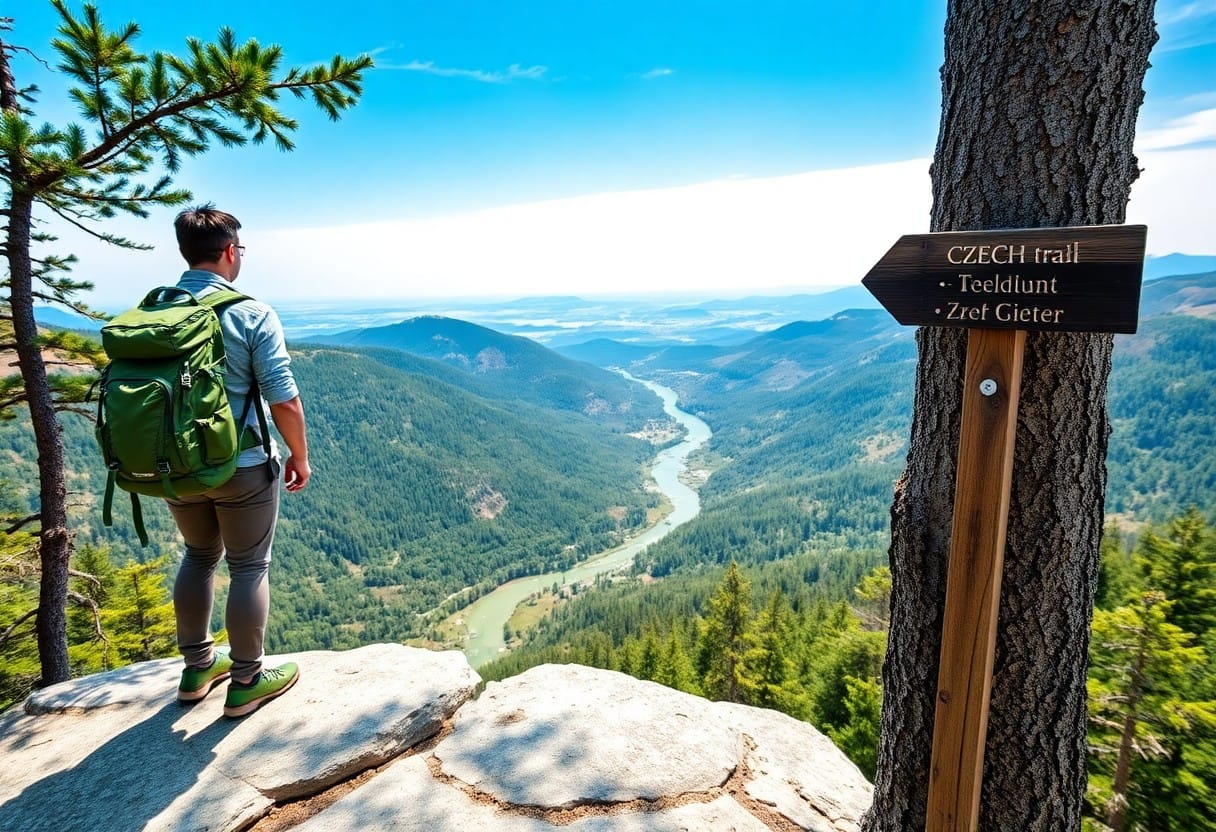
There’s a wealth of walking tours and self-guided activities in Czechia tailored to solo travelers; you can explore stunning, walkable historic centers and scenic Bohemian trails at your own pace. To stay safe, stay alert for pickpockets in crowded spots and keep valuables secure. Consider joining small-group guided walks for local insight and company; see Czech Republic Tours: Guided Solo and Small-Group Options to compare itineraries and book confidently for your trip.
Types of Walking Tours in Czechia
You can choose between short city walks, multi-hour nature hikes, and niche themed tours that focus on beer, history, or photography; typical urban walks run about 2-3 hours while day hikes are commonly 3-8 hours. Many guided options cost between 300-800 CZK for city tours and 500-1,500 CZK for specialty or multi-day guided hikes, with group sizes usually from 8-20 people.
When you plan, factor in seasonal crowds-Prague and Český Krumlov swell in July-August-and trail conditions: cobblestones and steep mountain stretches can be slippery when wet; bring sturdy shoes and a rain layer. Perceiving how the type of tour matches your energy and interests will make choosing simpler.
- Historical walking tours
- Nature and scenic walks
- Themed tours
- Self-guided routes
- Guided group tours
| Type | Typical length & highlights |
| Historical walking tours | 1.5-3 hours; Prague Castle, Kutná Hora, Český Krumlov; museum entries optional |
| Nature & scenic walks | Half-day to multi-day; Bohemian Switzerland, Krkonoše, Šumava; marked trails by KČT |
| Themed tours | 2-4 hours; beer trails, communist-era routes, Jewish Quarter, ghost tours at night |
| Self-guided vs guided | Self-guided gives flexibility; guided adds local insight and access to lesser-known sites |
Historical Walking Tours
You can follow guided routes through Prague’s medieval core, where a typical itinerary includes the Charles Bridge, Old Town Square, and Prague Castle complex; expect 2-3 hour walks and optional museum stops like St. Vitus Cathedral or the Royal Palace. Local guides often quote dates and stories-such as the 14th-century construction phases or the 1870-1900 urban renovations-to give context that you won’t get from a map alone.
Smaller towns offer focused historical tours: in Kutná Hora a 90-120 minute walking route links the Cathedral of St. Barbara and the Sedlec Ossuary, while Český Krumlov’s guided circuit highlights Renaissance and Baroque layers around the castle. For safety, keep valuables secure in crowded spots because pickpocketing risk increases on busy bridges and squares.
Nature and Scenic Walks
You’ll find day hikes in Bohemian Switzerland that climb to viewpoints like the Pravčická brána overlook and rim trails lasting 3-6 hours, while Krkonoše offers alpine routes with 500-1,000 m elevation gains and multi-day hut networks. Trails are maintained and marked by the Czech Tourist Club (KČT); maps and trail blazes let you combine stages into 15-30 km days for longer treks.
When you head into national parks, wear sturdy boots and carry water, a map, and a windproof layer because weather can change rapidly above 800 m; steep sandstone sections may have exposed drops, so exercise caution near cliffs. Guided nature walks often include naturalist commentary on endemic species and geology-great if you want biological or photographic insight.
Extra options include riverbank promenades along the Vltava for gentle urban scenery, and seasonal transfers to access higher trails: you can use regional trains to reach trailheads in under 90 minutes from Prague, making day escapes feasible and efficient. Perceiving how elevation and season alter trail difficulty helps you pick the right route.
Themed Tours
You can join themed experiences that focus on beer (pub crawls and brewery tours), communist-era history (walking routes in Prague plus trips to Terezín), or Jewish heritage tours in Josefov that include synagogue interiors and cemetery context; themed walks typically run 2-4 hours and often include entry fees. Many operators run small-group photography tours that time light for sunrise or blue hour in locations like Charles Bridge to improve your shots.
Nighttime ghost or legends tours visit alleys and cellars and are theatrical-expect storytelling and dramatized accounts rather than strict history, so choose a reputable guide if you want accurate background. For beer tours, sample sizes are common and you should budget an extra 200-600 CZK for tastings or brewery entry beyond the guide fee.
Specialized tours-culinary walks in Brno, textile-heritage routes in northern Bohemia, or cycling-and-walking hybrids-require varied fitness and booking in advance for small-group slots; operators frequently cap groups at 12-15 to preserve atmosphere and access to small venues. Perceiving which theme aligns with your interest ensures a richer, safer experience.
Planning Your Walking Tour
You should slot tours into the part of the day that matches your energy and light: many city circuits run best in the morning or late afternoon to avoid peak tourist crowds, while castle grounds and viewpoints are most photogenic at golden hour. Tours commonly last 2-4 hours and cover roughly 3-8 km, so pick one that matches your pace and foot fitness; if stairs and cobbled surfaces are listed, expect slower walking and more breaks.
When booking, check opening hours and seasonal changes-museums and some historic sites often have reduced hours in November-March-and book high-season slots (May-September, Christmas market weekends) 24-72 hours ahead. You’ll get the best mix of safety and social options by choosing small-group or themed tours (history, food, photography) that list group size, language, meeting point and cancellation policy; typical costs range from tip-based to 300-1,200 CZK for private or specialized excursions.
Research and Choose the Right Tour
Start by matching the tour type to the place: for Prague pick a route that explicitly covers the Old Town, Charles Bridge and Prague Castle if you want the classic highlights, while Bohemian Switzerland offers guided hikes like the Pravčická brána circuit that are usually 3-6 km round-trip with uneven trail sections. Free walking tours are great for orientation-expect 2-3 hours and tip-based guides-whereas paid small-group hikes (6-12 people) or private guides give more local insight and flexibility, especially if you want photography stops or museum entries.
Vet guides and operators on platforms such as GetYourGuide, Viator or local providers (check recent reviews) and confirm language, meeting landmark and transport links; Kutná Hora is an easy 60-75 minute train ride from Prague, but tours there usually include 2-3 hours on foot within town. Also check accessibility notes if you have mobility limits: many historic centers have cobbled streets and steep steps that aren’t suitable for everything from strollers to ankle-prone hikers.
Essential Gear and Supplies
You’ll want sturdy, broken-in walking shoes with good tread for cobbles and trails, a lightweight waterproof layer, and temperature-appropriate layers-Czech summers commonly sit around 20-25°C while winter daytime averages can be near -5-3°C-so pack a warm hat for off-season tours. Carry a daypack with at least 1-2 liters of water for half-day walks (2-3L for longer hikes), basic first-aid (plasters for blisters), sunscreen SPF 30+, insect repellent for forested areas, and a power bank to keep your phone charged for photos and navigation.
Keep some Czech koruna (CZK) on hand for small purchases and local transport; cards are widely accepted but rural vendors may be cash-only. For navigation download offline maps (Mapy.cz is widely used in Czechia) and save the emergency number 112 and local embassy details in your phone; if you’re hiking in less populated areas, include a whistle and a headlamp in your pack.
Choose footwear with a lug sole or Vibram-style grip and consider ankle-support models for uneven forest trails; break them in before longer tours to avoid blisters. Aim to keep your daypack under 10% of your body weight, bring a 10,000 mAh power bank as a minimum for full-day outings, and note that Czech sockets use Type E/F (230V), so bring an adapter if needed. For winter travel pack microspikes or traction aids and for summer use DEET-based repellent (20-30%) in tick-prone areas; the tap water is safe to drink, so a refillable bottle keeps costs down and plastic waste low.
Tips for Solo Travelers
Safety Precautions
When you head out on walking tours or explore late-night neighborhoods, keep a low profile with valuables: store your passport in a hostel safe and carry only the cash and cards you need for the day. Pickpocketing is most common around crowded sights such as Charles Bridge and Old Town Square, so keep wallets in front pockets, use a slim money belt, and keep a hand on bags in trams and on crowded metro platforms. If something goes wrong, dial 112 for emergencies or 158 to reach the local police; save your embassy’s number and the address of where you’re staying in your phone and a paper copy.
- Keep copies of your passport and travel insurance in cloud storage and one paper copy separate from the originals.
- Use licensed taxis or apps like Bolt/Uber rather than street-hailing late at night.
- Stay visible on walking routes after dark – main streets and tram lines are safer than shortcuts through parks.
- Watch peak hours on tourist sites (10:00-16:00) when crowds make pickpocketing easier.
On organized tours pick groups and meeting points visible on maps and confirmed by the guide – many reputable walking tours run with 8-30 people and list guides by name on review sites; choose ones with recent positive reviews and clear cancellation policies to avoid scams.
Socializing and Meeting People
You can meet other travelers fast on free walking tours (common start times in Prague are mid-morning and early afternoon) where groups often range from 15 to 40 people; paid small-group tours usually keep numbers to 8-12, which makes conversation easier. Hostels frequently host communal dinners or pub crawls – expect 10-60 attendees depending on the hostel – and local Meetup and Facebook groups such as Expats in Prague run language exchange nights, hikes, and brewery visits that are geared toward newcomers.
Start interactions with specific, simple questions: ask about a local brewery recommendation, which tram line goes to Vyšehrad, or whether someone wants to split a brewery tour in Plzeň – those prompts get better responses than generic small talk. Use apps like Meetup, Couchsurfing events, and Travello to find organized gatherings; always check recent reviews and event photos and share your ETA with your accommodation when joining late-night socials to keep your plans visible to someone you trust.
Learn a few Czech phrases to break the ice – “Dobrý den” for hello and “Na zdraví” for cheers – and be prepared to offer small gestures like buying the first round; hostel dorms in bigger cities often run about 250-600 CZK per night and pub-crawl fees are commonly 200-400 CZK, so have some CZK on hand. After you meet someone on a tour or at an event, exchange contact details quickly and suggest a concrete follow-up – a coffee at a named cafe or a specific time to meet – to turn a brief chat into a meetup.
Step-by-Step Guide to Enjoying Walking Activities
Quick Step Checklist
| Step | Action & Example |
|---|---|
| Plan time & distance | Set a target of 2-4 hours or 5-12 km depending on pace (average walking speed ~4-5 km/h). For example, a 7 km loop from Charles Bridge to Vyšehrad typically takes ~2 hours walking plus breaks. |
| Choose focus | Pick an angle: architecture, street food, history, or photography. If you want food stops, plan 3 short breaks-a pastry, a pub, and a market stall. |
| Navigation tools | Download offline maps (Mapy.cz or Maps.me), export a GPX route for Komoot, or use printed maps as backup. Guided options listed here: Czech These Out: The Best Walking Tours in Prague. |
| Gear & safety | Pack a 1 L water bottle, lightweight rain shell, portable charger, and spare cash. Avoid poorly lit alleys at night; stick to main streets after dusk and keep valuables secure. |
| Fallback plan | Identify tram/bus lines near route (Prague trams 2, 3, 9 often run along tourist corridors) and mark nearest metro stations for quick exits. |
Setting Goals for Your Tour
You should define a clear purpose before you head out: pick a time-based goal (e.g., a 3-hour loop), a distance goal (5-10 km), or an interest goal like baroque architecture or local food. For instance, if your aim is photography, plan to start 60-90 minutes before golden hour and restrict the route to 3-6 km so you can move slowly and get composition right.
If socializing is the aim, target small-group guided walks or themed meetups and allow an extra 30-60 minutes for coffee breaks. Set measurable checkpoints-three monuments or two food stops-and check them off as you go so your day stays on schedule without feeling rushed.
Navigating and Mapping Your Route
You should build your route using a mix of offline maps and waypoints: download Mapy.cz for Czechia offline coverage, draw a route in Komoot or Google My Maps and export a GPX for your phone. Plot clear waypoints every 1-2 km (major squares, tram stops, cafés) so you can reorient quickly if you detour.
Plan exit options at regular intervals: mark at least two nearby public transport stops within 15 minutes of walking time, and check tram schedules if your route crosses major arteries. Carry a paper backup of key streets or a printed small-scale map for when battery or signal fail.
More practical detail: save offline tiles for at least a 10 km radius, set your phone to low-power mode but keep a 10,000 mAh power bank handy, and pre-download site opening hours (many museums close Monday). If your route uses steep sections, check elevation profiles in Komoot-expect slowdowns of 30-50% on steep cobbled streets.
Factors to Consider
- Weather and seasonal patterns across Czechia
- Duration and Difficulty of routes
- Terrain (cobblestones, forest trails, mountain routes)
- Safety concerns (visibility, slippery surfaces, pickpockets)
- Transport links and daylight hours for solo itineraries
Weather and Seasonal Considerations
In Prague expect average January temperatures around -1 °C and July highs near 25-30 °C, while mountain zones like the Krkonoše routinely drop below -10 °C in winter and retain snow from November into April; plan for short daylight (around 8 hours in mid-December) if you’re hiking or taking evening walking tours. You should pack breathable layers and a waterproof shell for sudden summer storms, and carry microspikes or gaiters if you’ll be in higher elevations between November and March because icy cobblestones and frozen forest paths are a common hazard.
Festival seasons change the character of tours: Christmas markets (late November-December) make city walks atmospheric but more crowded, while May and September offer milder weather and fewer tourists, often with lower accommodation prices. Check local forecasts and the long-range outlook from Czech Hydrometeorological Institute for specific weather windows, and adjust plans if a mountain forecast shows strong winds or blizzard warnings.
Duration and Difficulty Level
Short urban walking tours typically run 1.5-3 hours and cover 2-6 km on paved surfaces-ideal if you prefer flat routes and frequent stops-whereas day hikes in regions like Český ráj or Šumava frequently span 8-15 km with intermittent steep sections and uneven rock steps. Gauge difficulty by distance, elevation gain (for example, the Sněžka ascent involves roughly 1,000 m of vertical gain and can take 8-10 hours round-trip from Pec pod Sněžkou), and surface type; use the Czech trail-marking system (red for primary long-distance routes, blue/green/yellow for shorter connectors) to estimate effort and navigation complexity.
This helps you match routes to your fitness, available daylight and transport connections so you can choose realistic solo itineraries.
Pros and Cons of Solo Walking Tours
| Pros | Cons |
|---|---|
| Full control of itinerary – you can divert to a hidden courtyard or extended café stop on a whim. | Safety risks in busy tourist spots – pickpocketing in Prague Old Town and crowded trams require vigilance. |
| Deeper local interactions – vendors in farmers’ markets in Brno or small pubs in Moravia often open up to solo travelers. | Loneliness on long days – remote trails like parts of the Bohemian Forest can feel isolated for hours. |
| Budget flexibility – you can choose hostels, day tours, or upscale options based on a single decision. | Logistics overhead – planning train connections and trailheads can be more demanding when you have no partner to split tasks. |
| Custom pace – walk 5 km or 20 km days (many regional hikes average 10-20 km/day) without compromise. | Physical strain – carrying a full pack or navigating cobbled streets increases risk of fatigue and small injuries. |
| Spontaneous discoveries – alleyways in Český Krumlov or street art in Olomouc appear when you wander off the main route. | Limited emergency backup – in case of sprain or sudden illness you may wait longer for help on rural paths. |
| Easy to combine with short guided segments – join a 3-hour Prague walking tour and continue solo afterward. | Language friction – outside Prague and Brno, English can be limited in villages; signage on minor trails may be sparse. |
| Opportunity to practice language and confidence – you control social interactions and learning pace. | Weather unpredictability – sudden storms in highlands can make exposed trails hazardous without shelter. |
| Choice of tools – you decide when to use apps like IDOS.cz or offline maps without negotiating with others. | Navigation errors – missing a junction on an unmarked path can add several kilometers and delay trains that run hourly or less on some regional lines. |
Advantages of Solo Exploration
You can tailor every day to your interests: spend three hours photographing Gothic spires at Prague Castle, then take a late-afternoon train to Kutná Hora and explore the Sedlec Ossuary on your own schedule. Solo travel lets you compress or extend time at sites – many travelers find they uncover lesser-known spots like small baroque churches or artisan workshops in Olomouc simply because they had the freedom to wander.
When you travel alone you also sharpen practical skills: reading timetables on IDOS.cz, negotiating a tram ticket, or handling a 10-20 km hike in the Bohemian Switzerland becomes faster with each trip. That hands-on experience often leads to better choices on subsequent itineraries, and you’ll find yourself planning more efficient days with a mix of urban walking and short regional hikes.
Challenges and Solutions
You’ll face safety and logistical challenges that solo travelers must address proactively. Pickpocketing in tourist hubs is real – keep valuables in a front pocket or money belt and avoid flashing passports or large sums of cash; a small cross-body bag with an internal zip reduces risk. On remote trails, brief gaps between villages mean you should carry a basic first-aid kit, water, and a charged phone or power bank; European emergency number 112 works throughout Czechia.
Language and transport gaps can slow you down, especially on less-frequented regional lines. Use IDOS.cz or the Czech Railways app to check schedules ahead; plan buffer time of 30-90 minutes for connections on rural routes. Learn a handful of Czech phrases and download offline maps or an eSIM so you can reroute if a path is closed – these small steps cut stress and keep you moving.
Mix solo days with one guided activity every few days to mitigate isolation and access expert knowledge for difficult routes; local walking groups and day tours also offer a safety net and social opportunities without sacrificing independence. Carry about 200-500 CZK in cash for rural stops where cards may not be accepted, and always share your planned route with someone via message or a simple photo of the map before heading into less-populated areas.
Conclusion
From above, you can see that walking tours and solo activities in Czechia offer a reliable, varied way to explore safely and efficiently; guided city walks, themed food tours, day hikes in national parks and small-group excursions let you control pace while connecting with others, and public transport and clear trail systems make independent exploration practical. Choose organized tours to access local knowledge and off-the-beaten-path sites, and use reputable providers and local reviews to ensure quality and accurate logistics.
When you plan your itinerary, balance iconic urban routes with outdoor options to keep energy and interest high, and prioritize tours that match your social preferences-if you want company, pick small-group departures; if you prefer solitude, select self-guided routes with good maps or apps. With basic preparation and selectivity, your solo walking experiences in Czechia will be efficient, engaging and rich in cultural insight.
FAQ
Q: What walking tours and activities are best for solo travelers in Czechia?
A: Solo travelers should mix city walking tours (free or paid) with themed experiences and short nature hikes. In cities, join free walking tours in Prague, Český Krumlov, Brno or Olomouc to get orientation, then try specialized walks – communism/history tours, street-art and Jewish Quarter tours, food and beer tastings, or photography walks. For outdoors, consider day hikes in Bohemian Switzerland, the Moravian Karst, or Krkonoše with marked trails and guided options. Also look for twilight ghost tours, castle tours (Prague Castle, Karlštejn), river boat trips, and guided cycling or e-bike tours when you want more pace. Book popular guided activities in advance in high season and tip free-tour guides appropriately.
Q: How safe and practical are walking tours for someone traveling alone, and what should I prepare?
A: Walking tours are generally safe; pick reputable companies, stay in well-frequented areas after dark, and trust your instincts. Carry a copy of your passport, a small amount of local currency, a charged phone and portable battery, and download offline maps (Mapy.cz or Google Maps). Use public transport validated tickets in cities (Prague, Brno) or taxis from licensed apps; emergency number is 112. Be aware of occasional pickpocketing in crowded spots-keep valuables secured and use a money belt or zipped bag. Wear comfortable shoes, layer clothing for changeable weather, and pack a light rain jacket for sudden showers.
Q: How can I meet people or join group activities when traveling solo in Czechia?
A: Join group-oriented offerings: free walking tours, pub crawls, cooking classes, beer tastings, photography meetups, or multi-day small-group hikes. Stay in hostels, guesthouses or use meetup platforms (Meetup, Couchsurfing events) and local Facebook groups to find social outings. Book small-group experiences through local guides and tour providers to guarantee interaction; guided day trips to nearby castles, spas or nature parks are good for making connections. Respect local customs, be open to after-tour coffee or drinks, and exchange contact details if you want to explore together later.

Hello, I am Jan, a travel writer based in the Czech Republic. I specialize in discovering and writing about my homeland—medieval towns, mountain hikes, the local pub scene, and off-the-tourist-radar destinations.
I also write about life as an expat in Czechia—just what it is like to live here, and not just visit. That means the little victories, the cultural surprises, and the daily realities of establishing life in this side of the world. If you’re considering visiting or making the move, I hope to give you an authentic, realistic sense of what life in Czechia is all about.