
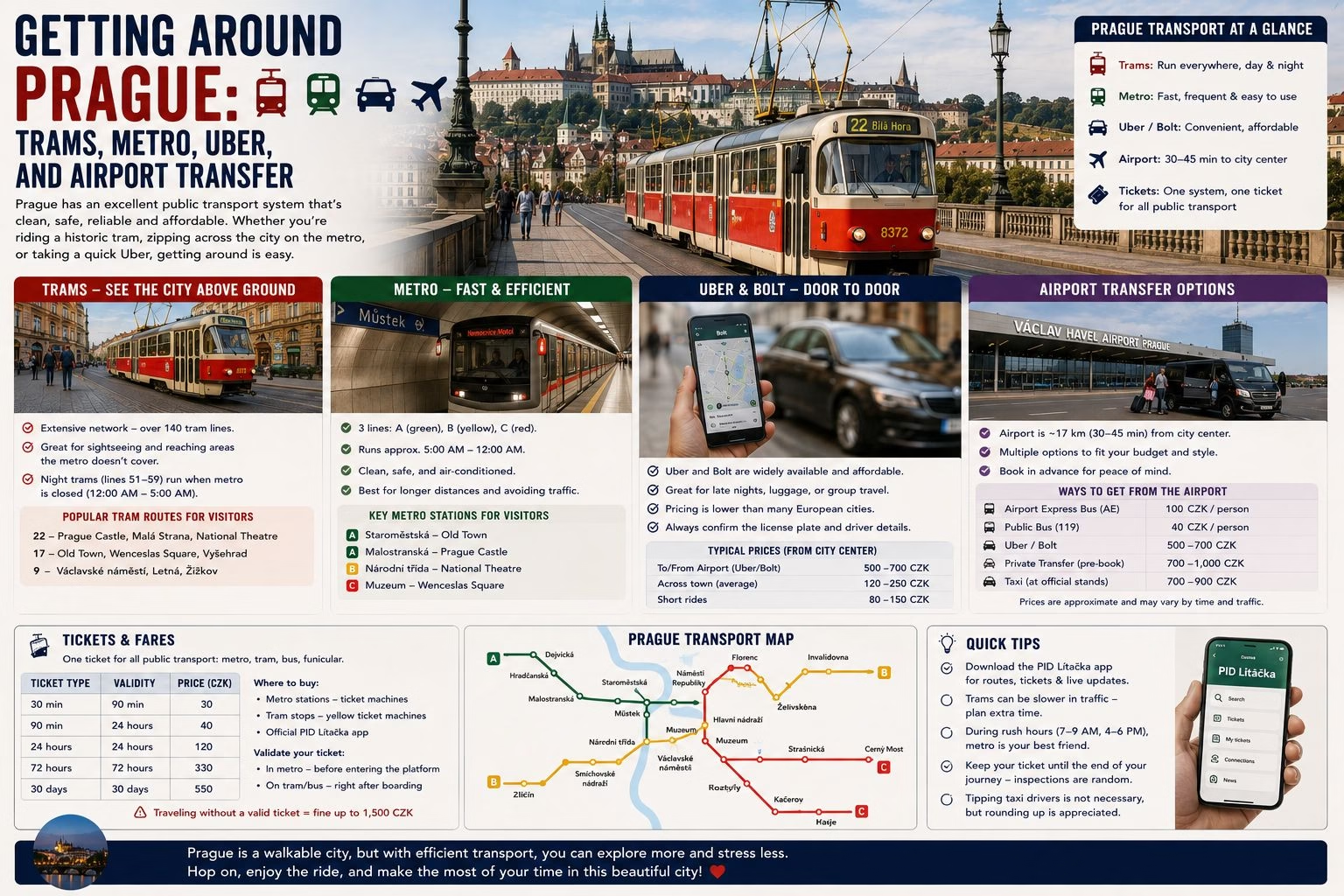
Prague’s public transport system is one of the best in Central Europe: frequent, well-integrated, inexpensive, and covering effectively the entire city. A single-zone ticket valid for 90 minutes costs CZK 50 (CZK 46 in the PID Lítačka app) and covers trams, metro, buses, and the night services. The 24-hour pass costs CZK 150 (140 in the app) and the 3-day pass costs CZK 350 (340 in the app). For visitors spending more than a day in the city, the day pass represents significantly better value than individual tickets.
The Tram Network
Prague’s trams are the most practically useful mode of transport for visitors. Unlike the metro, which runs under the city in straight lines, the trams follow the surface streets and show you the city as you travel. The main tourist routes:
Tram 22: The most useful single tram route for visitors. Runs from Vinohrady (Náměstí Míru) through Nové Město to the Old Town, across the Vltava to Malá Strana, up through Malá Strana to the castle stop (Pražský hrad), and continues west. A single tram ride covers most of the inner city tourist circuit.
Tram 17: Along the Vltava riverbank, connecting the National Theatre, the Charles Bridge approach (Staroměstská), and the Jewish Quarter area (Právnická fakulta).
Trams 5, 26: Connecting the Old Town with Žižkov and the outer east.
The DPP (Prague Public Transport) app has real-time tram positions; Google Maps shows tram times accurately for Prague. The tram network runs 24 hours with reduced night frequency (approximately every 20 to 30 minutes) between approximately midnight and 4:30am.
The Metro
Three metro lines form the backbone of longer-distance travel:
Line A (green): Runs east-west through the centre. Key stops: Dejvická (near the airport bus terminus), Hradčanská (for the castle via a walk), Malostranská (Malá Strana), Staroměstská (Old Town), Můstek (Wenceslas Square), Náměstí Míru (Vinohrady), Jiřího z Poděbrad (Vinohrady centre).
Line B (yellow): Runs northwest-southeast. Key stops: Florenc (bus station; connections to day trips), Náměstí Republiky (Palladium shopping; Old Town east), Karlovo náměstí (New Town), Anděl (Smíchov; residential, good food scene).
Line C (red): Runs north-south. Key stops: Hlavní nádraží (main train station), I.P. Pavlova (New Town south; good restaurant area), Vyšehrad (for the fortress), Pankrác (business district south of the centre).
Uber and Bolt
Both Uber and Bolt operate throughout Prague and are the recommended rideshare options over street taxis. The app-based services have metered pricing and the driver and route are tracked; street taxis on the tourist streets are not reliably metered and have a well-documented overcharging history.
Bolt is generally slightly cheaper than Uber in Prague; both are significantly cheaper than the fixed-price taxi services from the airport. A Bolt from the airport to the centre costs approximately CZK 350 to 500 depending on destination and time of day.
Airport Transfer
Public transport: The recommended option for most visitors. Trolleybus 59 (which replaced the old bus 119 in March 2024) from Terminal 1 or 2 to Nádraží Veleslavín metro station (line A, green). Journey: approximately 17 minutes. From Nádraží Veleslavín, metro to Staroměstská (Old Town) or Náměstí Míru (Vinohrady): approximately 10 to 15 minutes. Total airport to Old Town: 35 to 50 minutes. Ticket: CZK 50 (46 in the app). The trolleybus runs every 7 to 10 minutes during peak hours; every 15 minutes at night.
Bolt or Uber: CZK 400 to 600 from the airport to central Prague. Takes 25 to 40 minutes depending on traffic. Practical for late-night arrivals or those with heavy luggage.
Official airport taxis: More expensive than Bolt but regulated; the authorised airport taxi ranks are at the terminal exits. Avoid unofficial taxi approaches inside the arrivals hall.
Accessibility: Trams, Metro, and Reduced Mobility
Prague’s transport accessibility is improving but inconsistent. The metro is generally the most reliable mode for visitors using a wheelchair or with limited mobility: all three lines have lift access at most central stations, though a number of historic stations still rely on stairs only, so checking the DPP accessibility map before planning a route is worthwhile.
Newer low-floor trams, including the majority of the fleet on Tram 22, offer level boarding from raised platforms; older tram models on some outer routes do not. Buses are consistently low-floor and the most reliably accessible single mode across the network. For visitors planning a Prague trip around accessibility needs, the DPP website publishes a station-by-station accessibility list, and it is worth checking specific stops rather than assuming citywide consistency.
Related: Prague Hub | Where to Stay in Prague | Plan Your Trip | Practical Info: Transport