
Czech beer is not just a national beverage; it is a global phenomenon that most people drink without knowing it. The pilsner style, invented at the Pilsner Urquell brewery in Plzeň (Pilsen in German) in 1842, was the first pale golden lager in history. Before 1842, beer was predominantly dark, cloudy, and unpredictable in quality. Josef Groll, the Bavarian brewer hired by the Plzeň citizens, combined Bohemian Saaz hops with Plzeň’s unusually soft water and the newly emerging understanding of bottom-fermentation yeast to produce a beer that was clear, golden, bitter, and refreshing. The style was immediately successful, rapidly copied throughout Europe, and the pilsner lager is now the most produced beer style in the world.
Understanding this context changes how Czech beer tastes: you are drinking the original in its home country, poured as it was meant to be poured, from ingredients grown in the same Bohemian fields that supplied the first batches.
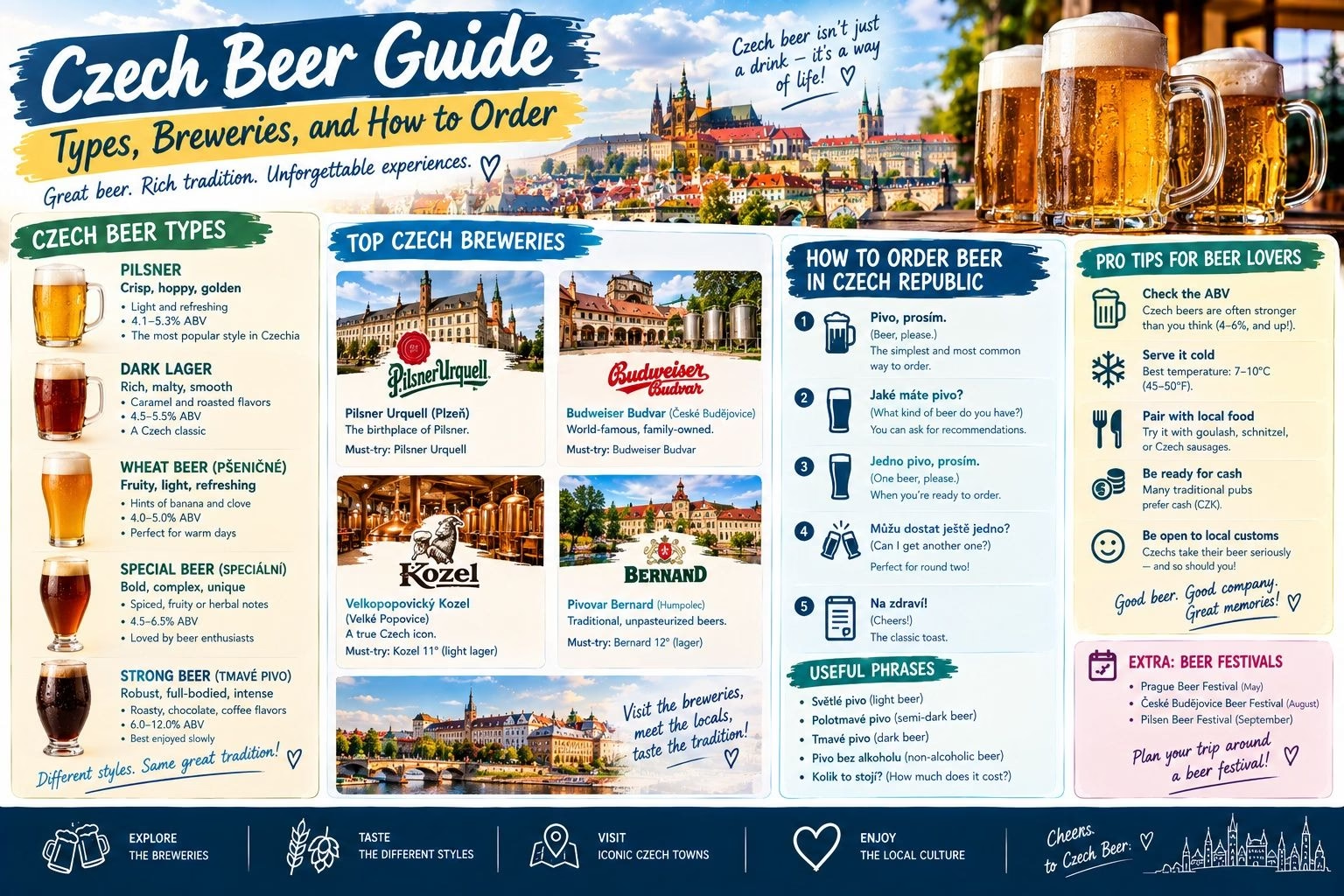
Beer Types in the Czech Republic
Czech Pilsner (světlý ležák): The dominant style. Pale golden, bottom-fermented, with the specific bitterness of Saaz hops. The benchmark is Pilsner Urquell; the closest mass-market equivalents are Kozel světlý, Gambrinus, and Staropramen. Served cold in a 0.5 litre glass (a půllitr) with a dense, creamy head.
Czech Dark Lager (tmavý ležák): Dark brown, slightly sweet, maltier than the pale version, with notes of roasted grain and chocolate. Kozel tmavý is the most widely available and genuinely excellent; Bernard tmavý and Budvar tmavý are strong alternatives. This is the most underrated Czech beer style internationally; many visitors discover it accidentally and become devotees.
Czech Unfiltered Lager (nefiltrované, or kvasnicové): Beer that has not been filtered before packaging, resulting in cloudier, more complex flavour. Pilsner Urquell nepasterizované (unpasteurised) as served directly from the barrel in the Plzeň cellar is the apex of this category; many Czech breweries now offer tank beer (tankové pivo) versions in Prague pubs.
Czech Wheat Beer (pšeničné pivo): Less common than in Germany but present; produced by several Czech microbreweries and by some larger breweries seasonally.
The Major Czech Breweries
Pilsner Urquell (Plzeňský Prazdroj): Founded 1842 in Plzeň; the original Czech pilsner brewery and now owned by the Japanese Asahi group. The beer, despite corporate ownership, remains the benchmark Czech pilsner. The barrel-lagered version available at the brewery (unpasteurised, served directly from the wooden conditioning barrel) is the best expression of the style.
Budvar (Budějovický Budvar): The state-owned Bohemian brewery in České Budějovice, famous for the long-running trademark dispute with Anheuser-Busch over the name “Budweiser.” Budvar is a completely separate company from the American Budweiser and produces a genuinely excellent Czech pilsner. The beer is sold as “Czechvar” in the US market due to the trademark restrictions; everywhere else it is Budvar.
Kozel (Velkopopovický Kozel): Produced in Velké Popovice south of Prague; the dark lager (Kozel tmavý) is the most acclaimed product. Widely available in Prague.
Gambrinus: Produced at the same Plzeň brewery as Pilsner Urquell; a more affordable everyday beer with the same soft Plzeň water character but less hop intensity.
Staropramen: The major Prague brewery, now owned by Molson Coors. Available everywhere in the city; more variable in quality than the Plzeň breweries.
Bernard: An independent Czech microbrewery in Humpolec with a strong following; unpasteurised version available in many Prague pubs. One of the best representatives of the Czech independent brewery movement.
How Czech Beer Is Poured (and Why It Matters)
Czech tap beer is poured using a method that is specific to the Czech tradition and produces a beer with a different texture and taste from the same beer poured quickly. The Czech method:
The glass is held under the tap at an angle; the first pour fills the glass partially with foam, establishing the head. The glass is then set upright and the beer is allowed to rest; the head settles. A second pour adds more beer; the head is allowed to build again. The final result: a glass of golden beer with a dense, creamy head approximately 3 to 4 centimetres thick that is integral to the drink, not waste.
The head in Czech beer culture is not decorative; it serves as a barrier preventing the beer below from losing carbonation and coming into contact with air. The properly poured Czech pilsner, drunk within 10 to 15 minutes of pouring, tastes different from the same beer poured without the head: fuller, softer, with the hop bitterness better integrated.
Ordering Beer in Czech
Czech pubs use a simple ordering system. At a hospoda, you sit at a table and wait; a server will come to you. Say:
“Jedno pivo, prosím” (one beer, please): the server will bring the house beer in the standard 0.5 litre glass.
“Dvě piva, prosím” (two beers, please).
“Ještě jedno” (one more): when your glass is approximately three-quarters empty, the server may ask; this phrase orders another.
“Zaplatím” (I’ll pay): when you want the bill. The server tallies the marks on the beermat and tells you the total.
Craft Beer in Prague
The Czech craft beer revolution began around 2012 to 2013 and Prague now has a substantial number of dedicated craft beer bars and microbreweries. The craft beer scene focuses primarily on Czech lager styles done with more care and artisanal ingredients, alongside American-style IPAs and other international styles. Specific craft beer destinations are covered in the Prague nightlife guide.
Nealko: Czech Non-Alcoholic Beer
Czech non-alcoholic beer, nealko, is taken seriously in a way that surprises visitors used to weaker international versions. Birell, Bernard’s nealko range, and Staropramen’s non-alcoholic line are widely available on tap in ordinary pubs, not just as a bottled afterthought, and are drunk by a meaningful share of the Czech population as a genuine everyday choice rather than a substitute. For visitors who are driving, pregnant, or simply pacing themselves through a long pub session, ordering nealko carries none of the stigma it might elsewhere; “Nealko pivo, prosím” gets the same respect at the bar as ordering the full-strength version.
Related: Beer and Food Hub | Czech Pub Culture | Day Trips: Plzeň Brewery | Practical Info: Culture and Etiquette