
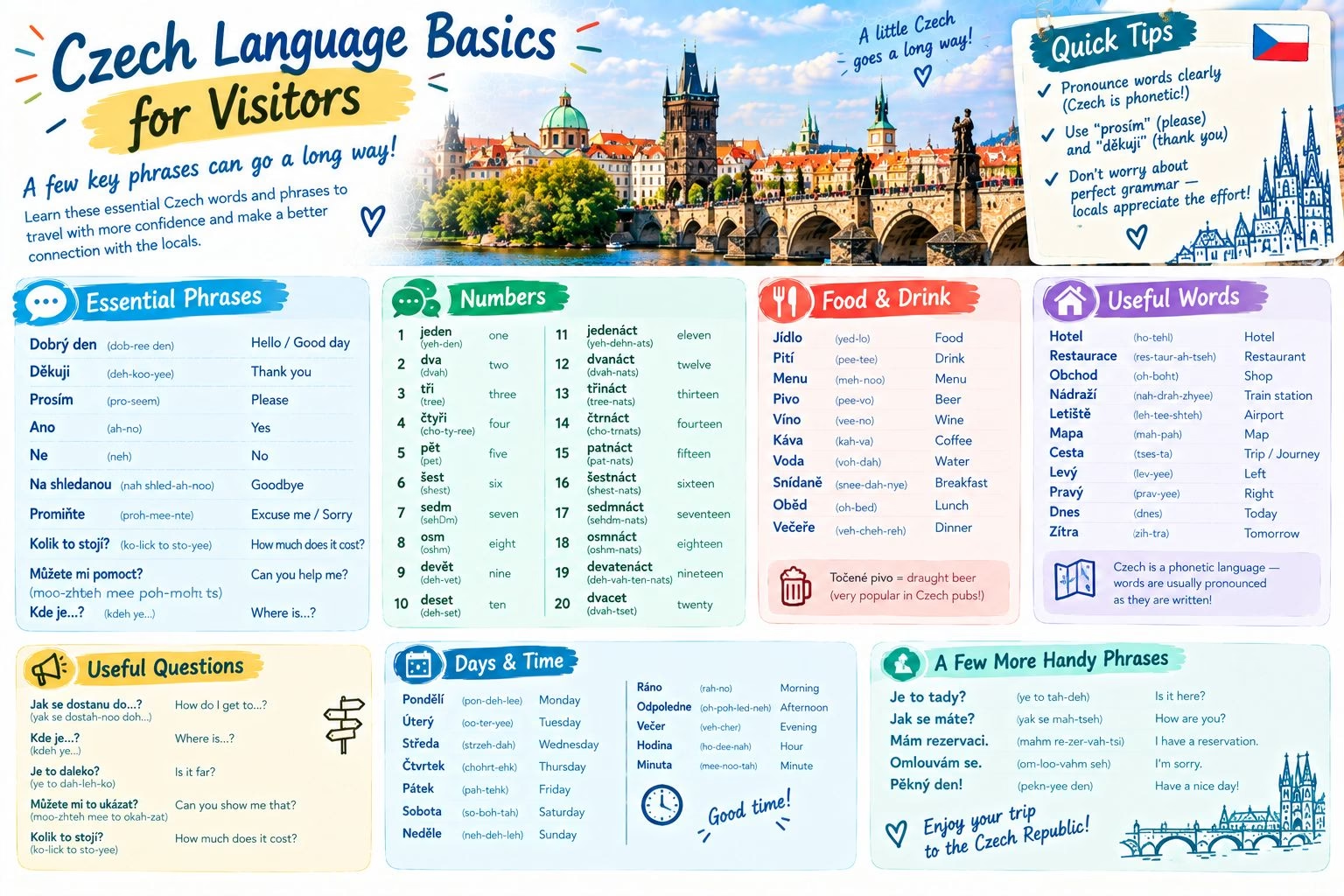
Czech is a Slavic language related to Slovak, Polish, and Russian but not mutually intelligible with any of them at a practical level without study. It is not an easy language for English speakers; the grammar involves seven cases, consonant clusters that English-trained mouths find difficult, and a pronunciation system that includes the specific consonant sounds ř (a simultaneous r and ž sound with no equivalent in any other European language), ch (the back-of-throat sound also in German), and the long vowels marked with accents.
The good news for visitors: English is very widely spoken in Prague and in most tourist-facing contexts throughout the Czech Republic. The information below is practical knowledge rather than a requirement for surviving a Czech visit; it will, however, make the visit more rewarding.
The Most Useful Czech Phrases
Greetings and basics:
Dobrý den: good day (formal greeting)
Dobrý ráno: good morning
Dobrý večer: good evening
Ahoj: hi / bye (informal)
Na shledanou: goodbye (formal)
Prosím: please (also used as “here you are” when handing something)
Děkuji (or Díky): thank you (formal / informal)
Promiňte: excuse me / sorry (formal)
Pardon: excuse me (informal)
At a restaurant or pub:
Jedno pivo, prosím: one beer, please
Dvě piva, prosím: two beers, please
Ještě jedno: one more
Zaplatím: I’ll pay
Je tu volno?: Is this seat free?
Nechte to: keep the change
Practical navigation:
Kde je…?: Where is…?
Jak se dostanu do…?: How do I get to…?
Vlevo / vpravo: left / right
Rovně: straight ahead
Numbers:
Jeden/jedna (1), dva/dvě (2), tři (3), čtyři (4), pět (5), šest (6), sedm (7), osm (8), devět (9), deset (10), sto (100), tisíc (1,000)
Czech Pronunciation: The Essentials
Czech pronunciation is phonetic: words are pronounced exactly as they are spelled, once the Czech alphabet is understood. Key rules:
The accent (háček, the little check mark above a letter) changes the sound: š = sh, č = ch, ž = zh (as in “measure”), ř = the unique Czech sound (rough approximation: a rolled r and zh simultaneously).
The long accent (čárka, the stroke above a vowel) lengthens the vowel: á, é, í, ó, ú all hold twice as long as their short equivalents.
Stress in Czech is almost always on the first syllable.
The letter h in Czech is pronounced in the throat, more strongly than the English h; ch is the guttural sound of German Bach.
Czech Social Language: Reading the Room
The formal/informal distinction in Czech (vy versus ty) matters. With strangers, service staff, and older people: vy (formal). With people of approximately your own age who have indicated informality: ty. When in doubt, vy.
The Czech “prosím” (please) does multiple duty: as please when making a request, as “here you are” when handing something over, as “come in” in response to a knock, and as “you’re welcome” in some contexts. It is one of the most useful words in the language.
Czech in the Context of Czech Hospitality
Attempting Czech, even badly, produces a disproportionately positive response from Czech people. The Czech relationship to their language is specific: it is a language that was suppressed and replaced by German during the Habsburg period and that was revived as a central part of Czech national identity in the 19th-century National Revival (Národní obrození). Czech people are genuinely pleased when foreigners engage with their language. Even “dobrý den” and “děkuji” said correctly produces a different quality of response than immediate English.
Reading Czech Menus and Signs
A small set of words does most of the work for navigating on foot and reading a menu without asking for an English version. Otevřeno and zavřeno mean open and closed; vchod and východ mean entrance and exit; pokladna is the till or ticket counter. On a menu: polévka is soup, hlavní jídlo is main course, příloha is a side dish, and vegetariánské marks a vegetarian option. Pozor, seen on signs near steps, wet floors, or low doorways, means caution or watch out, and is worth recognising even without knowing the rest of the sentence around it.
Related: Practical Info Hub | Czech Culture and Etiquette | Beer and Food Hub | Plan Your Trip