
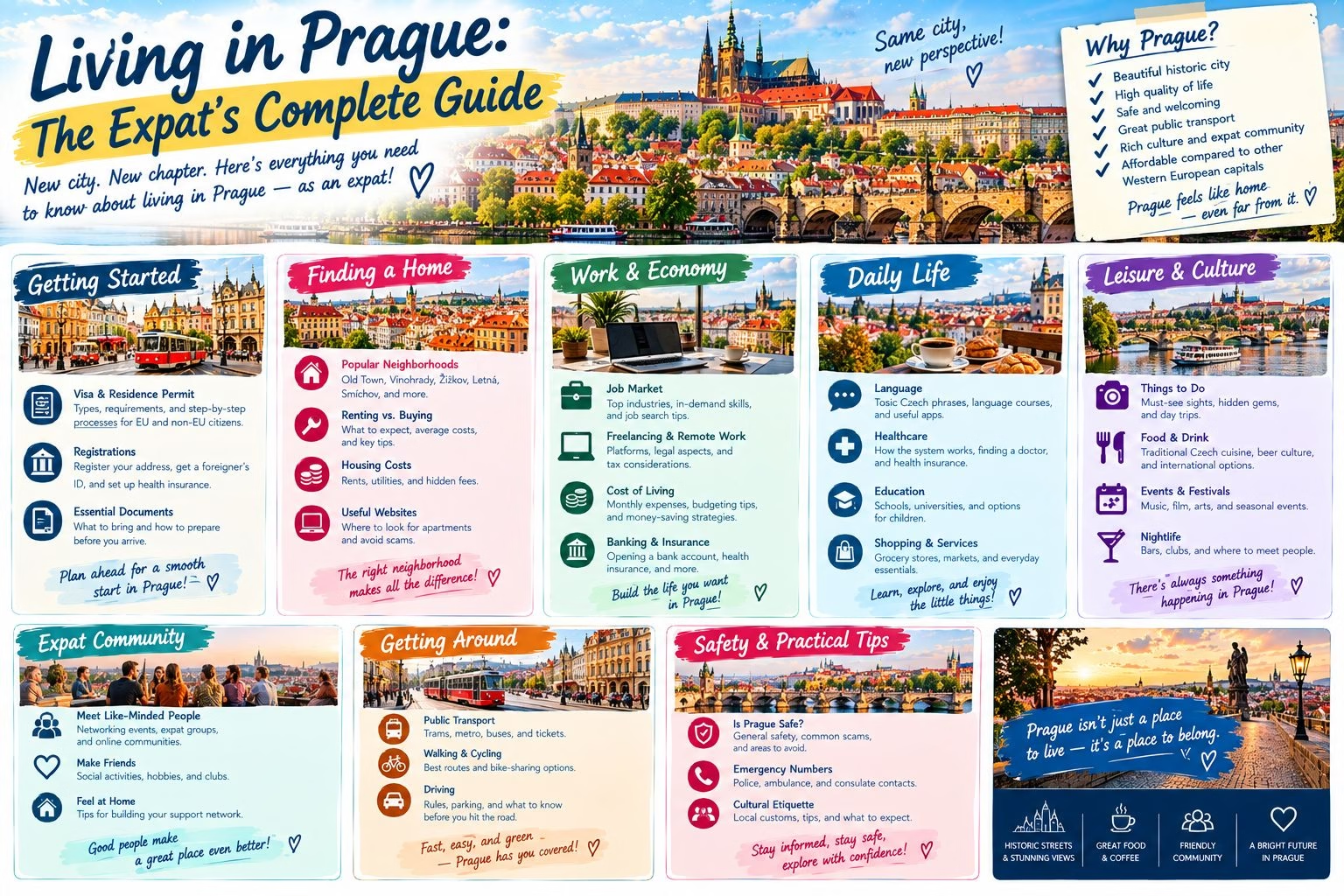
I have lived in Prague for more than a decade. The city I arrived in 2013 and the city now have both continuity and significant change: the same extraordinary architectural fabric, the same Central European pace and culture, and substantially different housing costs, restaurant scene, and expat community. This guide reflects current conditions rather than historical ones.
Finding an Apartment in Prague
The Prague rental market has tightened significantly since 2015. The combination of Airbnb reducing the long-term rental supply (particularly in the Old Town and Malá Strana), the growth of the expat community, and increased domestic demand for rental housing has pushed prices up and wait times for good apartments down. The practical situation: good apartments in the desirable inner neighbourhoods (Vinohrady, Žižkov, Holešovice, Smíchov) require fast decision-making and either a reliable agent or active searching.
Useful platforms for Czech apartment searching:
Sreality.cz: the largest Czech real estate portal; Czech only, but navigable with Google Translate.
Expats.cz: English-language platform with significant Prague rental listings; specifically oriented toward the expat community.
Facebook groups: “Prague Flats and Apartments,” “Prague Expat Housing,” and similar groups have real-time listings and direct landlord contact.
Typical current costs in desirable inner neighbourhoods: a one-bedroom apartment (1+1 in Czech notation) in Vinohrady or Žižkov: CZK 19,000 to 26,000 per month plus utilities. A two-bedroom (2+1 or 2+kk): CZK 27,000 to 38,000 per month. Older buildings (panelák, the prefabricated concrete blocks of the communist era) are significantly cheaper and have loyal defenders; the apartments are often larger for the price and the buildings are well-maintained.
Registering Your Address
Non-EU visitors staying more than 30 days in the Czech Republic are required to register with the Czech Foreign Police (Cizinecká policie). EU citizens have the right to stay without registration for up to 30 days; for longer stays, registration of address (ohlášení místa pobytu) is required.
The registration process requires: your passport, a document confirming your address (usually a lease agreement or a document signed by the property owner confirming you are staying there), and the completed registration form (available from the Foreign Police website). Allow 1 to 3 hours for the appointment; the Prague Foreign Police at the Žukovského address in Letňany is the main processing centre, with branch offices in the city.
Czech Healthcare for Expats
The Czech Republic has a state healthcare system funded by compulsory insurance contributions. Access for expats:
EU citizens: EU citizens working in the Czech Republic contribute to the Czech state health insurance (zdravotní pojištění) through their employer or, if self-employed, as OSVČ (freelancers). EU citizens who are registered residents but not working can access the state system through either their home country’s European Health Insurance Card (EHIC) for short periods or by registering with the Czech VZP (the main state health insurer) and paying voluntary contributions.
Non-EU citizens: Must either have commercial health insurance (required for long-stay visa application) or, once employed or registered as self-employed, enrol in the Czech state health insurance system.
Practical access: most Czech doctors in Prague have at least basic English. The Foreigners Medical Clinic at the Charles University Faculty Hospital (Všeobecná fakultní nemocnice) is the main English-language public healthcare resource in Prague. Private clinics (Canadian Medical, Medicover) offer English-language care at private rates.
Czech Banking for Expats
Opening a Czech bank account requires a Czech address (registered) and a valid residence document. The main Czech banks (Česká spořitelna, Komerční banka, ČSOB, Raiffeisenbank) all open accounts for registered foreign residents with the relevant documentation.
For digital nomads who cannot or do not want a Czech bank account: Revolut, Wise (Transferwise), and N26 are widely used by the Prague expat community for Czech koruna transactions without a local bank account. These accounts do not replace a Czech bank account for salary reception or rent payment but handle daily expenses well.
Schools and Family Life
Prague has a growing number of international schools serving the expat community, concentrated in Prague 5 and Prague 6: the International School of Prague, Riverside School, and the English College are the most established, with annual fees typically CZK 300,000 to 500,000. Families relying on the Czech state school system will need at least functional Czech within a year or two, since instruction is in Czech from the start; some Prague districts run preparatory classes for non-Czech-speaking children, worth asking about at the local school office (spádová škola) when registering an address.
Related: Expat Hub | Cost of Living | Czech Visa and Permits | Coworking in Prague