
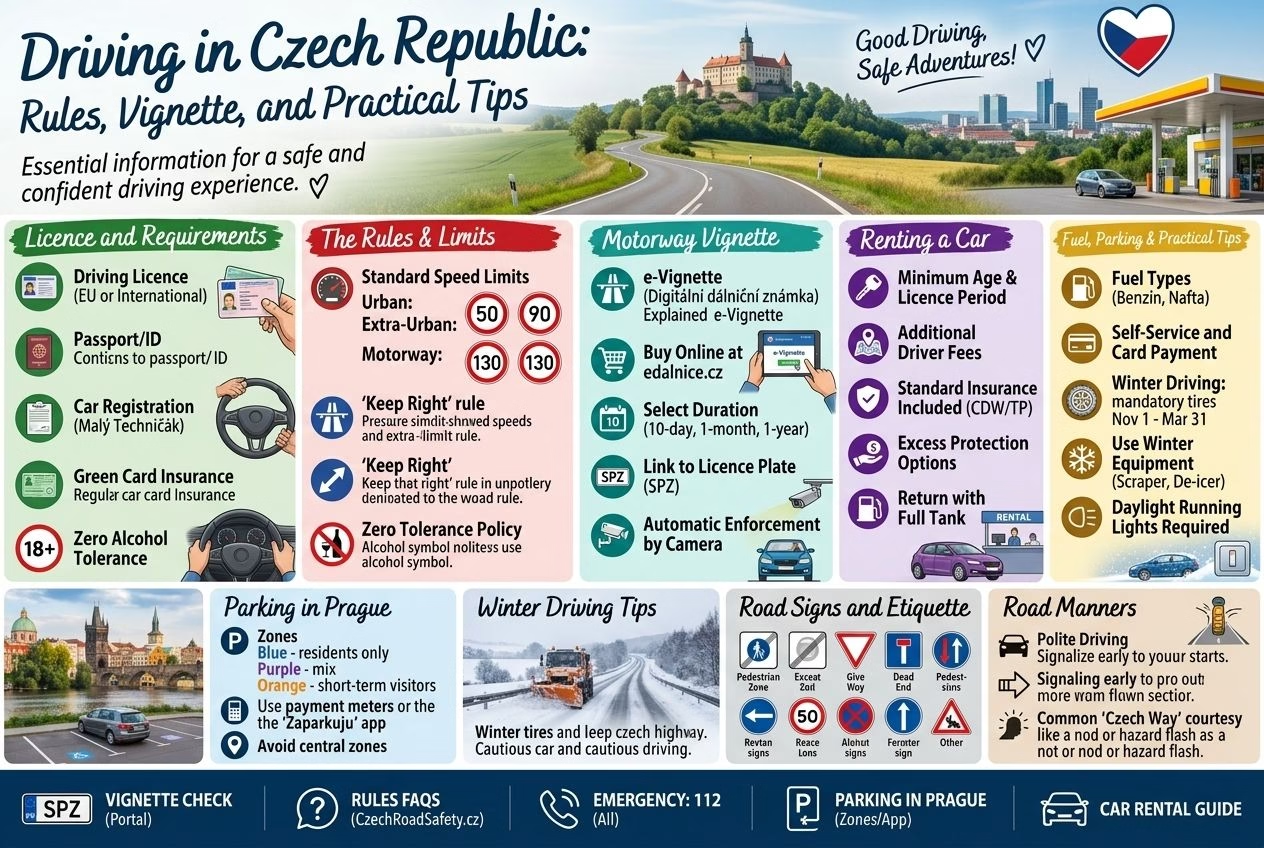
Driving in the Czech Republic is straightforward and the roads are in good condition, but it’s genuinely unnecessary for a Prague-based trip and actively useful once your itinerary reaches Moravia or the countryside. Here’s what you need before you get behind the wheel.
Licence and Requirements
EU driving licences are valid without formality. Non-EU visitors can drive on their home licence if it’s printed in the Latin alphabet; if it isn’t, get an International Driving Permit before you travel, a simple, inexpensive step that avoids any dispute with police or a rental company. Minimum driving age is 18, though most rental companies require 21, with a young-driver surcharge under 25.
The Rules
Drive on the right. Speed limits: 50 km/h in towns, 90 km/h on standard roads, 130 km/h on motorways. The drink-drive limit is 0.00 percent, no allowance whatsoever, stricter than most visitors expect and strictly enforced. Seatbelts are mandatory for every occupant, headlights must be on at all times (day and night), and handheld phone use while driving is illegal.
The Motorway Vignette
Using the Czech motorway network (marked D-roads) requires a vignette (dálniční známka): CZK 310 for 10 days, CZK 460 for 30 days, CZK 1,500 for a year. Sold at petrol stations, post offices, and increasingly online for electronic registration. Check whether a rental agreement already includes it, a growing number of Czech rental companies bundle it in for longer rentals, but plenty don’t, and the fine for driving without one is substantial.
Renting a Car
The major international chains, Hertz, Avis, Europcar, operate at Prague airport and several city-centre locations, alongside Czech operators that are frequently cheaper for an equivalent vehicle class. Booking online in advance secures a better rate than walking up, particularly in summer. Check what your personal auto policy or travel credit card already covers before paying extra for the rental company’s own collision damage waiver; where you’re not covered elsewhere, it’s worth taking given the cost of skipping coverage if something does happen.
Fuel and Petrol Stations
Petrol stations are widespread and reliable, with the major chains (MOL, OMV, Shell, Benzina) accepting cards without issue and often staffed 24 hours on motorway routes. Diesel (nafta) and standard unleaded (Natural 95) are both widely available; check which your rental vehicle takes before filling up, since diesel rental cars are common in Europe and using the wrong fuel is an expensive mistake. Fuel prices are broadly comparable to Western Europe, slightly lower on average.
Parking in Prague
Central Prague has zoned resident parking that visitors can’t use, and the historic core’s narrow streets make driving into the Old Town or Malá Strana genuinely impractical. If you’re renting a car for day trips, look for a hotel with parking or a secure car park on the edge of the centre, and don’t plan to drive within the historic core itself. Paid public car parks exist at the edges of the centre and near the main train station, priced by the hour and considerably cheaper than the risk of a parking violation in a resident-only zone.
Winter Driving
Winter tyres are legally required in winter road conditions (roughly November to March) and rental companies fit them automatically for that period. Mountain roads in the Krkonoše and Šumava can require snow chains in heavy conditions; check current road status before winter mountain drives. Road salting and clearing on major routes is generally reliable, but rural and mountain roads can be more variable after a heavy snowfall.
Road Signs and Etiquette
Czech road signage follows standard European conventions and is easy to read even without Czech language skills, with international pictograms for most warnings and instructions. One local habit worth knowing: Czech drivers are generally disciplined about lane use and speed limits are actively enforced with speed cameras on major routes, including in areas that don’t look like obvious enforcement zones. Fines for speeding or other violations are issued on the spot for visible infractions and can also arrive by post via the rental company for camera-detected offences.
When a Car Actually Helps
Moravian wine country around Mikulov and Znojmo, the Bohemian Karst around Karlštejn, and stringing together smaller towns like Telč or Český Šternberk are all genuinely easier with a car. For Prague itself and the standard day trip circuit (Kutná Hora, Karlštejn, Český Krumlov), train and bus remain faster and simpler; see the getting around guide for the specific comparison by route.
Related: Getting Around Czech Republic | Day Trips Hub | Practical Info Hub