
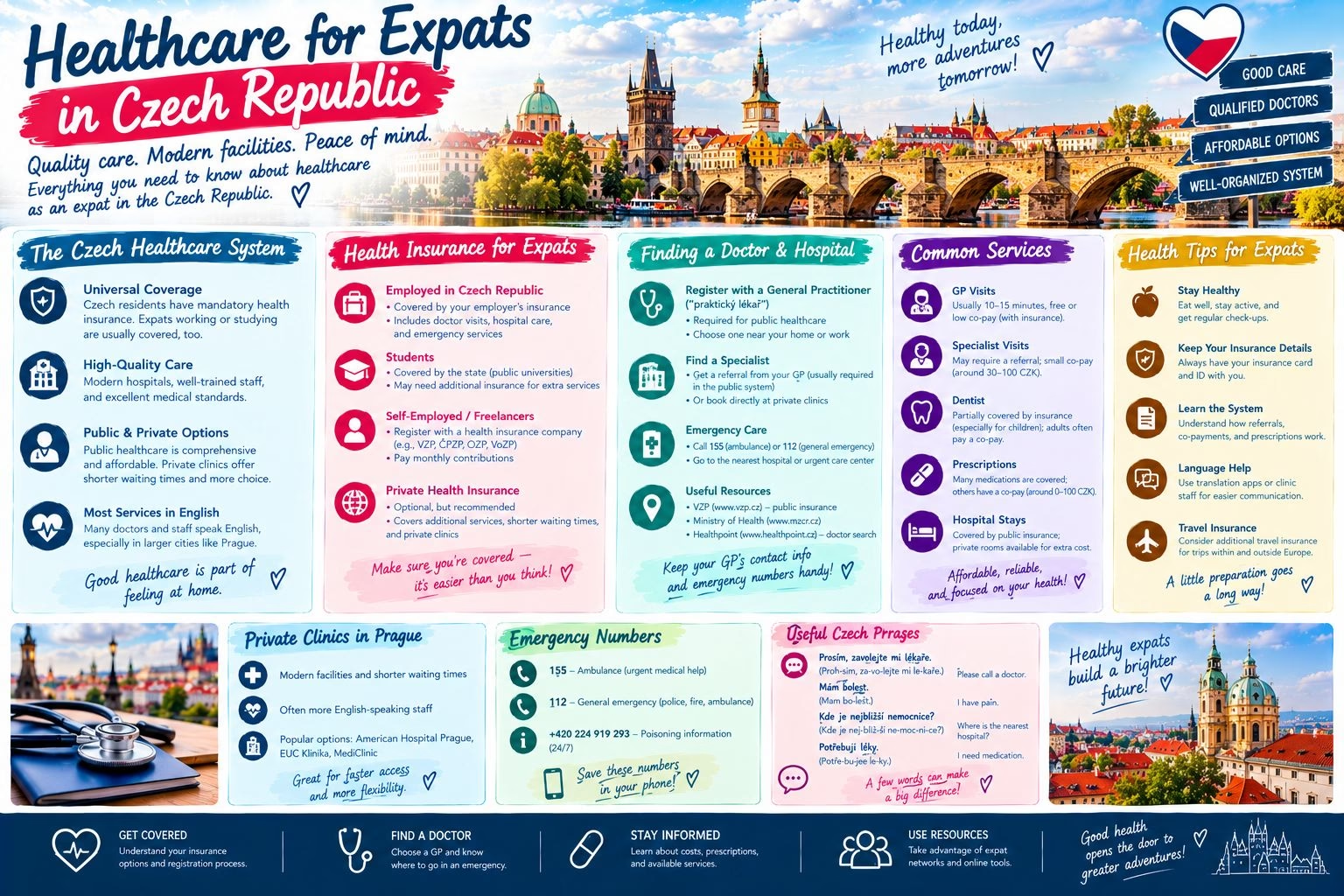
The Czech healthcare system is a compulsory-insurance model, well-regarded by international standards, and genuinely good once you’re inside it. The practical question for expats isn’t quality, it’s how you get access, and that depends entirely on your employment status and nationality.
EU Citizens
EU citizens working in the Czech Republic pay into the state health insurance system (zdravotní pojištění) automatically through payroll deductions, or directly if self-employed as OSVČ. This gives full access to the state system on the same terms as Czech citizens. EU citizens who are resident but not working can use their home country’s EHIC for short periods, or register directly with a Czech insurer (VZP is the largest) and pay voluntary contributions.
Non-EU Citizens
Non-EU residents must have commercial health insurance to obtain a long-stay visa in the first place, and this remains a requirement until you’re employed or self-employed and enrolled in the state system. Once working, enrolment in Czech state insurance becomes possible and is usually the better long-term option, both cheaper and more comprehensive than most commercial policies.
Choosing a State Insurer
Several state-approved health insurance companies operate in the Czech Republic, VZP (Všeobecná zdravotní pojišťovna) is the largest and has the widest network of contracted doctors. Coverage and cost are broadly standardised across insurers by law; the practical differences are in customer service, digital tools, and specific supplementary benefits.
How Much State Insurance Actually Costs
For employees, the contribution is calculated as a percentage of gross salary and split between employer and employee, so it’s rarely something you budget for separately; it’s simply deducted from payroll. For OSVČ (self-employed) registrants, the minimum monthly health insurance payment is a fixed amount set annually by the state, typically in the range of CZK 2,500 to 3,000 per month regardless of how much you actually earn, which is worth factoring into the cost of freelancing in the Czech Republic compared with salaried employment.
Finding an English-Speaking Doctor
The Foreigners Medical Clinic at the Charles University Faculty Hospital (Všeobecná fakultní nemocnice) is the main English-language public healthcare resource in Prague. Private clinics, Canadian Medical and Medicover are the two most established, serve the expat community specifically and offer faster appointments and reliably fluent English, at a cost above state-system rates. Many expats maintain state insurance for the general system while paying out of pocket for a private GP for day-to-day convenience.
Registering With a Doctor
Once you have Czech state insurance, registering with a GP (praktický lékař) works similarly to most European systems: you choose a doctor accepting new patients in your area, bring your insurance card, and they become your primary point of contact and referral source for specialists. Some GPs in Prague, particularly in Vinohrady and other expat-dense neighbourhoods, are used to foreign patients and speak workable English; asking other expats for a recommendation is often faster than searching independently.
Pharmacies
Czech pharmacies (lékárna) are widely available, well-stocked, and staffed by pharmacists with generally good English in Prague. Many medications requiring a prescription elsewhere are available over the counter.
Dental and Vision Care
Dental care in the Czech Republic is generally not fully covered by state insurance beyond basic check-ups and emergency treatment; many expats pay privately for anything beyond routine care, and Czech dental costs are still considerably lower than in Western Europe or North America, which has made Prague a modest destination for dental tourism. Vision care and glasses follow a similar pattern: routine eye tests are inexpensive, and private opticians are widespread.
Emergency Care
Emergency treatment is provided regardless of insurance status, though non-insured patients are billed afterward. The emergency number is 155 for ambulance, or the EU-wide 112, which has English-speaking operators.
Practical Recommendation
Get commercial insurance sorted before you arrive if you’re on a long-stay visa application, and prioritise moving to state insurance once you’re eligible; it’s more comprehensive and considerably cheaper than maintaining a commercial policy long-term. The visa and permits guide covers how insurance fits into the residence permit process.
Related: Czech Visa and Permits | Living in Prague | Expat Hub