
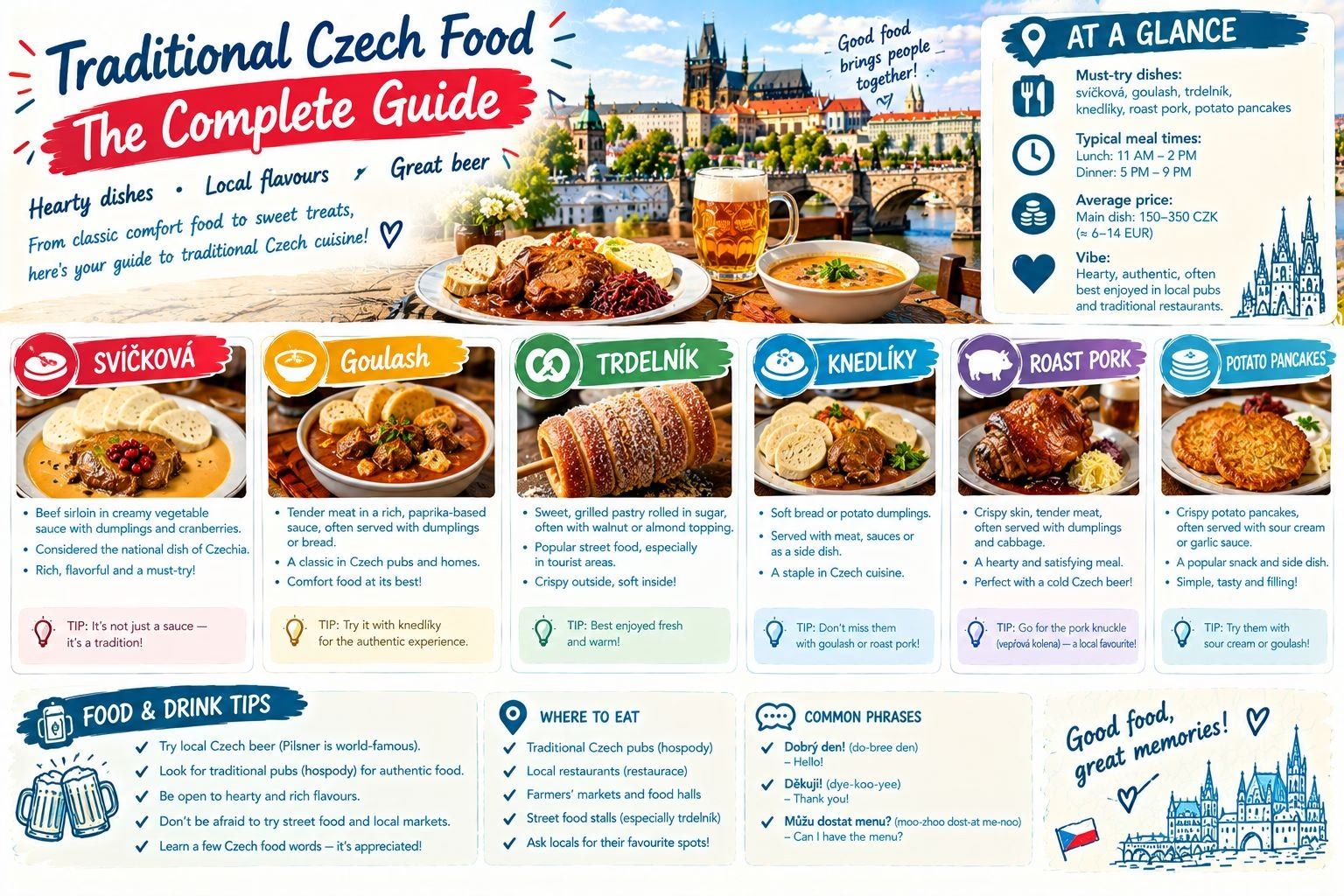
Czech cuisine is a Central European tradition built on the same foundations as Austrian, Slovak, and South German cooking but with its own specific character: a particular emphasis on cream-based sauces, a dumpling culture that produces several distinct varieties for different dishes, and the specific cooking methods of a landlocked country with a historically strong farming and hunting tradition.
Understanding what to order, what the dishes actually contain, and where to find the best versions produces a significantly better eating experience than the default tourist-area restaurants that serve the same dishes at elevated prices with reduced quality.
The Essential Czech Dishes
Svíčková na smetaně: Arguably the Czech national dish. Braised beef sirloin in a sauce made from root vegetables (carrot, celeriac, parsley root, onion), cream, and a touch of lemon, served with bread dumplings, a spoonful of cranberry sauce, and a swirl of cream. The preparation takes 3 to 4 hours when done properly; the slow braising produces a beef that is very tender and a sauce that is thick, slightly sweet from the root vegetables, and enriched by the cream. The quality difference between a well-made svíčková (using beef that has been marinated and braised slowly) and a poorly made one (made quickly with instant sauce mix) is dramatic. A properly made svíčková is one of the best slow-cooked beef dishes in European cuisine.
Vepřo-knedlo-zelo (svíčková’s pork equivalent): Roast pork with dumplings and sauerkraut. The Czech Sunday lunch, a version of which exists in every Central European culinary tradition. The Czech version uses caraway seed as the primary flavouring for both the pork and the sauerkraut; the bread dumplings absorb the pork cooking juices.
Guláš: Czech beef goulash is thicker and more bread-sauce-like than Hungarian paprikash; it is meat braised in a sauce seasoned with onion, paprika, caraway, and garlic until the liquid reduces to a thick gravy. Served with bread dumplings. Less paprika-intense than Hungarian versions; more deeply savoury.
Smažený sýr: Fried Edam cheese. A thick slice of Edam, breaded and deep-fried to a crispy golden exterior with molten cheese interior, served with tartar sauce and potato salad or fries. Czech fast food; available at virtually every Czech restaurant and pub. Beloved by Czech children and by visitors who discover it unexpectedly.
Bramboráky: Potato pancakes, roughly grated and fried with marjoram and garlic; the Czech equivalent of Swiss rösti or German Reibekuchen, but more aggressively seasoned.
Dumplings: Czech Knedlíky
Czech dumplings (knedlíky) are not the boiled dough pockets of Polish or Ukrainian tradition. Czech knedlíky are steamed or simmered in water and produced in several distinct forms:
Houskové knedlíky (bread dumplings): Made from white bread cubes bound in an egg-and-flour dough; steamed to produce a cylindrical loaf, then sliced. The texture is slightly spongy; ideal for absorbing sauces. Served with svíčková, goulash, and any braised meat.
Bramborové knedlíky (potato dumplings): Heavier dumplings made from mashed and raw grated potato. Larger than bread dumplings; served with specific meat dishes, particularly roast duck.
Švestkové knedlíky (plum dumplings): Sweet dumplings with a plum inside the potato dough, served with cottage cheese, butter, and a sprinkling of poppy seeds. A specifically Czech dessert tradition.
Czech Soups
Czech soup culture is diverse and underrated by most visitors:
Kulajda: A South Bohemian sour cream soup with mushrooms, dill, and a poached egg. One of the most distinctive Czech regional soups; the combination of sour cream, the earthy mushrooms, and the dill is highly specific.
Česneková polévka (garlic soup): Czech garlic soup; a clear or creamy broth with roasted garlic, croutons, and often a raw egg stirred in. The traditional hangover remedy; available at most Czech pubs.
Bramboračka: Potato soup with mushrooms, marjoram, and caraway; hearty and specifically Czech in flavour.
Where to Find Good Czech Food
The distinction between tourist-area Czech food and genuine Czech food in Prague is primarily about price, preparation quality, and the customer base. The daily menu (denní menu), available at local restaurants Monday to Friday at lunch, typically costs CZK 150 to 250 for a soup plus main course and indicates a restaurant that cooks for Czech workers rather than tourists.
The Lokál restaurants (multiple Prague locations) are a reliable option for visitors: the chain specifically replicates the Czech pub food and beer experience at consistent quality in various Prague locations. Not cheap by Czech local standards but significantly better and cheaper than tourist-area restaurants.
The neighbourhood restaurants of Vinohrady and Žižkov, particularly those without English menus in the window, are where the most authentic and most affordable Czech cooking is found.
Allergies and Dietary Notes
Czech traditional cooking relies heavily on wheat: bread dumplings, the breading on smažený sýr, and most sauces thickened with flour all contain gluten, and a genuinely gluten-free traditional Czech meal is difficult to find outside a handful of Prague restaurants that specifically cater to it. Nuts appear less often than in Mediterranean cooking, but poppy seed, present in several desserts and in koláč pastries, is worth checking for if it is a concern. Dairy is present throughout: cream sauces, cheese, and butter are foundational rather than optional, which makes traditional Czech food a difficult tradition to navigate for anyone avoiding dairy. For the vegetarian and vegan angle specifically, see the vegetarian and vegan guide.
Related: Beer and Food Hub | Czech Beer Guide | Vegetarian and Vegan Guide | Prague Hub