
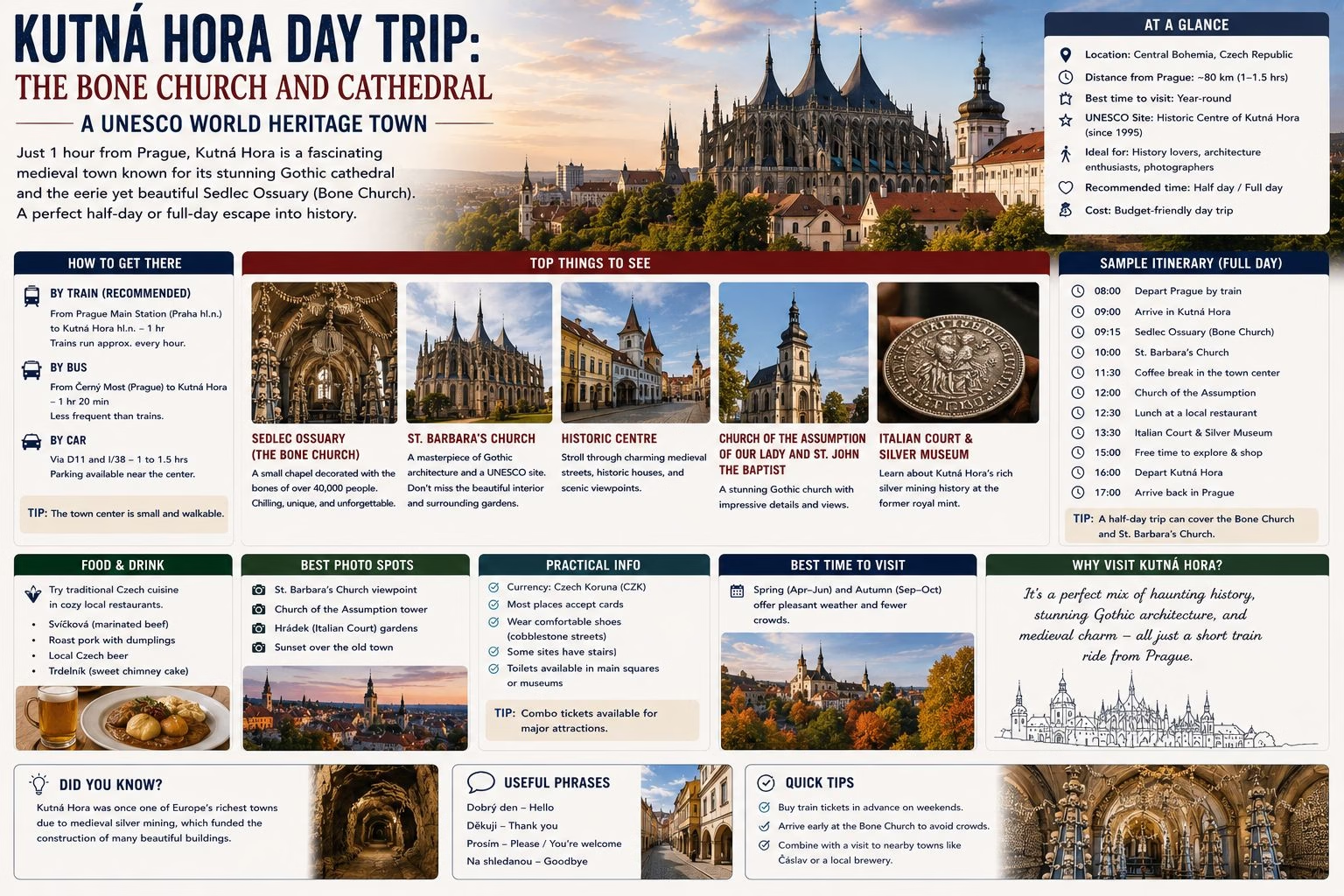
Kutná Hora is a medieval silver-mining town 70 kilometres east of Prague that has two of the most extraordinary sites in the Czech Republic: the Sedlec Ossuary (the Bone Church) and the Cathedral of Saint Barbara. The combination makes it the most rewarding half-day trip from Prague, and the most distinctive single day’s content available outside the capital.
Getting There from Prague
By train (recommended): Direct trains from Praha hlavní nádraží (Prague Main Station) to Kutná Hora hlavní nádraží. Journey time: approximately 55 minutes on the direct service (ČD or RegioJet). Departures approximately every hour during the day. Cost: CZK 100 to 130 single. Return trains also approximately hourly.
From Kutná Hora hlavní nádraží station, the Sedlec Ossuary is approximately 10 minutes on foot or 3 minutes by local bus 1 or 4. From Sedlec, the Cathedral of St Barbara in the town centre is approximately 1.5 kilometres; walk, bus, or the free hop-on shuttle bus (runs April to October).
Practical note: The main station (Kutná Hora hlavní nádraží) is in the Sedlec suburb, not in the old town centre. The second station (Kutná Hora město) is in the town centre; fewer trains stop there and it is less convenient for the ossuary.
The Sedlec Ossuary (Kostnice Sedlec)
The Sedlec Ossuary is a small Gothic chapel in the Church of All Saints in Sedlec, whose interior is decorated with human bones. The bones, belonging to between 40,000 and 70,000 people who died in the Black Death plagues of the 14th century and the Hussite Wars of the 15th century, were systematically arranged in the late 19th century when František Rint, a local woodcarver, was commissioned to “put the bones to artistic use.”
The result: a chandelier using every bone in the human body, garlands of skulls and bones draping the vaulted ceiling, four large pyramidal structures of skulls in the corners of the chapel, a coat of arms of the Schwarzenberg family made entirely from bones, and the initials FR (for František Rint) spelled out in bones near the entrance. The effect is not ghoulish but deeply meditative: these are real people, thousands of them, arranged with evident care and considerable artistry into a memorial that is more affecting than most conventional monuments.
Entry: approximately CZK 200 (tickets at the door or online at kostnice.cz). Allow 45 to 60 minutes.
Visitor context: The Bone Church is one of the most photographed destinations in the Czech Republic and accordingly has tourist volume that can feel at odds with the solemnity of the site. Early morning visits (opening time is 8 or 9am depending on season) have significantly lower visitor density than midday.
The Cathedral of Saint Barbara (Katedrála sv. Barbory)
Founded in 1388, with construction running through the 15th and 16th centuries and the building not completed until the 19th, the Cathedral of Saint Barbara is the second most significant Gothic building in the Czech Republic after St Vitus in Prague. It was built by the wealthy silver-mining community of Kutná Hora as their expression of civic pride and religious devotion: the most prosperous medieval town in Bohemia, which produced more silver than any other site in Central Europe at its peak, could afford a cathedral that rivalled the royal foundation in Prague.
The exterior, with its distinctive system of flying buttresses arranged in a forest of stone tracery around the nave, is one of the finest Gothic architectural compositions in the country. The interior has important late Gothic fresco cycles in the south nave showing scenes from the life of the mining community, including the miners themselves at work: an unusual survival of secular subject matter in a sacred space.
Entry: approximately CZK 130. Allow 45 to 90 minutes.
The Old Town of Kutná Hora
The area between the ossuary and the cathedral, approximately 1.5 kilometres, is the historic centre of Kutná Hora. The Italian Court (Vlašský dvůr), originally the royal mint where the Bohemian Groschen silver coins were struck, is the most important additional site: the building where Czech currency was produced for three centuries, now a museum. The Baroque Plague Column in Šultysova street and the Sedlec Cathedral (a separate Cistercian abbey church, also UNESCO-listed and distinct from the ossuary church) round out the day’s content.
Eating in Kutná Hora and Combining with Other Trips
Options near the Cathedral of Saint Barbara are limited but adequate for a lunch stop; the restaurants on Palackého náměstí in the town centre are the most reliable choice, with a standard Czech daily menu at CZK 150 to 220. Kutná Hora and Karlštejn are often mentioned together as the two classic half-day trips from Prague, but they sit in different directions from the city and cannot realistically be combined in a single day once travel time and site time are accounted for; treat them as two separate half-day trips rather than a pairing.
Related: Day Trips Hub | Karlštejn Castle | Český Krumlov | Plan Your Trip