
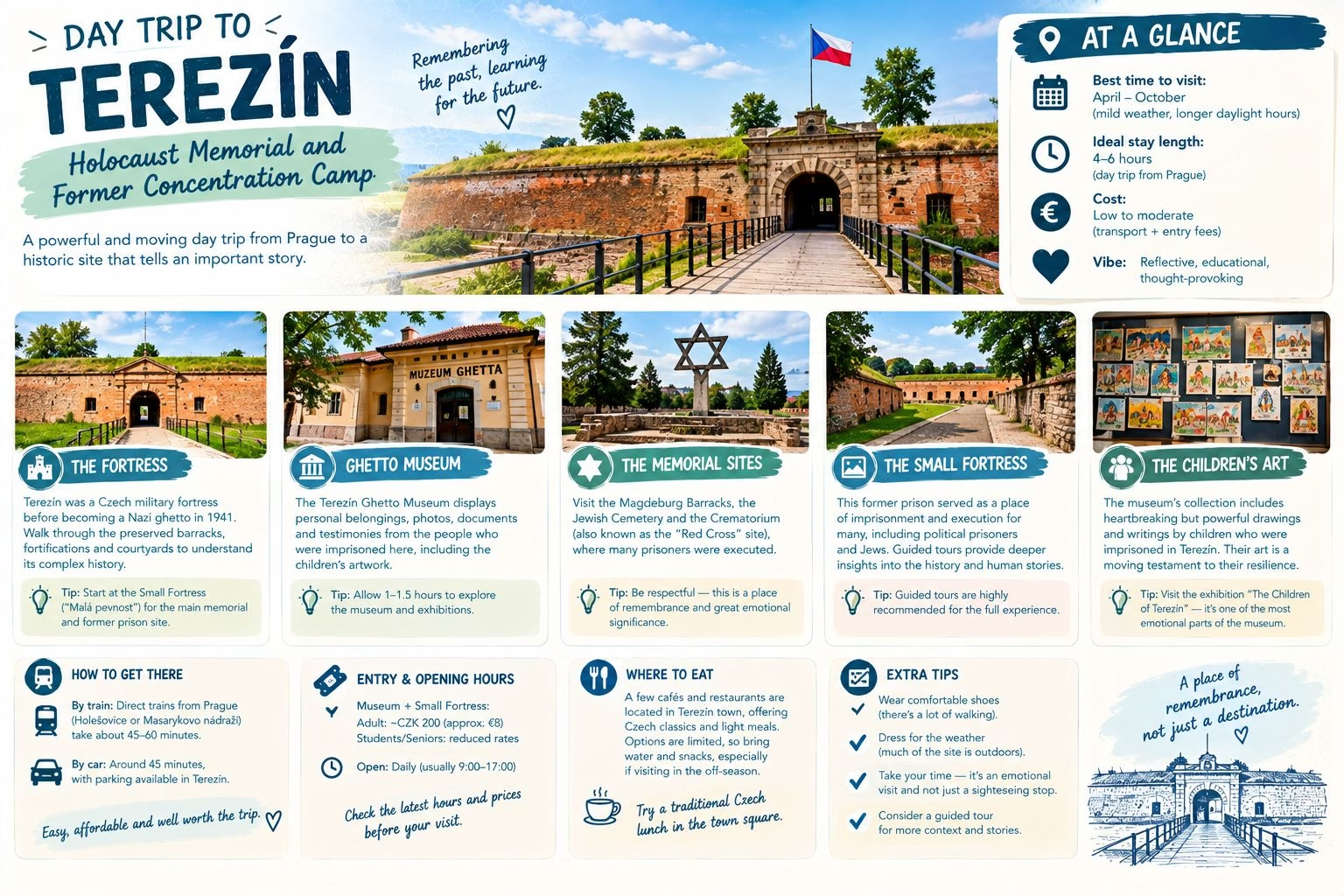
Terezín (German: Theresienstadt) is a former 18th-century military garrison town 65 kilometres north of Prague that was used by the Nazi occupation regime from 1941 to 1945 as a transit ghetto and concentration camp for Jews from Bohemia, Moravia, and other parts of occupied Europe. Approximately 150,000 Jews were imprisoned in Terezín; approximately 33,000 died there; approximately 88,000 were deported from Terezín to the extermination camps to the east, where the great majority were killed. The memorial site at Terezín is one of the most important Holocaust memorials in Central Europe.
A Note on Visiting
Terezín is a memorial site at a place where extraordinary suffering occurred. This affects the appropriate approach to a day trip there: it is not a place to visit lightly, and understanding the historical context before arriving produces a more meaningful visit than arriving without preparation.
The two main sites, the Small Fortress and the Ghetto Museum, are separated by a 10 to 15 minute walk. Both require emotional engagement, and the combination of both takes a significant portion of a day. Most visitors find the Ghetto Museum the more affecting of the two; some find the Small Fortress (the prison) more viscerally present. Both are worth visiting.
Getting There
By bus: The direct bus from Prague Holešovice bus station (Nádraží Holešovice) to Terezín takes approximately 1 hour. Regular departures throughout the day from Prague. Cost: approximately CZK 80 to 120 single. Return buses approximately hourly.
By car: 65 kilometres north of Prague via D8 motorway (direction Dresden); journey approximately 45 minutes. Parking available at the memorial sites.
The Ghetto Museum (Muzeum Ghetta)
Located in the town of Terezín itself, the Ghetto Museum in the former civic school building presents the history of the Terezín ghetto. The permanent exhibition covers the deportations, the living conditions in the overcrowded garrison town (a town designed for 7,000 people held up to 60,000 prisoners at peak occupancy), the cultural and educational life that prisoners sustained despite the conditions (the Theresienstadt cultural programme, with its concerts, theatre performances, cabarets, and art workshops, is one of the most documented and most complex aspects of the ghetto), and the deportations to Auschwitz-Birkenau and other extermination camps.
The Children’s Drawing Collection: artwork produced by the children of Terezín, preserved and presented as testimony to the specific loss represented by the murder of approximately 15,000 children who passed through the ghetto. Among the most affecting exhibits.
Entry: approximately CZK 200 for the combined ticket covering both main sites.
The Small Fortress (Malá pevnost)
The Small Fortress, separated from the main town by the Ohře river, was a prison throughout the 19th and 20th centuries: first for political prisoners of the Habsburg monarchy, then for Serbian nationalist Gavrilo Princip (who assassinated Archduke Franz Ferdinand in 1914) and his co-conspirators, and finally, from 1940, for political prisoners of the Nazi occupation. The fortress was operated separately from the Jewish ghetto and housed primarily Gestapo prisoners.
The self-guided route through the preserved cell blocks, the execution courtyard, and the isolation cells provides an unmediated encounter with the physical reality of the incarceration. The scale of the fortress, and the specific elements such as the cynical inscription above one entrance (“Arbeit macht frei,” the phrase later used at Auschwitz), require adequate time and attention.
Visiting Terezín as a Standalone Day
Most visitors find it better not to combine Terezín with another destination or with a busy evening back in Prague. The site asks for attention and does not sit comfortably alongside other sightseeing on the same day. A simple plan works best: travel out in the morning, allow three to four hours for the Ghetto Museum and the Small Fortress together, and keep the return to Prague unhurried rather than scheduling something else immediately afterward.
Related: Day Trips Hub | Kutná Hora | Practical Info | Solo Travel: Safety