
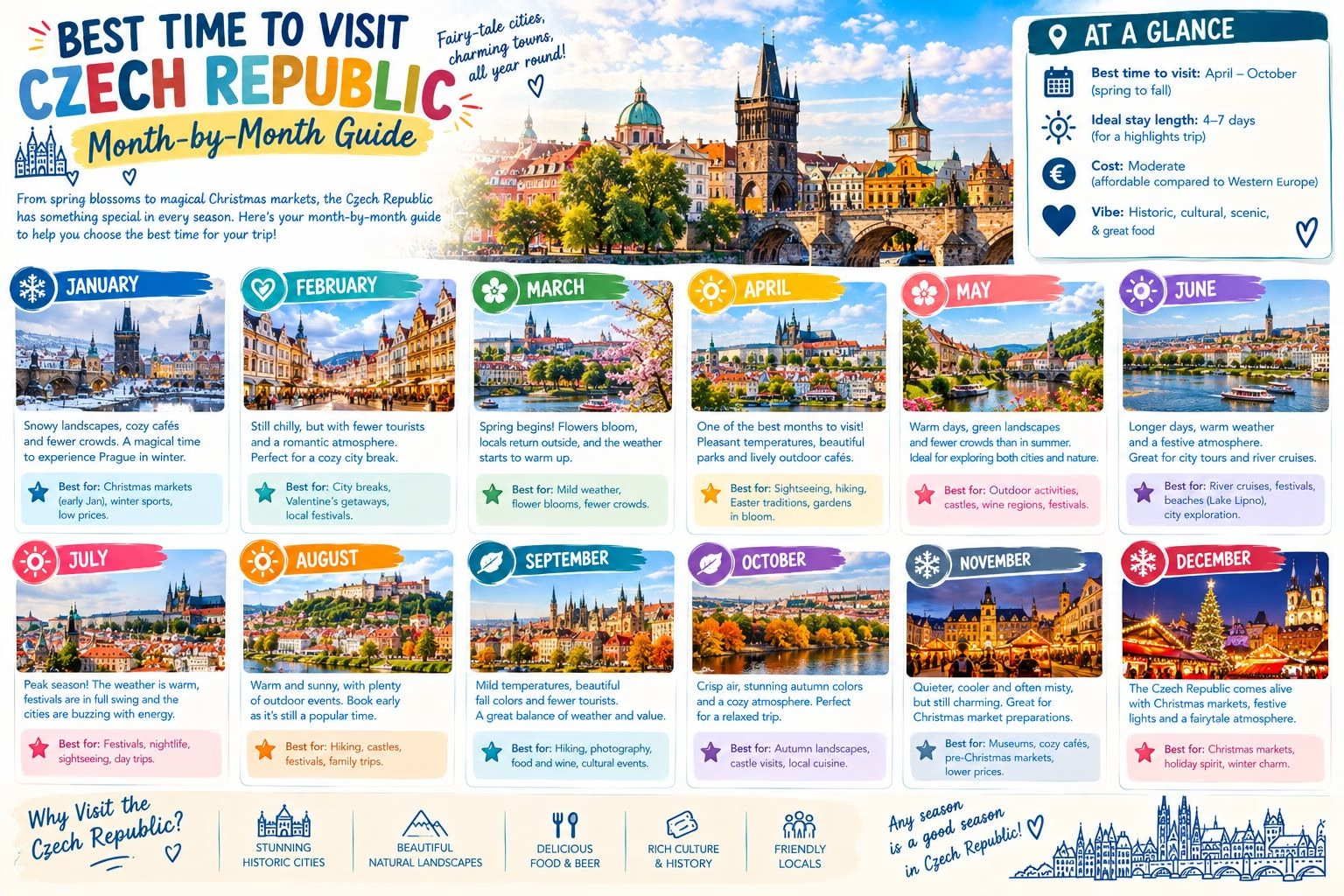
The Czech Republic has four distinct seasons with genuinely different experiences in each. The country does not have a Mediterranean or Alpine climate; its Central European continental climate produces cold winters (genuine snow in Prague most years), warm summers, and the specific quality of Central European spring and autumn that is particularly rewarding in a city with as much preserved architecture as Prague.
The Seasons at a Glance
Spring (March to May): Arguably the best overall season for a first visit. The crowds have not yet reached summer intensity, the weather is improving from the cold grey of January and February, and Prague’s chestnut trees and parks come into dramatic flower in April and May. The Prague Spring Music Festival (May) is one of Central Europe’s most significant classical music events. Temperatures range from 5 to 20°C depending on the month; pack layers.
Summer (June to August): The tourist high season. Prague is very crowded in July and August; the Old Town Square is at maximum tourist capacity, accommodation prices are at their annual peak, and the popular day trip destinations (Český Krumlov, Kutná Hora) require earlier starts to beat the day-tripper wave. The weather is reliably warm (22 to 30°C) with occasional thunderstorms. Gardens and outdoor spaces are at their best; the castle gardens above Malá Strana are spectacular in June.
Autumn (September to November): The second-best season for most visitors. September specifically offers the combination of summer warmth (17 to 22°C), thinning tourist crowds after the school holidays end, and the specific golden-light quality of Central European September that photographers specifically seek. October is the harvest season in Moravia’s wine regions; November is when the Czech Christmas market preparation begins, and the city takes on its pre-Christmas character in late November.
Winter (December to February): A specific experience worth seeking for the right visitor. The Prague Christmas market on Old Town Square (December 1 to January 6) is one of Central Europe’s most atmospheric, with mulled wine, roasted chestnuts, and the medieval backdrop of the square under snow on good years. January and February are cold (minus 5 to 5°C), grey, and quiet; accommodation prices are at their annual minimum. Prague in January, with the tourist crowds absent and the city functioning for its residents, is a different city from Prague in July.
Month by Month
January: Very quiet, very cold. The Christmas market is over after early January. Good for budget visitors; lowest prices of the year. The city feels genuinely Czech in January rather than tourist-facing.
February: Cold, grey, quiet. Prague Carnival (Masopust) in late February brings some energy. The ski resorts in the Krkonoše mountains are at peak season; a combined Prague and skiing itinerary works well in February.
March: The transition month. Temperatures beginning to rise; the first outdoor café terraces appearing. Still uncrowded; the good-weather visitors have not yet arrived.
April: The city comes alive. Cherry blossoms in Stromovka park; the castle gardens opening after the winter closure. Easter markets on Old Town Square with the specific Czech Easter traditions (painted eggs, decorated willow branches). Temperatures reaching 12 to 18°C on good days. One of the best months to visit.
May: Prague Spring Music Festival brings classical music events throughout the city. Gardens in full bloom. Temperatures comfortable (15 to 22°C). Increasing tourist numbers but not yet summer intensity.
June: The effective start of tourist high season. Metronome music festival at Letná park. Warm and pleasant. Crowds building in the Old Town.
July and August: Peak tourist season. Very crowded in the standard tourist areas. Hot (25 to 32°C on hot days). Accommodation prices at maximum. Best avoided for the core tourist circuit; good for outdoor spaces, parks, and swimming spots outside the centre.
September: The best single month for a balanced visit: warm, beautiful light, post-season crowds, good prices. The Bohemian Switzerland National Park (Hřensko and the Pravčická brána sandstone arch) is at its most rewarding in September with the summer hikers gone.
October: Wine harvest in Moravia. The Prague autumn colours are excellent in Stromovka and the palace gardens. Temperatures dropping (10 to 18°C) but still comfortable. Crowds thin.
November: The month of transition to winter. Pre-Christmas preparations begin in late November. Cold and grey at the start; improving atmosphere as the Christmas market approaches.
December: The Christmas market month. Old Town Square market is one of the best in Central Europe. Christmas Eve is observed on December 24 in Czech tradition (not December 25). The atmosphere of Prague in early December, before the market becomes extremely crowded, is particularly good.
What the Crowds Actually Mean
Summer tourist crowds in Prague are specifically concentrated in a small geographic area: the Old Town Square, the Charles Bridge, and the route connecting them. Walk two streets off this axis in any direction in July and the crowds thin dramatically. The issue is not that Prague in July is unpleasant but that the specific tourist circuit is very densely populated. Visiting the same sites at 8am rather than 11am produces a completely different experience.
The day trip destinations are more genuinely crowded in summer because they are small: Český Krumlov has narrow medieval streets and a limited number of restaurants; 2,000 summer tourists is too many. For Český Krumlov specifically, visiting on a Tuesday or Wednesday rather than a weekend produces the most significant crowd improvement.
Shoulder Season for Value and Weather
If forced to pick one window that balances weather, crowds, and price, late April through the first half of May and the whole of September edge out the rest of the calendar. Both give reliable double-digit daytime temperatures, meaningfully thinner crowds than June through August, and accommodation prices closer to the November-to-February low than the July-to-August peak. Late May and early June are the closest runner-up, once the Prague Spring Festival crowds have cleared but before the main summer wave arrives.
Related: Plan Your Trip | How Many Days | Itineraries | Best Day Trips from Prague