
Living in the Czech Republic, and Prague specifically, is one of the more rewarding choices currently available to the English-speaking expat and digital nomad community. The combination: Central European quality of life, prices that are roughly half to two-thirds of equivalent Western European cities, an excellent public transport system, a reasonably efficient internet infrastructure (Prague has good fibre coverage and coworking spaces are plentiful), and the specific cultural richness of a city with a thousand years of continuous history and a contemporary culture that is more complex and more interesting than its international reputation suggests.
The challenges are also real: Czech bureaucracy is slow, rule-bound, and inconsistently applied; Czech language learning is genuinely difficult and the bureaucratic system is less accommodating of non-Czech speakers than the tourist infrastructure; the Czech rental market in Prague is competitive and requires local knowledge or a reliable agent; and the social integration into Czech social life, as opposed to the expat bubble, requires sustained effort. This hub covers the practical realities rather than the promotional version.
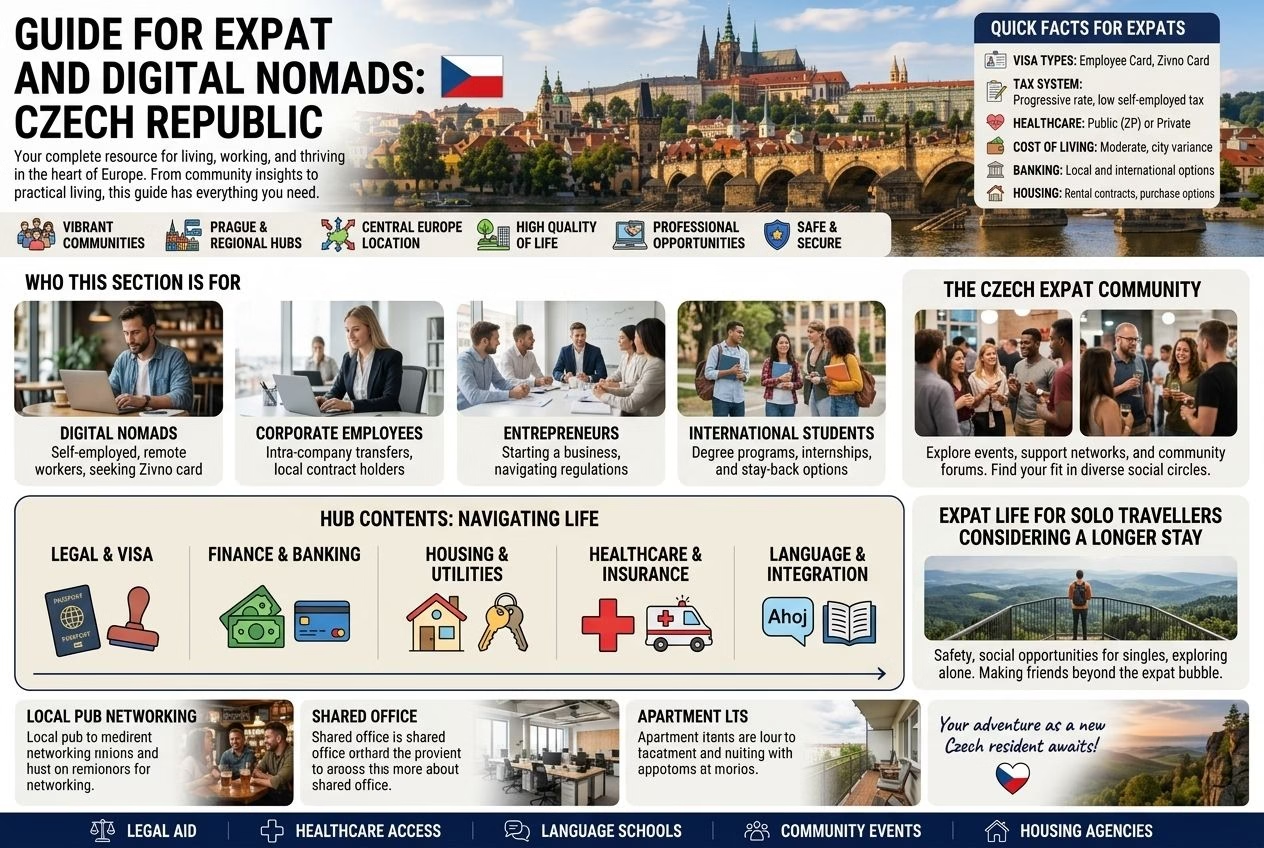
Who This Section Is For
Digital nomads considering Prague as a base: the cost-benefit analysis relative to competing European bases (Lisbon, Barcelona, Budapest, Tallinn) is covered in the digital nomad guide. The short version: Prague is more expensive than Tbilisi or Chiang Mai and significantly cheaper than London, Amsterdam, or Copenhagen; the specific advantages are the Central European cultural richness and the ease of access to the wider European day trip and weekend trip circuit.
Expats relocating: the living in Prague guide covers the practical reality of establishing a life in Prague rather than just visiting. Finding an apartment, registering with the authorities, opening a bank account, accessing healthcare, and the specific Czech administrative processes are all covered.
Remote workers and freelancers: the cost of living guide provides specific and current data on what life in Prague actually costs, the coworking guide covers where to work, and the visa guide covers the residence permit pathways.
Existing Posts: 67 Articles by Jan Marek
The Expat Life and Digital Nomad Tips sections of this site have 35 and 32 posts respectively by Jan Marek, covering specific aspects of expat and nomad life in the Czech Republic from direct experience. Topics covered in the existing posts include: saving money in the Czech Republic as an expat, networking for expats, registering your address, the Czech healthcare system, banking for foreigners, learning Czech, finding work, the tax system for OSVČ (self-employed), specific coworking spaces, the Prague rental market, and the experience of the Czech bureaucratic system from the inside.
The hub pages in this section connect the existing posts to each other and add the structural overview that makes them more navigable.
Hub Contents
- Living in Prague: expat guide
- Digital nomad guide to Prague and Czechia
- Cost of living in Czech Republic
- Czech visa and residence permits
- Coworking spaces in Prague
- Healthcare for expats
- Banking for foreigners
- Learning Czech as an expat
Related: Practical Info Hub | Solo Travel Hub | Plan Your Trip | Prague Hub
All Expat and Nomad Guides by Topic
Start with the pillar guides above, then use these topic lists for the detail. Rules, fees and thresholds change often, so check official sources before you act on any figure.
Visas, residency and registration
- Digital nomad visa: overview
- Long-stay visa for digital nomads
- Proof of income for the nomad visa
- Remote work visa policy changes
- Residency for digital nomads
- Visa renewal
- Digital nomad rights
- Long-term visa for expats
- Registering your address (expats)
- Address registration (nomads)
Money, banking and tax
- Cost of living for digital nomads
- Cost of living for expats
- Budget living for remote workers
- Saving money as a digital nomad
- Saving money as an expat
- Managing finances as an expat
- Opening a bank account
- Banking fees
- Tax laws for digital nomads
- Tax residency for nomads
- Tax residency for expats
- Filing taxes as a foreigner
Work, freelancing and coworking
- Remote jobs while living in the Czech Republic
- Jobs for expats
- Work culture for foreigners
- Freelancing: trade licence and tax
- Freelance platforms used in Czechia
- Productivity tips
- Remote work tools
- Coworking spaces for nomads
- Coworking spaces for expats
- Best cafés to work from in Prague
Housing, utilities and mail
- Accommodation for nomads in Prague
- Renting in Brno
- Renting an apartment as an expat
- Best neighbourhoods for expats in Prague
- Buying property as a foreigner
- Internet and utilities
- Utilities costs
- Mail forwarding services
Phones, transport and daily life
- Mobile internet and eSIM
- Mobile phone plans
- SIM card options
- Public transport passes
- Public transportation for expats
- Driving as a foreigner
- Grocery shopping
- Czech culture guide for nomads
- Holidays and traditions
- Best cities in Czechia for nomads
Health insurance and healthcare
Family, schools and childcare
Community, friends and language
- Expat communities
- Making friends as an expat
- Making friends as a digital nomad
- Social life for nomads
- Networking for expats
- Networking events for nomads
- Entrepreneur communities
- Dating as a foreigner
- Learning Czech: expat tips
- Learning Czech: nomad tips
The Czech Expat Community
Prague has one of the larger expat communities in Central Europe by proportion: approximately 180,000 to 200,000 foreign residents, representing approximately 15 percent of the city’s population. The largest national groups are Ukrainians (the largest single group), Slovaks (culturally close; language is mutually intelligible), Vietnamese (the legacy of the communist-era guest worker programme), and a mix of Western European and international residents.
The English-speaking expat community, concentrated primarily in Vinohrady, Žižkov, and increasingly Holešovice, is active and well-organised. The Expats.cz website and its associated Facebook groups are the primary platforms for English-speaking expat connection in Prague; they cover housing, jobs, bureaucracy questions, social events, and the general support infrastructure of a new-arrival community.
The Czech-expat social integration (as opposed to the expat-bubble-only experience) is rewarding and requires sustained effort. The language is the primary barrier; Czech people who speak English are available and generally willing to engage, but the social infrastructure of the Czech pub and neighbourhood life is primarily Czech-language. Language learning, even at a functional level, dramatically opens the integration possibilities.
Expat Life for Solo Travellers Considering a Longer Stay
Many longer stays in Prague start as a solo trip that simply doesn’t end on schedule. If that sounds familiar, the solo travel in Prague guide covers the visitor-stage version of the city, neighbourhood safety, meeting people, getting around, while everything on this hub picks up the practicalities once a visit turns into a stay: housing, healthcare registration, banking, and visas.
Related: Practical Info Hub | Solo Travel Hub | Plan Your Trip | Prague Hub