
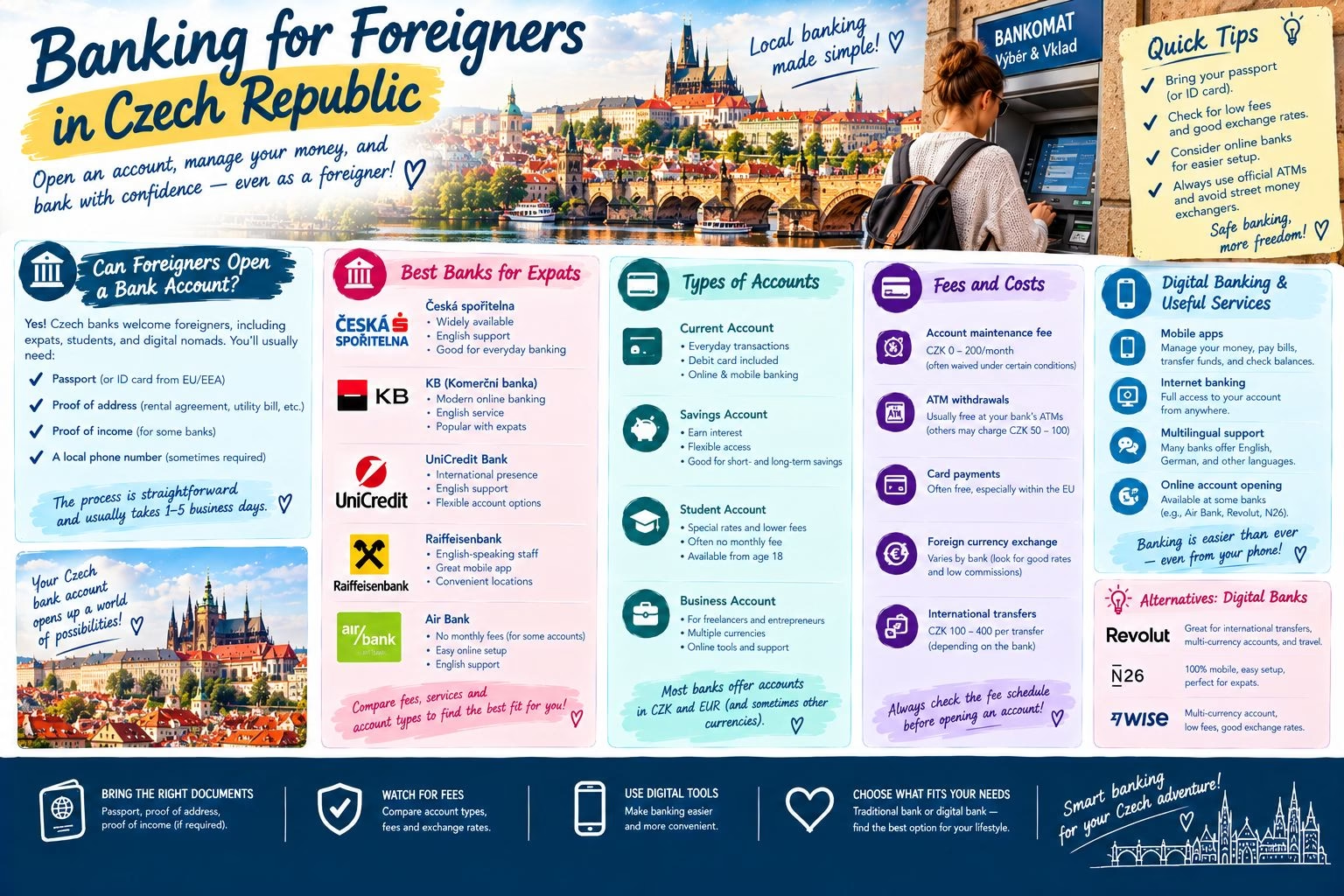
Opening a Czech bank account is straightforward once you have the two prerequisites: a registered Czech address and a valid residence document. Getting there, and deciding whether you even need a Czech account, is the part worth planning for.
The Main Czech Banks
Česká spořitelna, Komerční banka, ČSOB, and Raiffeisenbank are the major retail banks, all open accounts for registered foreign residents and all operate in English for basic services, online banking included. Air Bank and Moneta are newer, more digitally-focused alternatives with a reputation for simpler onboarding. Most banks require an in-person visit to open the account, though a growing number now offer remote or app-based onboarding for some visa categories.
What You Need
Your passport, your residence document (long-stay visa or residence permit), and proof of your Czech address, typically your Foreign Police registration confirmation or a lease agreement. Some banks also ask for proof of income or employment, particularly for opening a current account rather than a basic one.
Comparing the Main Banks
Česká spořitelna has the largest branch and ATM network in the country, useful if you’ll be travelling or living outside Prague. Komerční banka and ČSOB both have strong English-language digital banking apps, a meaningful convenience for day-to-day account management. Air Bank markets itself specifically on simplicity and low fees, and has become popular with younger Czechs and expats alike for exactly that reason; it’s worth comparing its monthly account fees against the traditional banks, which sometimes charge more for the same basic services. None of the major banks charges dramatically more or less than the others for a standard current account, so the practical differences come down to branch convenience and app quality rather than cost.
Do You Actually Need a Czech Account?
If you’re being paid by a Czech employer, registering as OSVČ (self-employed) with Czech clients, or paying Czech rent and bills regularly, yes, a Czech account is close to essential. If you’re a digital nomad earning entirely from foreign clients and simply living in Prague, you can often manage without one for longer than you’d expect.
The Revolut, Wise, and N26 Alternative
These multi-currency accounts are widely used by the Prague expat and nomad community and handle Czech koruna transactions, including local transfers and card payments, without needing a Czech bank account at all. They don’t fully replace a Czech account, some Czech landlords and employers specifically want a Czech IBAN for rent or salary, but they cover daily spending, ATM withdrawals, and even some bill payments well. Many nomads use one of these as their primary account for the first several months before deciding whether a full Czech account is worth the paperwork.
Setting Up Direct Debits and Bill Payments
Once you have a Czech account, setting up standing orders (trvalý příkaz) for recurring rent or utility payments is standard and straightforward through online banking, and most landlords and utility providers expect this rather than manual monthly transfers. Setting this up correctly early, with the right variable symbol (variabilní symbol), a reference number Czech payment systems use to identify what a transfer is for, avoids the common early-expat mistake of a payment arriving but not being matched to the right account or invoice.
Taxes and OSVČ
Self-employed foreigners registering as OSVČ (a Czech trade licence holder) need a Czech bank account for tax and social insurance payments in most cases. The visa and permits guide covers the OSVČ registration process this connects to.
Credit History and Loans
Building a Czech credit history takes time and generally requires being a resident with a Czech account and stable income for a while before local banks will offer meaningful credit products like a mortgage. If a longer-term move to the Czech Republic is part of your plan, opening a Czech account and using it consistently from early on is worth doing specifically to start building this history, even if a multi-currency app covers your daily needs in the meantime.
Practical Recommendation
Start with Revolut or Wise for the first few months while you settle in; open a full Czech account once you have a registered address and a clearer sense of whether you’ll need Czech-specific banking relationships, for salary, rent, or OSVČ tax payments.
Related: Living in Prague | Czech Visa and Permits | Money and Currency