
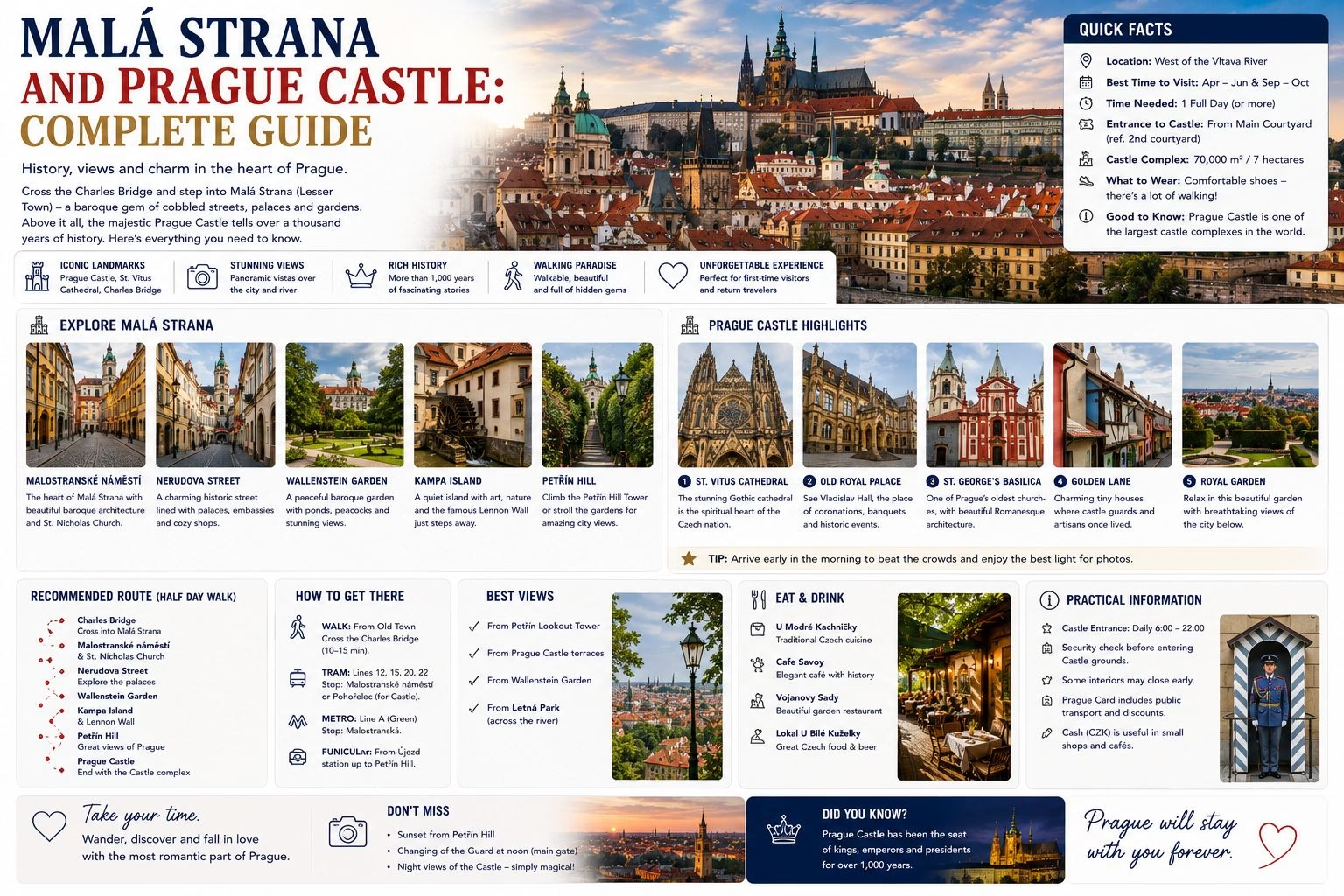
Malá Strana (Lesser Town) occupies the western bank of the Vltava directly below Prague Castle, connected to the Old Town by the Charles Bridge. The neighbourhood is defined by the contrast between two physical environments: the lower zone of Baroque palaces and embassies along the river and around Malostranské náměstí (Lesser Town Square), and the upper zone of castle complex and cathedral above. Between them, the streets of Malá Strana climb the hill through a maze of lanes and stairways that have barely changed since the 17th century.
Prague Castle Complex
Prague Castle (Pražský hrad) is the largest ancient castle complex in the world by area: 70,000 square metres of fortifications, palaces, churches, gardens, and administrative buildings constructed and modified continuously since the 9th century. The current form is largely a product of the Habsburgs, who ruled Bohemia from 1526 to 1918 and used the castle as a royal and subsequently imperial residence.
Entry: The castle complex is divided between paid and free areas. The outer courtyards and Hradčanské náměstí (Castle Square) in front are free. The main paid circuit (Ticket A or B depending on which buildings you want) covers the main sights; Ticket B (St Vitus Cathedral interior, Old Royal Palace, Basilica of St George, Golden Lane) is sufficient for most first-time visitors. Buy tickets online at hrad.cz to avoid the queue; timed entry has been introduced during peak season.
St Vitus Cathedral (Katedrála sv. Víta): Construction began in 1344 and the cathedral was not fully completed until 1929. The exterior is predominantly Neo-Gothic; the interior is a combination of original Gothic, Renaissance, and Baroque elements. Specific highlights: the Royal Oratory in the south nave (an extraordinary late Gothic carved stone structure with pretzel-like intertwined branches forming the vault), the Chapel of St Wenceslas (which contains the crown jewels vault and the medieval fresco cycles), and the Art Nouveau window designed by Alfons Mucha in the north nave (1931: the life of SS Cyril and Methodius in Mucha’s characteristic flowing style). The south tower gives the most famous external view of Prague, with the Old Town visible across the river; the tower is open for a separate fee.
Old Royal Palace: The palace used by Bohemian kings from the 12th to the 16th centuries. The Vladislav Hall (1502) is the centrepiece: a late Gothic hall of extraordinary scale with vaulted ceiling ribs that intertwine in complex patterns without any supporting columns. This was the largest secular hall in Central Europe when it was built.
Golden Lane (Zlatá ulička): The alley of small houses built into the castle wall in the 16th century, originally for castle guards and craftsmen. Franz Kafka lived in house 22 for a period in 1916 and 1917 (he rented it from his sister). The houses now contain small museum displays; the alley is one of the more enchanting parts of the castle complex despite the crowds.
Castle Gardens: The gardens below the south side of the castle (Royal Garden to the north is accessed separately) are accessible via the castle circuit or from Malá Strana below. The Baroque terraced gardens, with their pavilions and the view from the lowest terrace back toward Malá Strana and the Charles Bridge, are among the best gardens in Prague. Open in summer; closed in winter.
Malostranské náměstí and the Church of St Nicholas
The central square of Malá Strana, with the Church of St Nicholas (Chrám sv. Mikuláše) as its focal point. The St Nicholas Church (not to be confused with the smaller St Nicholas Church in the Old Town Square) is the finest Baroque church interior in the Czech Republic: ceiling frescoes by Johann Lukas Kracker covering 1,500 square metres, marble columns, gilded decoration, and the largest organ in Czech Bohemia (on which Mozart played during his Prague visit in 1787). Entry approximately CZK 100.
The square itself has been the setting for significant Czech historical events; a plague column in the centre commemorates the 1713 plague epidemic that killed a third of Prague’s population.
Malá Strana Streets and Gardens
The streets between Malostranské náměstí and the Charles Bridge, particularly Mostecká and Lázeňská, have some of the best-preserved Baroque palace facades in the city and, in the side streets, some of the most atmospheric pub and restaurant options in Prague. The Herget Brickworks site on the Vltava bank opposite the National Theatre has been developed as a cultural and gastronomy space; the view from the outdoor seating toward the Old Town is one of the best in the city.
The Vrtba Garden (Vrtbovská zahrada), entered from Karmelitská street, is one of the most beautiful Baroque gardens in Central Europe and one of the least-crowded major attractions in Prague: terraced gardens climbing the hillside with statues, pergolas, and the view toward the castle above. Entry approximately CZK 250. Open April to October.
Reaching the Castle From Malá Strana: Which Route to Take
Three practical options connect Malá Strana to the castle gate, and the right choice depends on energy and time rather than distance. The direct walk up Nerudova street is steepest but fastest, roughly fifteen minutes past the historic house signs and craft shops that give the street its character. Tram 22 from Malostranská to the Pražský hrad stop removes the climb entirely and is the better choice in July heat or with young children, though it adds a short walk from the tram stop to the castle gate. Whichever route you take, arrive before 9:30am if the cathedral interior is the priority: the tour coach groups fill the courtyards from mid-morning onward.
Related: Solo Travel in Prague | Getting Around Prague | Old Town and Charles Bridge | Where to Stay in Prague