
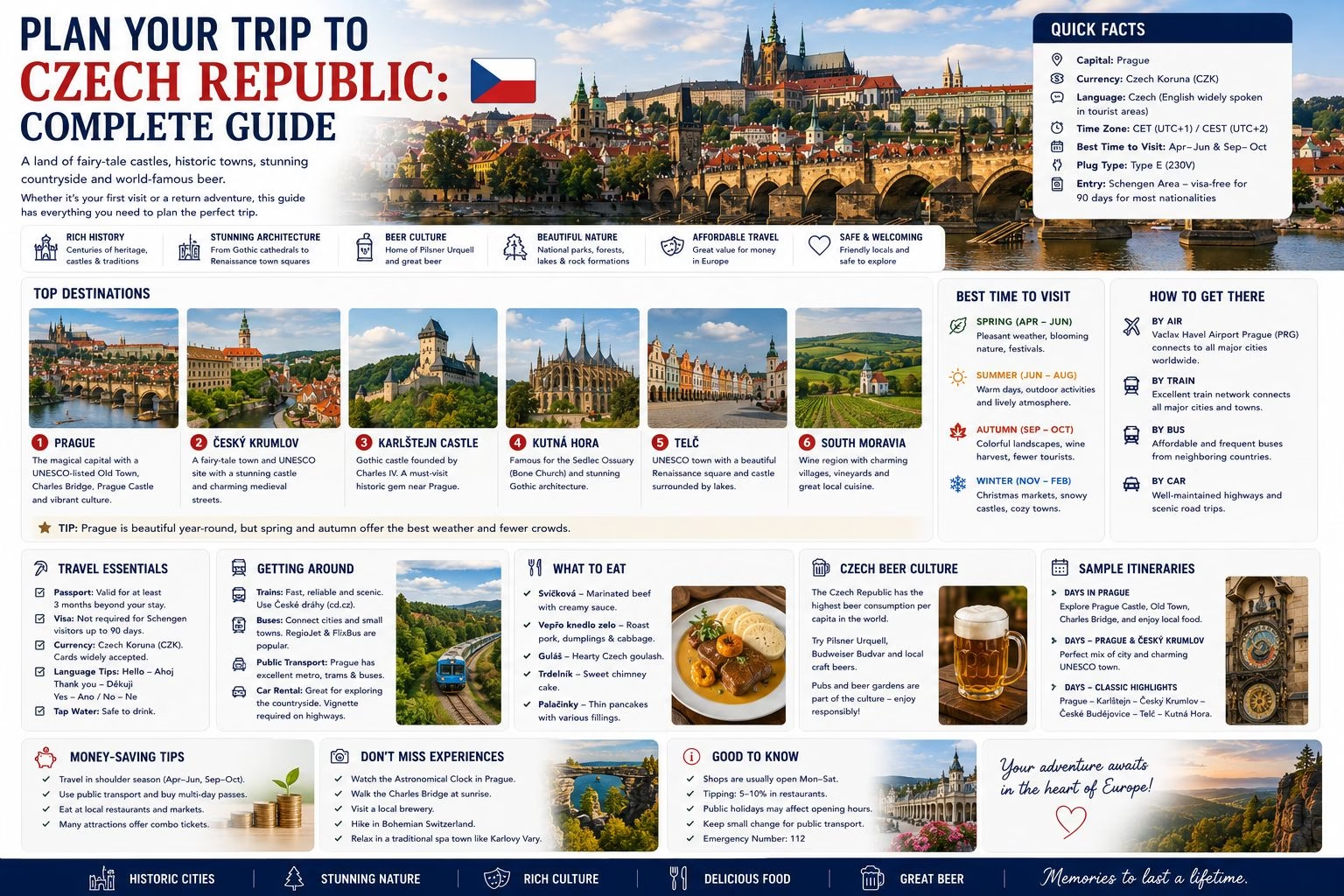
The Czech Republic is one of the most straightforward European destinations to plan a trip to, and one of the easiest to get significantly wrong on specific practical details. The planning is straightforward because the country is compact, public transport from Prague to the major day trip destinations is reliable and cheap, and English is spoken throughout the tourist infrastructure in Prague. The specific difficulties: the currency is not the euro (a surprise to some visitors who assume all EU countries use the same currency), the tourist-area taxi and currency exchange situation is genuinely predatory, and some of the things most worth doing require advance booking during peak season that visitors do not always know about.
This section covers all pre-trip preparation in the sequence that matters most.
The Single Most Important Planning Decision: How Long?
The Czech Republic’s visitor experience is almost entirely shaped by how long you stay in Prague relative to how many day trips you take. The frameworks in the how many days guide are specific, but the quick version:
3 to 4 days: Prague only. This is enough time to do Prague properly if focused, and not enough time to also do a good day trip without rushing everything.
5 to 7 days: Prague plus one or two day trips. The natural first-time visit length. Český Krumlov as a full-day trip (bus 3 hours each way, full day in the town) or Kutná Hora as a half-day (train 1 hour each way, 3 to 4 hours in the town) are the additions that most improve a 5-day visit.
8 to 14 days: Prague as a base with multiple day trips, plus potentially one overnight in Brno or Český Krumlov. The country outside Prague starts to reveal itself at this length.
What to Book in Advance
Prague requires more advance booking in specific categories than most visitors expect:
Prague Castle timed entry: The castle complex has introduced timed entry management during peak season (April to October). Walk-up queuing is possible but can mean 30 to 60 minute waits; booking online in advance is free and eliminates the wait.
Pilsner Urquell brewery tour in Plzeň: The underground cellar tour (the best version of the brewery experience) is the most popular option and books up on summer weekends. Book at least a week in advance if visiting between June and August.
Karlštejn Castle interior tours: The interior tours at Karlštejn are ticketed with a fixed daily capacity. During summer weekends, the morning tours sell out in advance. Book online through the official castle website if visiting on a summer weekend.
Accommodation during Prague festivals: The Prague Spring Music Festival (May), the Metronome Festival (June), and the Old Town Square Christmas Market (December) all produce significant accommodation demand spikes. Book 4 to 8 weeks in advance for these periods.
Everything else, trains, buses, most restaurants, and most activities, can be arranged on arrival or with very short lead times. The Czech bus and train network is excellent and does not require advance booking for most routes.
The Currency Reality
The Czech koruna (CZK) is the reason the Czech Republic is affordable for visitors from Western Europe and North America. With the koruna exchanging at approximately CZK 25 to 27 per euro and CZK 22 to 24 per US dollar, Czech prices that look large in local currency are very reasonable in conversion: a lunch at a good non-tourist restaurant costs CZK 180 to 280 (approximately EUR 7 to 11); a beer at a traditional pub costs CZK 50 to 80 (EUR 2 to 3). The affordability is real but requires actually withdrawing koruna from a bank ATM rather than converting at tourist-area exchange offices where the rates are significantly worse.
What Is in This Section
- Best time to visit Czech Republic
- Visa and entry requirements
- Czech Republic travel costs and budget
- How many days in Czech Republic?
- Flights to Czech Republic
- Packing guide
- Is Czech Republic worth visiting?
- 14 things you need to know before visiting Czech Republic
- 3-day Prague itinerary
- 1-week Czech Republic itinerary
- 2-week Czech Republic itinerary
Related: Prague Hub | Day Trips | Practical Info | Beer and Food
Common Questions from First-Time Visitors
The questions that appear most often from first-time visitors planning a Czech Republic trip fall into a few consistent categories:
Is Prague the only place worth visiting? No, but it is the right starting point. Prague warrants 3 to 5 days on its own; after that, the day trip circuit and the possibility of an overnight in Český Krumlov or a visit to Brno open the country up considerably. The Czech Republic rewards visitors who give it more time than a single city break, but the single city break (Prague only) is also a fully satisfying trip.
How difficult is it to get around without speaking Czech? Not difficult at all in Prague and in the tourist infrastructure. English is widely spoken in Prague hotels, restaurants, and attractions; public transport information is available in English; the major ticketing apps work in English. Outside Prague, English is less reliable but Google Translate and patience handle most situations.
Is it safe? Yes, by European standards. The specific risks in Prague are financial (pickpocketing, overcharging taxis, currency exchange fraud) rather than physical; the practical info hub covers all of these with specific prevention guidance. Czech regional cities and the countryside are very safe.
When is the cheapest time to go? January and February are the cheapest months for accommodation, followed by November. The shoulder seasons (March, April, October) offer good value at good weather and crowd levels. July and August are the most expensive.
Plan Your Trip for Solo Travellers and Longer Stays
Everything above works the same whether travelling solo or in a group; the Czech Republic’s transport and booking systems do not assume a particular travel style. Solo travellers planning their first trip should also read the solo travel in Prague guide for neighbourhood and safety detail that goes beyond this planning-stage overview. For anyone whose visit might stretch from weeks into months, the Expat and Nomad hub picks up the practicalities, visas, housing, and cost of living, once planning shifts from a trip to a stay.
Related: Prague Hub | Day Trips | Practical Info | Expat and Nomad | Solo Travel in Prague