
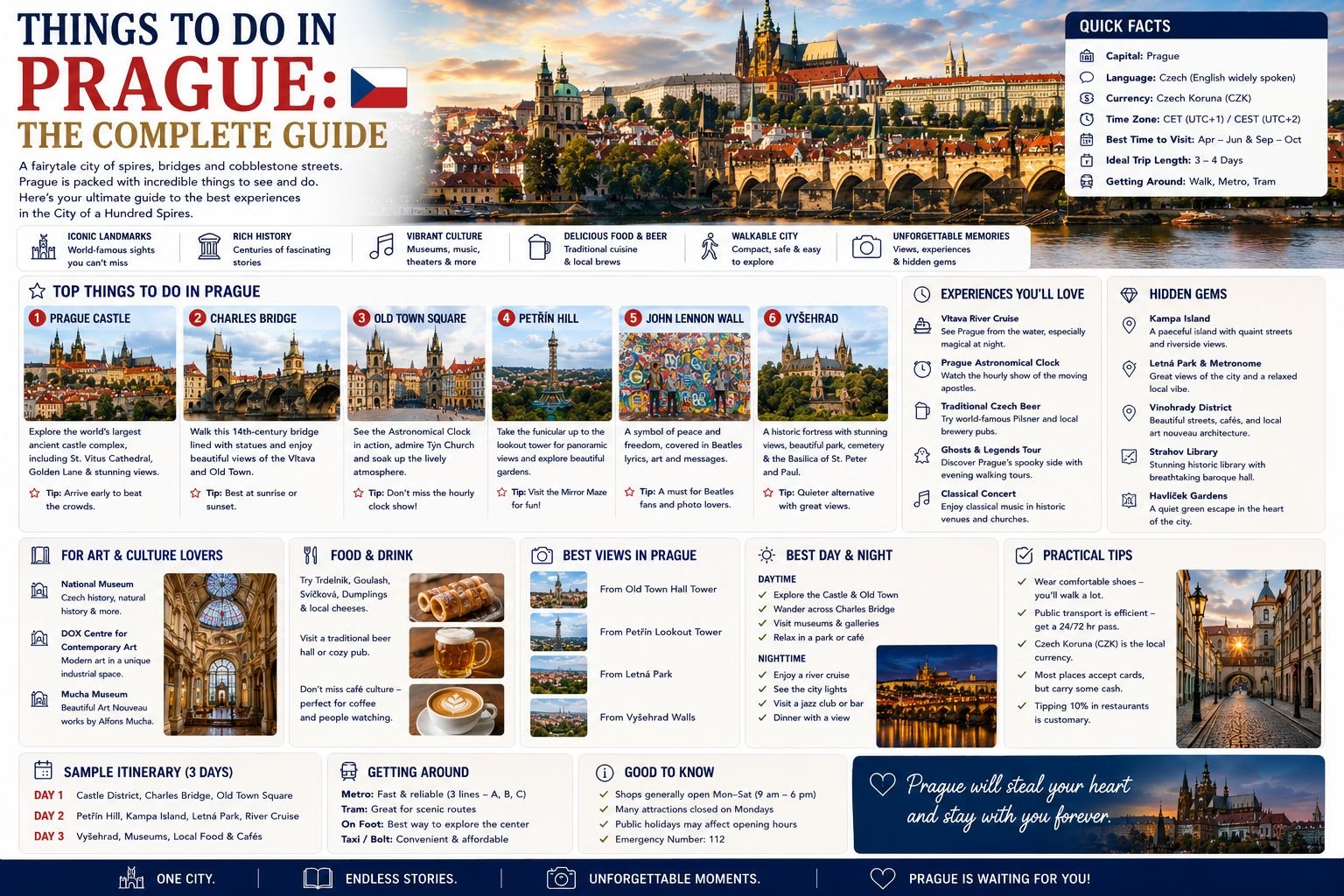
Prague’s things-to-do range from the iconic (Prague Castle, Charles Bridge, the Astronomical Clock) through the genuinely unmissable but less marketed (the Josefov Jewish Quarter, the Vyšehrad fortress, the Letná panorama) to the specifically rewarding for visitors who have time beyond the standard circuit (the Stromovka park, the DOX contemporary art gallery, the Lapidarium sculpture museum in Holešovice, the best viewpoints that the guide books do not mention).
This guide organises Prague’s activities into categories with practical information for each.
The Unmissable: What Not to Skip
Prague Castle and St Vitus Cathedral: The most visited attraction in the Czech Republic. The castle complex is large enough to spend a full day in; the minimum meaningful visit is 3 to 4 hours covering the cathedral, the Old Royal Palace, and the Golden Lane. Book timed entry online to avoid queues. See the full Malá Strana and Castle guide for coverage.
The Jewish Quarter (Josefov): The Pinkas Synagogue’s memorial walls and the Old Jewish Cemetery are among the most important memorial sites in Central Europe. Allow 2 to 3 hours for the full Jewish Museum Prague circuit. See the Old Town guide for coverage.
Vyšehrad fortress: The second castle of Prague, on the Vltava cliff south of the New Town, is free to enter and genuinely extraordinary: the Romanesque rotunda of St Martin (11th century), the Gothic Church of SS Peter and Paul, the Slavín cemetery (final resting place of Dvořák, Smetana, Mucha, and other Czech national figures), and the best-preserved section of the medieval city walls in Prague. Essentially tourist-free compared to the main castle. Take metro line C to Vyšehrad station; 2 to 3 hours.
Art and Culture
National Gallery Prague (Národní galerie Praha): Distributed across multiple buildings throughout the city. The most important collections: the Czech 19th-century art at the Trade Fair Palace (Veletržní palác) in Holešovice; the European medieval and early modern collection in the Convent of St Agnes (Klášter sv. Anežky České) near Josefov; and the Baroque art in the Schwarzenberg Palace at the castle. The Trade Fair Palace specifically has an important collection of Czech Cubist architecture and the most comprehensive 20th-century Czech art collection outside Prague.
Mucha Museum: The Alfons Mucha Museum in the New Town holds the most important single-artist collection in Prague. Mucha’s Art Nouveau decorative art, his Paris salon posters, and his preparatory studies for the Slav Epic (the monumental 20-canvas cycle now housed separately in Moravský Krumlov) are all here. Entry approximately CZK 300.
DOX Centre for Contemporary Art (Holešovice): The most serious contemporary art space in Prague. International and Czech contemporary art in a converted industrial building; the permanent collection and temporary exhibitions are consistently high-quality. Open Tuesday to Sunday; entry approximately CZK 180.
Parks and Outdoor Spaces
Letná park and beer garden: The large park above Holešovice, east of the castle, has the most celebrated beer garden in Prague: wooden benches, Gambrinus and Staropramen on tap, and the panoramic view over the Vltava bend with the Old Town on the far bank. Most beautiful at sunset; crowded in summer evenings; quieter on weekday afternoons.
Stromovka park: Prague’s largest park, originally a royal hunting ground in the 13th century, now a tree-dense park in Holešovice connecting to the Výstaviště exhibition grounds. Good for running, cycling, or afternoon walking; essentially no tourists.
Vrtba Garden (Malá Strana): See the Malá Strana guide. Baroque terraced garden; one of the most beautiful small gardens in Central Europe; genuinely undervisited.
Views and Panoramas
Prague rewards upward effort: the views from above are among the best in Central Europe. The specific viewpoints worth the climb:
Petřín hill: The cable car (lanová dráha) from Újezd in Malá Strana or the walking path through the gardens reaches the Petřín Tower (a miniature Eiffel Tower from 1891; views over the entire city) and the Stefanik Observatory. Combined Petřín and observation time: approximately 2 hours.
Letná panorama: From the park bench at the edge of the Letná plateau, the view west over the Vltava bend and the Old Town is one of the best urban panoramas in Prague. Free.
Žižkov TV Tower viewing platform: CZK 300; views from 93 metres; interesting for the combination of the view and the building experience. For the best modern-architecture viewpoint, the Dancing House has a rooftop Glass Bar and terrace with a 360-degree view over the river to the castle, free to go up.
What Not to Do: Specific Prague Tourist Traps
The trdelník stalls in the Old Town (the spirally pastries): a commercial invention with no genuine Czech food tradition; expensive for what they are.
Currency exchange offices on tourist streets: predatory rates regardless of “0% commission” signs. Use a bank ATM.
Unmarked taxis picked up on tourist streets: typically overcharge significantly. Use Bolt or Uber.
The Old Town Square tourist restaurants: double the price for half the quality of equivalent restaurants one street away.
Prague With Children
Prague is a genuinely good city for family travel, though the standard sightseeing circuit is not built with children in mind. The Petřín hill funicular and its mirror maze at the top, the playgrounds and open space at Stromovka park, and the Vyšehrad fortress grounds (room to run, no crowds, no entry fee) are the three most reliable options for a full afternoon with children under ten.
The National Technical Museum in Holešovice, covered above for its aircraft and car collection, consistently gets the best reaction from children aged six and up. Prague Castle and the Old Town Square are worth doing with children but work better in short blocks of an hour or two rather than a full day; the cobblestones, crowds, and lack of shade make the afternoon heat harder on children than on adults.
Related: Solo Travel in Prague | Where to Stay in Prague | Malá Strana and Castle | Day Trips from Prague