
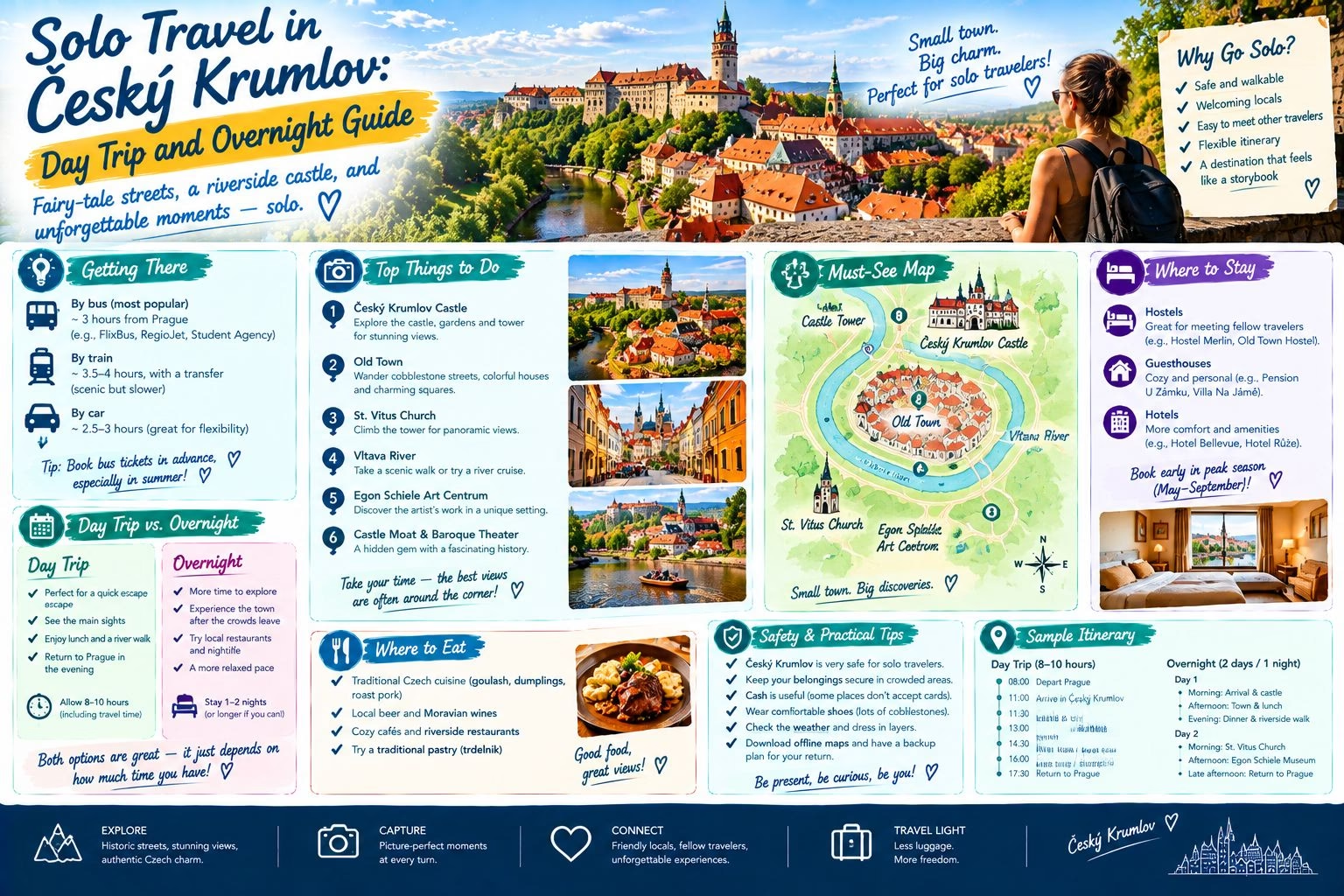
Český Krumlov is the most visited small town in the Czech Republic and arguably the most beautiful, a UNESCO World Heritage Site where a medieval castle complex sits on a tight bend of the Vltava River, with a Baroque theatre inside the castle still used for performances, coloured Renaissance and Gothic buildings descending to the river, and a town of 13,000 people that somehow accommodates two million visitors a year. The tourists are real. So is the beauty. Knowing how to find the second and avoid the worst of the first is what separates a memorable solo visit from an expensive, crowded disappointment.
I have been to Český Krumlov more times than I can count, as a child with family, as a student, and in recent years writing about Central Europe. The version of the town that most visitors see (the main castle viewpoint, the inner town, lunch at a riverside restaurant) is genuinely lovely. The version that a solo traveller with an overnight stay experiences, the town at 7am when the tour coaches haven’t arrived, the castle gardens in late afternoon light, the jazz festival week in the summer, the snow-covered rooftops in January, is extraordinary.
Day Trip or Overnight Stay?
The honest answer depends on what you want. A day trip from Prague (2.5 to 3 hours by direct bus) is sufficient to see the castle exterior and interior, walk the inner town, have lunch, and understand why the town has the reputation it does. It will be crowded, particularly on summer weekends, and you will leave having seen the surface.
An overnight stay transforms the experience. The town empties noticeably after 6pm when the last coach tours depart. The evening light on the castle and river is genuinely different from the midday version. Breakfast in the town square with almost no other visitors is a specific pleasure. And the surrounding area, the Šumava National Park is 40 minutes away, the meadows along the Vltava are excellent for morning walking, becomes accessible rather than theoretical.
My recommendation for solo travellers: stay one night minimum. Two nights if the season is right (the jazz festival week in July, the Baroque festival in August, or the winter Christmas market in December). The accommodation is much cheaper in Český Krumlov than in Prague and the quality of smaller family guesthouses (pensiones) is consistently good.
When to Visit
The crowds question is the central consideration. July and August are the peak months: beautiful weather, all attractions open, and extremely crowded. The ratio of tourists to local residents reaches absurd proportions on summer weekends. If your dates are flexible, avoid these months.
May and June are near-ideal: spring green on the riverside meadows, the castle gardens in flower, temperatures in the high teens to low twenties, and significantly fewer visitors than high summer. September and October are excellent; the meadows and forests around the town turn gold and red, the light is softer, and the tourist numbers drop sharply after the school holiday season ends.
Winter (November to March, excluding Christmas week) is the least visited and most atmospheric time. The baroque castle with snow is one of the most photographed images in Central Europe for good reason. Most restaurants and some guesthouses close outside the main season, but enough remain open and the experience of near-solitude in a medieval town is worth the cold. January and February are the quietest months.
Christmas week (late December) brings a Christmas market in the main square that is genuinely excellent, smaller and more authentic than the Prague markets, with a character that is specifically South Bohemian rather than generically Central European.
Safety
Český Krumlov is among the safest places in the Czech Republic for solo travellers. Violent crime is essentially absent. Petty theft exists during the peak summer months given the tourist density but is very low by any urban standard. The specific risk in summer is the inflated restaurant pricing on the main tourist square; scout the side streets one minute from the main thoroughfare for restaurants serving locals at local prices. A meal in the same town can cost twice as much or half as much depending entirely on which street it is on.
Solo female travellers will find Český Krumlov entirely comfortable at any hour. The town is compact enough that you are never far from populated areas, and the evening atmosphere, once the day-trippers have left, is quiet and genuinely safe.
What to See and Do
Český Krumlov Castle is the primary attraction and deserves several hours. The compound is the second largest castle in Bohemia after Prague Castle. The two standard guided tours cover the Baroque theatre (one of the best preserved in Europe, with original 17th-century stage machinery still operational) and the Renaissance state rooms. Book online; tickets sell out on peak days. The castle tower is climbable independently for the best views of the town and river bend. The castle gardens and the Baroque theatre summer performances are worth researching in advance.
The inner town below the castle requires no planning beyond walking it. The main square (Náměstí Svornosti) is the natural centre; the streets radiating from it in all directions have consistent medieval character. The Egon Schiele Art Centre is a notable modern addition; the Austrian Expressionist painter was born in Krumlov (his mother was Czech) and spent significant time here; the gallery in a converted Baroque building is excellent and rarely crowded.
The Vltava River surrounds the town on three sides. Canoeing and rafting on the Vltava from Český Krumlov is one of the most popular outdoor activities in the Czech Republic; multiple companies rent equipment for half-day and full-day routes. Solo paddling is entirely feasible and the river section immediately below the town is manageable for beginners. The weir below the castle requires a portage; staff at the rental points explain the route clearly.
For early morning solo walks: the path from the castle gardens along the top of the ridge gives the best elevated view of the town. Start at 7am in summer and you will have it almost entirely to yourself. The riverside path below the town heading south towards the camping areas is peaceful, flat, and full of birds in the early morning.
Getting There and Around
Direct buses from Prague (Florenc bus terminal) take approximately 2h40. Student Agency (RegioJet) and Flixbus both operate the route; the RegioJet buses are more comfortable and recommended. Book online in advance for weekend travel in summer; the buses fill. From Brno, the journey is longer (approximately 3 hours with changes) and less straightforward; Prague is the better departure point.
From České Budějovice (22km north), buses and trains run frequently and take 30 to 40 minutes. If you are travelling through South Bohemia, using České Budějovice as an overnight base and visiting Český Krumlov as a half-day trip is an underused option that avoids the peak accommodation prices in the town itself.
The town is entirely walkable once you arrive; the inner town is compact and car-free in the historic centre. The castle is accessible on foot from anywhere in the inner town within 10 to 15 minutes. There is no public transport within the town worth using.
Practical Tips
Book the castle tours in advance: the standard tour tickets (Tour I and Tour II) sell out on summer weekends. Buy online at zamek-ceskykrumlov.eu before you travel. The garden and tower are separately ticketed and available on the day.
Where to eat without paying tourist prices: Cikánská jizba (Romani inn, on Dlouhá Street, decorated with Romani art and serving Czech-Romani cooking) is one of the best restaurants in the town and entirely local in character. Laibon (vegetarian restaurant on Parkán Street, with a riverside terrace) is excellent and not on the main tourist circuit. Any restaurant on the main Horní Street or the main square will charge peak prices.
Accommodation: the small family pensions in the inner town are the best value and the best experience. Staying within the castle walls is possible (there are rooms available in the castle complex) and extraordinary but expensive. Booking at least two months ahead for summer weekends is necessary.
The Šumava National Park: if you have a car or are happy with the bus, the national park begins 40km west of Český Krumlov and has excellent walking trails through forest and along river valleys. The bus from Český Krumlov to Železná Ruda runs several times daily.
Further Reading
For the practicalities of the bus journey and combining Český Krumlov with other day trips from Prague, see the Day Trips hub and the Český Krumlov day trip guide. For where to eat in more depth, see Traditional Czech Food.
Related: Solo Travel Hub | Day Trips: Český Krumlov | Solo Travel in Prague | Plan: Best Time to Visit
Written by Jan Marek, Czech travel writer and Central European expat specialist at allaboutczech.com and allaboutvienna.com.